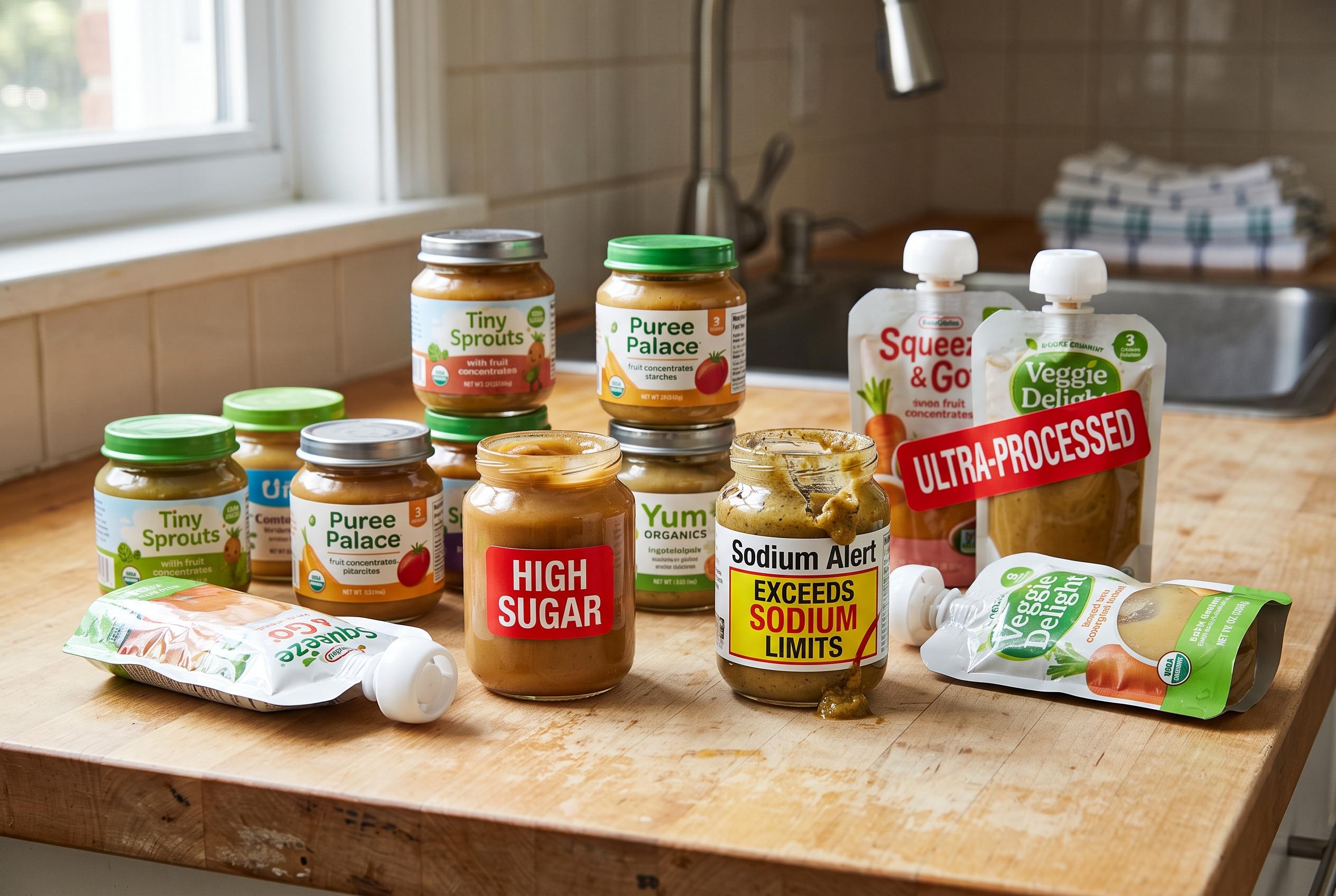

A study of Austin supermarkets finds that 81% of baby and toddler foods are ultra-processed, with many products high in sugar and sodium, raising concerns over early childhood nutrition and long-term eating habits.
Commercial baby and toddler foods on supermarket shelves are often more heavily processed than parents may realise, according to a study of stores in Austin, Texas that found ultra-processed items dominated the category. Researchers examined 2,783 products aimed at children aged 6 to 36 months and classified 81% as ultra-processed, while nearly half failed to meet at least one World Health Organisation nutrient guideline for foods marketed to young children.
The findings matter because the early years are a critical period for feeding patterns. The World Health Organisation says complementary foods should begin at around 6 months and should be safe, nutritionally adequate and varied, helping to support growth while exclusive breastfeeding is no longer enough on its own. WHO guidance also stresses that healthy eating in infancy can shape long-term habits, making the composition of commercial baby foods especially important.
The Texas study found several recurring problems. Some products were too high in sugar, others contained more sodium than recommended, and some fell short on fat or energy density. Fruit snacks, oat bars and savoury ready meals were among the items most likely to miss the mark. The researchers also found that more highly processed toddler foods tended to contain more sugar than less processed alternatives, although they cautioned that processing level and nutrient content do not always tell the full story on their own.
That distinction is important for parents trying to make quick decisions in store aisles. Packaging, health claims and child-friendly branding can suggest a product is well suited to a balanced diet when its ingredient list tells a different story. Nutrition experts say the best approach is to check both the ingredients and the nutrition panel, looking for shorter, simpler lists and avoiding regular reliance on foods high in sugar or salt. WHO European documents have raised similar concerns about commercial foods for infants and young children, noting that many products are heavily sweetened and may be marketed earlier than recommended.
Disclaimer: This content is for informational purposes only and is not intended to be a substitute for professional medical judgment, advice, diagnosis, or treatment.