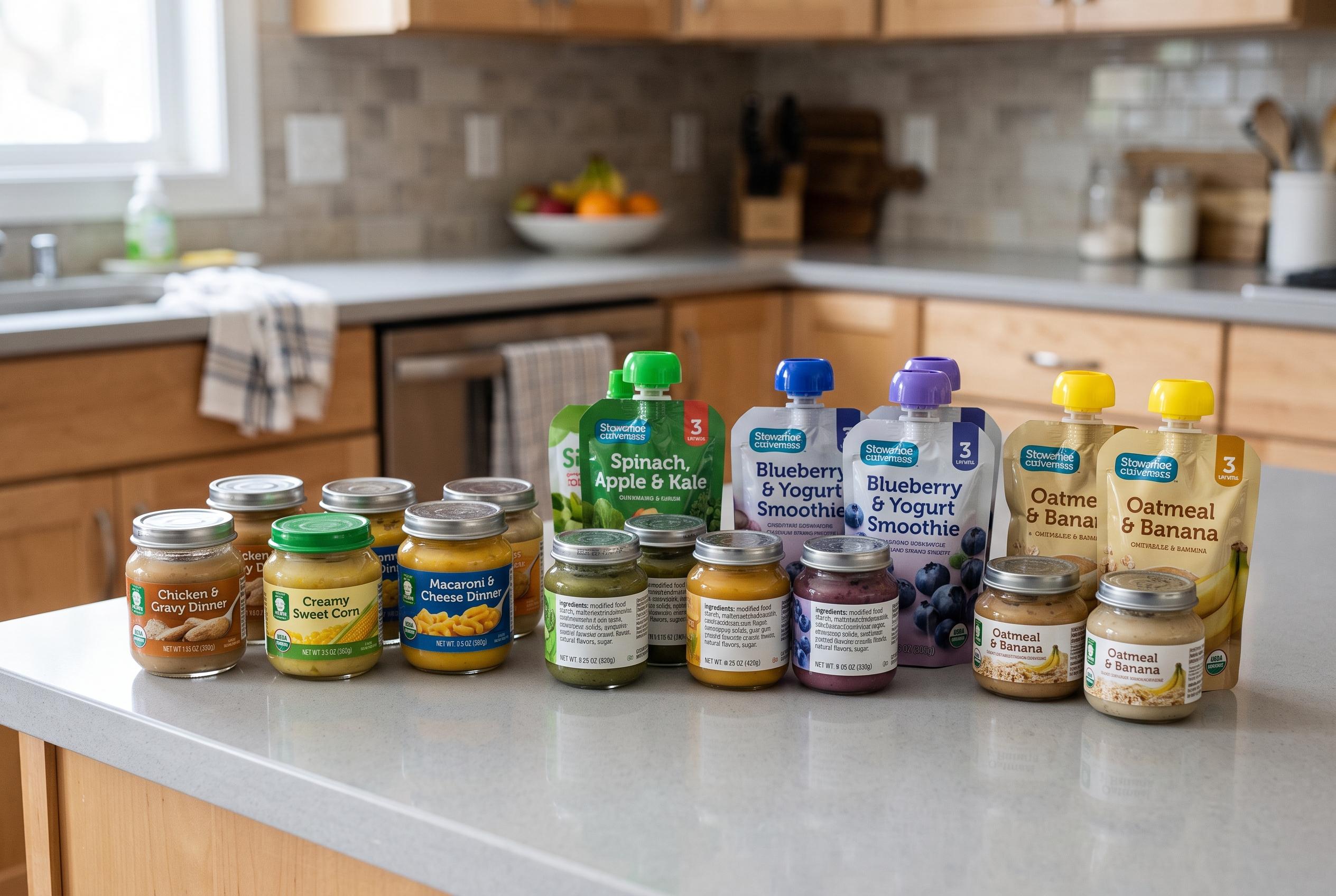

A new analysis finds that 71% of commercially sold baby foods in the US are ultra-processed, prompting calls for clearer labelling and healthier options for young children.
A new analysis of commercially sold baby food has renewed concern about what many parents are putting on the tray. According to The George Institute for Global Health, researchers reviewed 651 products sold across the top 10 US grocery chains and found that 71% met the NOVA definition of ultra-processed food, a category that includes industrial ingredients and additives rarely used in home cooking. The study, published in Nutrients, also found that these products tended to contain more sugar and sodium than less processed alternatives.
The findings matter because baby and toddler foods are marketed as gentle first foods, yet many are built from formulations that look more like factory products than simple purées. The George Institute said the products contained flavour enhancers, thickeners, emulsifiers and colours, with some items carrying a long list of ingredients. A separate summary from the Environmental Working Group said the study raises questions about whether current labels give parents enough information to tell the difference between genuinely simple foods and heavily engineered ones.
The concern extends beyond ingredients alone. News Medical reported that the researchers found added sugar only in ultra-processed products, alongside higher average sugar and sodium levels than in non-ultra-processed baby foods. The study also suggested that snack foods and finger foods were among the most heavily processed items, while even fruit and vegetable purées were often classified as ultra-processed. Those patterns are worrying because early childhood is a period when taste preferences and eating habits are still forming.
That broader picture is echoed by other recent work. ScienceDaily reported in July that an audit of nearly 2,800 toddler foods found 81% were ultra-processed and almost half failed at least one World Health Organisation nutrient standard. Together, the findings suggest that industrial processing is not an isolated problem in the children’s food aisle but a common feature of the category, spanning snacks, meals and drinks aimed at very young children.
For parents, the practical takeaway is straightforward: read ingredient lists closely, not just front-of-pack claims. The more a product relies on concentrates, starches, flavourings and stabilisers, the further it moves from the simple foods many families expect to buy. The researchers and child-health groups cited in the coverage argue that clearer labelling and tighter rules would help, but until that happens, the burden remains on caregivers to look past reassuring packaging and judge the food inside.
Disclaimer: This content is for informational purposes only and is not intended to be a substitute for professional medical judgment, advice, diagnosis, or treatment.