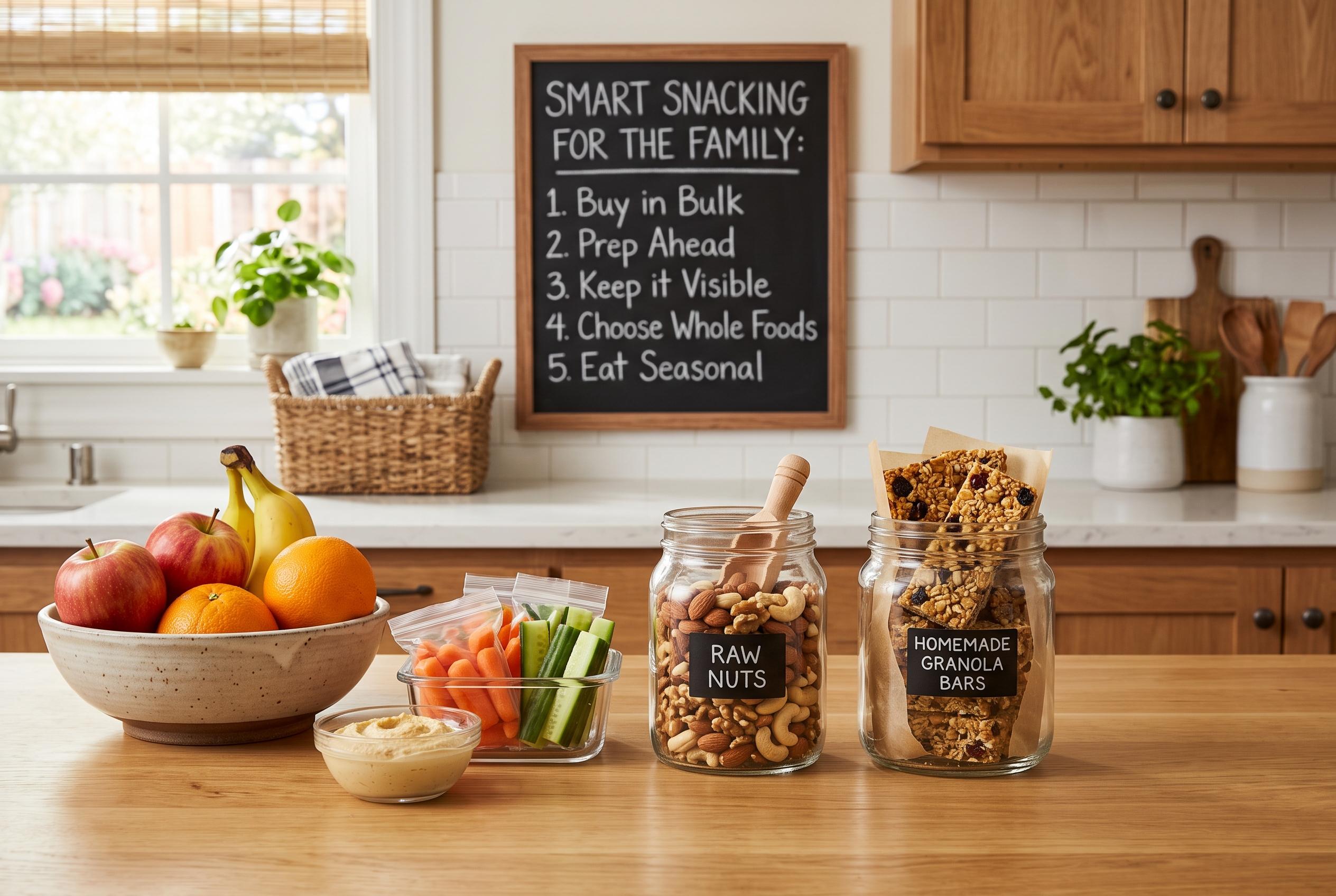

Practical advice from experts reveals how families can cut snack costs, improve nutrition, and streamline preparation through simple, sustainable changes, making healthy eating more accessible amid busy schedules.
Feeding a family well between meals can become expensive fast, especially when convenience snacks are the default. Yet families do not need a large budget or a professional kitchen setup to keep children satisfied. As guidance from Children’s Health and HealthyChildren suggests, the most effective approach is often the simplest: plan ahead, set realistic goals and make small changes that can be sustained week after week.
A weekly snack plan can cut costs almost immediately. Rather than making repeated last-minute stops for biscuits, crisps or petrol-station treats, families can fold snacks into the main shop and buy them in larger, better-value packs. HealthyChildren recommends checking what is already in the cupboard before shopping and working to a set food budget, while Children’s Health says families are more likely to succeed when they start with achievable changes rather than trying to overhaul everything at once.
The choice between homemade and shop-bought snacks is usually a question of time as much as money. Homemade items such as muffins, flapjacks, bread or energy bars can be cheaper per portion, and they allow parents to control sugar, salt and additives. A separate cost comparison from a gluten-free snacks site found that making some items at home can save families hundreds, even thousands, over a year. But convenience still matters, and for busy days, multi-packs or simple ready-to-eat options may be worth the extra spend if they help avoid pricier impulse buys elsewhere.
Nutrition also matters when choosing snacks that will actually keep children going. Protein-rich foods tend to be more filling than quick-hit carbohydrates such as biscuits, which can leave children hungry again soon after eating. That makes foods such as yoghurt, eggs, cheese, hummus, beans and nuts useful budget choices as well as healthier ones. In practical terms, a snack that lasts longer can reduce the total amount of food a family goes through in a day.
Preparation can make the biggest difference of all. Batch-cooking snack components at the weekend, such as boiling eggs, portioning chopped vegetables, making hummus or baking muffins, can save both time and money during the week. HealthyChildren also suggests looking beyond the usual supermarket aisle and checking farmers’ markets or ethnic shops for better prices on staples. A fridge snack station, stocked with ready-to-grab options, can stop families reaching for expensive convenience foods when they are rushing out of the door.
For families trying to balance health, time and cost, the answer is not perfection but consistency. A little planning, a focus on filling foods and a bit of weekend prep can make healthy snacking far more manageable. The result is less waste, fewer emergency purchases and a week of snacks that works better for both the household budget and the school run.
Disclaimer: This content is for informational purposes only and is not intended to be a substitute for professional medical judgment, advice, diagnosis, or treatment.