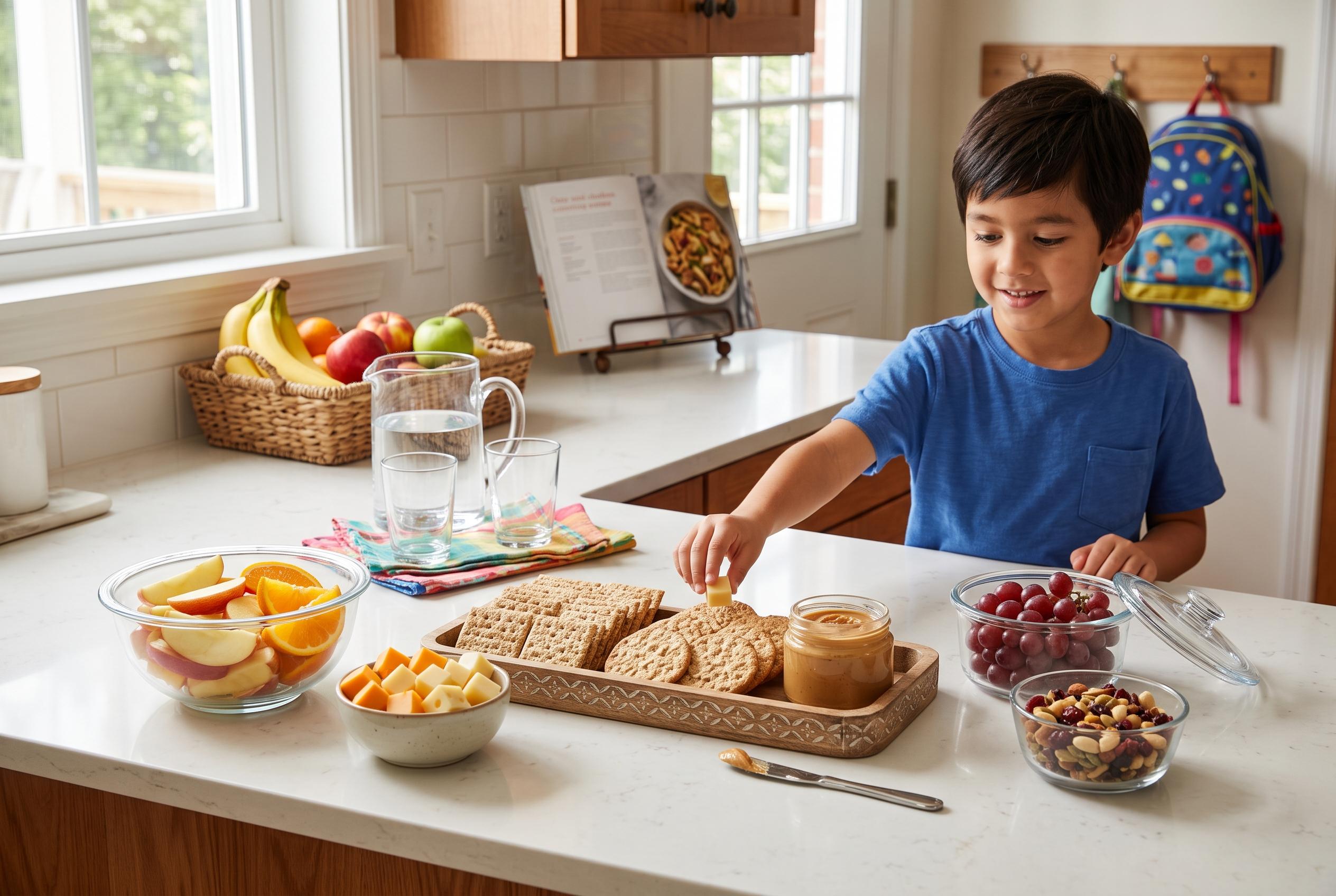

Expert advice emphasises simple, balanced, and easily prepable snacks to keep children energised and satisfied after school, advocating for straightforward, planned approaches over elaborate meal preparations.
Parents looking for an easy way to bridge the gap between school and dinner have plenty of options, and the best ones do more than quiet a hungry child for an hour. Nutrition experts say after-school snacks work best when they combine carbohydrates with protein or fat, helping children stay satisfied and avoid the energy dip that can follow a packet of plain crackers or sweets. Clemson University’s Home & Garden Information Centre recommends whole foods such as fruit, vegetables, cheese, nuts and seeds, while also suggesting packaged snacks with limited added sugar and enough fibre and protein to be genuinely filling.
The practical answer, several food and health groups note, is not elaborate meal prep but a little planning. Making a batch of muffins, energy bites or yogurt bark at the weekend can give families ready-to-go options for the week, especially because those foods freeze well. Cornell Cooperative Extension says children can also be involved in choosing or assembling snacks, which makes them more likely to eat what is offered. Keeping a short list of two or three options, rather than a crowded pantry of choices, can make the routine simpler for parents and children alike.
The snack ideas themselves are straightforward: apple slices with a dip, cheese sticks with crackers, hummus with vegetables, yoghurt with fruit, popcorn, trail mix, hard-boiled eggs and mini sandwiches all appear on expert lists from Food Network, Snack Girl and PBS KIDS for Parents. Those sources also point to easy make-ahead items such as muffins, wholegrain breads, quesadillas and cucumber or celery snacks topped with cheese, nut butter or cream cheese. Mercy Health says the after-school snack can account for a meaningful share of a child’s daily intake, so pairing convenience with balance matters.
For busy households, visibility is part of the trick. Snacks placed where children can see them, such as cut fruit in the fridge or muffins on the counter, are more likely to be eaten, according to the advice collated by iheartvegetables.com. The larger lesson is simple: a healthy after-school snack does not need to be fancy, but it should be planned with enough care to carry children from the classroom to the dinner table without a crash.
Disclaimer: This content is for informational purposes only and is not intended to be a substitute for professional medical judgment, advice, diagnosis, or treatment.