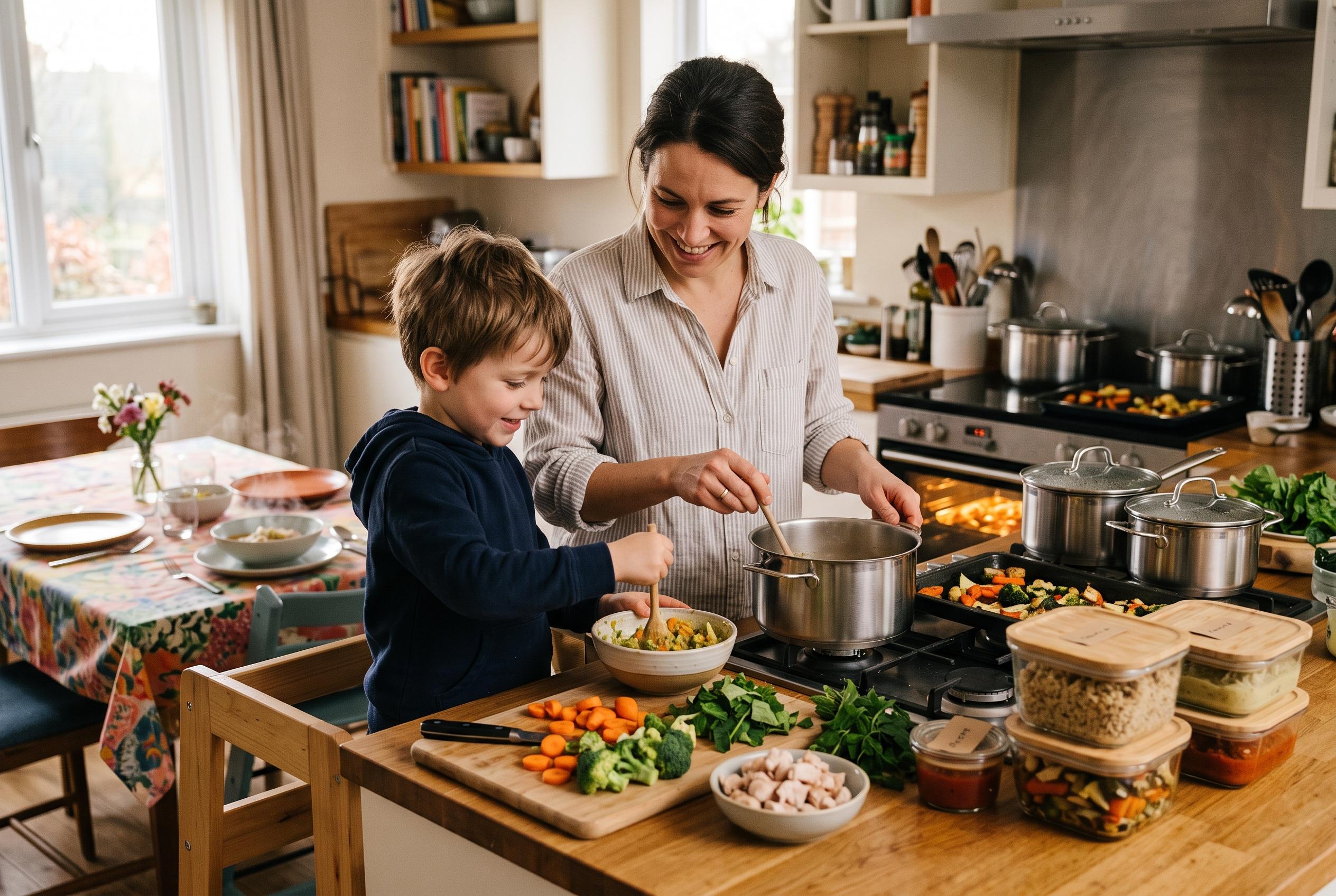

Busy parents can turn to flexible meal planning and batch cooking to reduce weekday stress, minimise waste, and enjoy more varied, children-friendly dinners without the need for elaborate recipes.
Busy parents do not need elaborate recipes to make dinnertime feel calmer or more enjoyable. A better approach is to build a flexible system: plan a few meals in advance, keep a short list of reliable staples, and reserve one block of time each week to prepare ingredients that can be reused in different ways. That small amount of organisation can cut down on weekday stress, reduce waste and make it easier to put a proper meal on the table without starting from scratch every night.
Batch cooking is one of the most useful habits for families with packed calendars. Rather than preparing full meals for every night, many home cooks now focus on making components such as rice, quinoa, roasted vegetables, shredded chicken, sauces and soups in advance. Those basics can then be mixed and matched into pasta bakes, grain bowls, traybakes or quick casseroles. Some guides also recommend setting a fixed prep window, such as Sunday afternoon, so the routine becomes easier to maintain from week to week.
The appeal of this approach is that it saves time without forcing every meal to taste the same. A tray of roasted vegetables might appear in pasta one night, alongside chicken the next, and in a blended soup later in the week. The freezer can also play a major part, especially for stews, curries and lasagnes that reheat well. Making extra portions on a good cooking day means a proper home-cooked dinner is available on the evenings when energy has run out and takeaways start to look tempting.
Speed does not have to mean blandness. Simple dishes can feel much more special with one or two stronger ingredients, such as good pesto, harissa, fresh herbs or a squeeze of lemon. One-pan and one-pot meals remain especially practical because they limit washing-up while still delivering flavour. Families can also turn familiar dishes into something more appealing by offering choice, whether that means a taco bar, homemade pizzas with different toppings or a traybake with sweet and savoury elements that roast together.
Children can also be brought into the process in small, manageable ways. Younger children can wash vegetables, stir cold ingredients or tear lettuce, while older ones can measure, crack eggs or help assemble simple dishes. Letting them choose a meal once a week can make them more willing to try new food and can turn dinner into a shared activity rather than a daily battle. A well-stocked kitchen, a sensible shopping list and a few trusted recipes are often enough to keep family meals varied, manageable and far less stressful.
Disclaimer: This content is for informational purposes only and is not intended to be a substitute for professional medical judgment, advice, diagnosis, or treatment.