

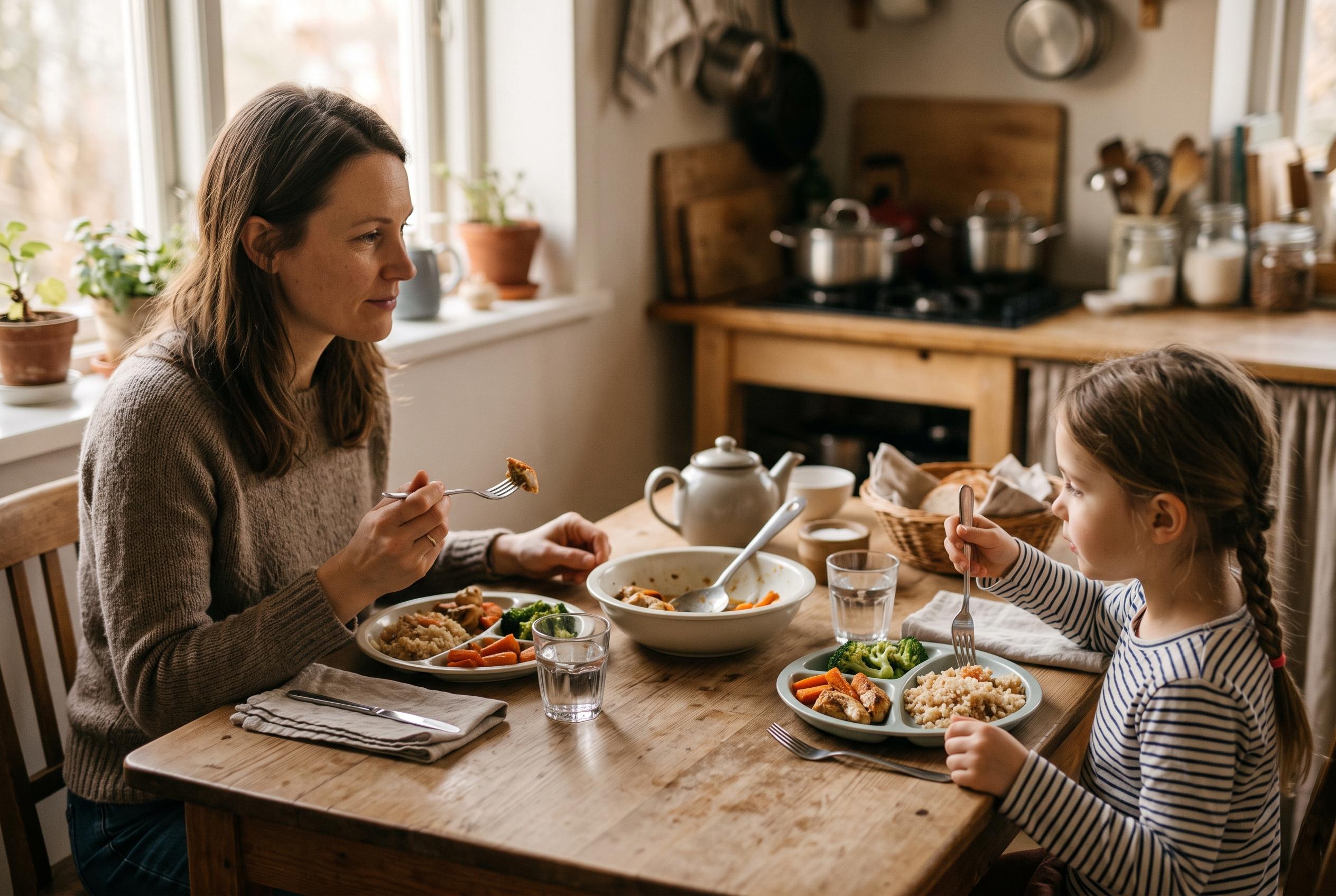

A practical guide to mastering portion control using visual cues, slowing down, and understanding hunger signals, offering a less stressful and more sustainable way to enjoy balanced meals both at home and dining out.
Portion control often sounds like a task for scales, measuring cups and calorie-tracking apps, but it does not have to be that complicated. A more practical approach is to use visual cues, slower eating and a better read on hunger and fullness. Healthline notes that simple tactics such as smaller dinnerware, the plate method and mindful eating can all help people avoid oversized servings without turning every meal into a calculation. For families, that can make everyday eating feel less stressful and more sustainable.
One of the easiest starting points is to use the hand as a guide. Several portion-control resources recommend a palm-sized amount of protein, a cupped hand for carbohydrates and a hand-shaped serving of vegetables, with the appeal being that the method adjusts to body size rather than relying on rigid numbers. A plate-based approach works in a similar way: fill half the plate with vegetables or fruit, reserve a quarter for protein and use the final quarter for whole grains or starchy foods. PortionPlate.eu says that this pattern can help create a balanced meal without weighing ingredients, while other guides add that a small amount of healthy fat can fit naturally into the same framework.
Knowing how much to serve is only part of the picture. The more difficult skill is learning when to stop. That means paying attention to the difference between physical hunger and habits, stress or boredom. DynamicCook and other portion-control guides emphasise slowing down, chewing thoroughly and cutting out distractions so that the body has time to register fullness. In practice, that can be as simple as putting the phone away, switching off the television and pausing between bites instead of racing through a meal.
Smaller plates and bowls can also do more work than many people expect. Healthline and other sources point out that the size of the dish can shape how much food seems normal, which means a full small plate may satisfy just as well as a half-empty large one. Pre-portioning snacks is another useful safeguard. Instead of eating straight from a packet of nuts, crackers or dried fruit, separating them into single servings makes it easier to stop at one portion rather than drift into mindless grazing later in the day.
The same principles matter when eating out. Restaurant servings are often far larger than what most people would serve at home, so portion control may require a plan before the first bite. Common strategies include splitting a main course, asking for a takeaway box at the start of the meal or choosing lighter options from the menu. Staying hydrated can help too, since thirst is sometimes mistaken for hunger. Used together, these habits make portion control less about restriction and more about building a steadier, more relaxed relationship with food.
Disclaimer: This content is for informational purposes only and is not intended to be a substitute for professional medical judgment, advice, diagnosis, or treatment.



