

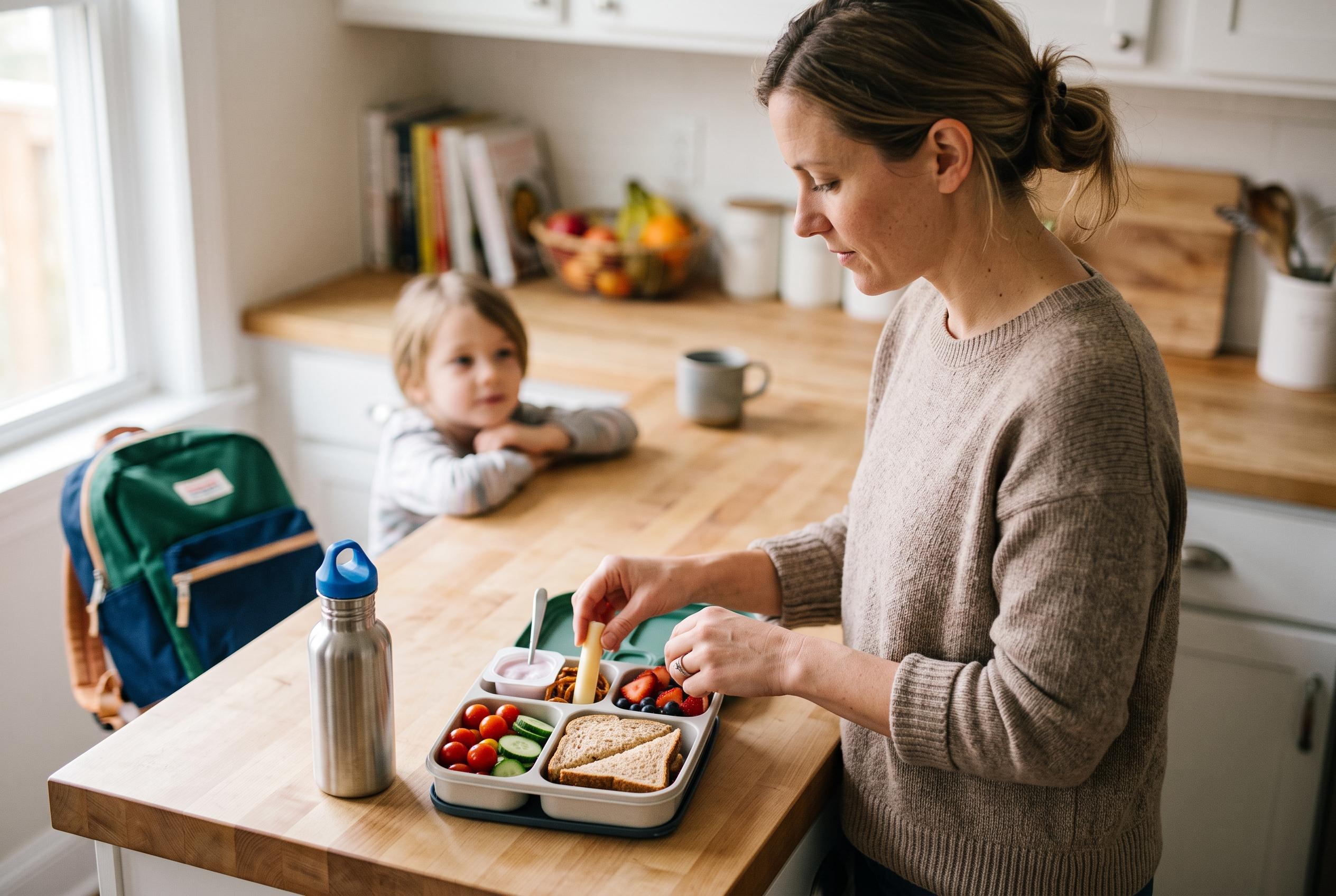

A practical, repeatable pattern for school lunches, emphasising familiar, balanced options, is helping parents make lunchtime less stressful and more appealing for children, backed by nutrition experts’ advice.
Packing school lunches can become far less fraught when it follows a repeatable pattern. One mother, writing on Lemon Stripes, describes the approach as a simple “recipe” built around a few reliable categories: a filling main, fruit, vegetables, a crunchy snack, a protein-rich snack and a small sweet bite. The idea is not to reinvent lunch every morning, but to create a framework that works across different appetites, schedules and classroom allergy rules.
That kind of structure is backed by practical advice from school nutrition resources. Southcoast Health says children are more likely to eat what is packed when they are offered familiar choices and when lunch feels fun rather than forced. Using compartmentalised bento boxes can help keep ingredients separate, which not only makes the meal more appealing but also gives parents an easy way to balance protein, carbohydrates, fruit and vegetables in a single container.
The Lemon Stripes guide reflects that logic with a menu of dependable options that can be mixed and matched through the week. For the main section, leftovers such as meatballs, pesto pasta or chicken noodle soup are among the easiest choices, but there are also no-cook options such as hummus with crackers, sunbutter and jelly sandwiches, bagels with cream cheese and mini charcuterie-style boxes of salami, cheese and crackers. Other ideas include quesadillas packed in a thermos and toaster waffles with sunbutter and maple syrup.
The same flexible approach runs through the rest of the lunchbox. Fresh fruit is presented as an everyday staple, with berries, apple slices, citrus segments, grapes and summer fruit all in rotation, while vegetables are kept simple and familiar, including cucumbers, carrots, snap peas, peppers and tomatoes. For something salty and crunchy, the list ranges from pretzels and popcorn to cheese crackers, chickpea puffs and lentil rings. Protein snacks include cheese sticks, yoghurt, muffins fortified with collagen and cereal eaten dry as a treat in its own right.
That balance of familiarity and variety mirrors broader guidance from Harvard’s Nutrition Source, which recommends using lunch as an opportunity to combine fruit and vegetables with whole grains and protein. It also fits with other bento-box advice from children’s lunch-planning sites, which stress that small, appealing portions can make meals less intimidating for children who prefer to graze. In practice, the method is less about strict rules than about making school mornings easier and increasing the chances that lunch actually gets eaten.
Disclaimer: This content is for informational purposes only and is not intended to be a substitute for professional medical judgment, advice, diagnosis, or treatment.



