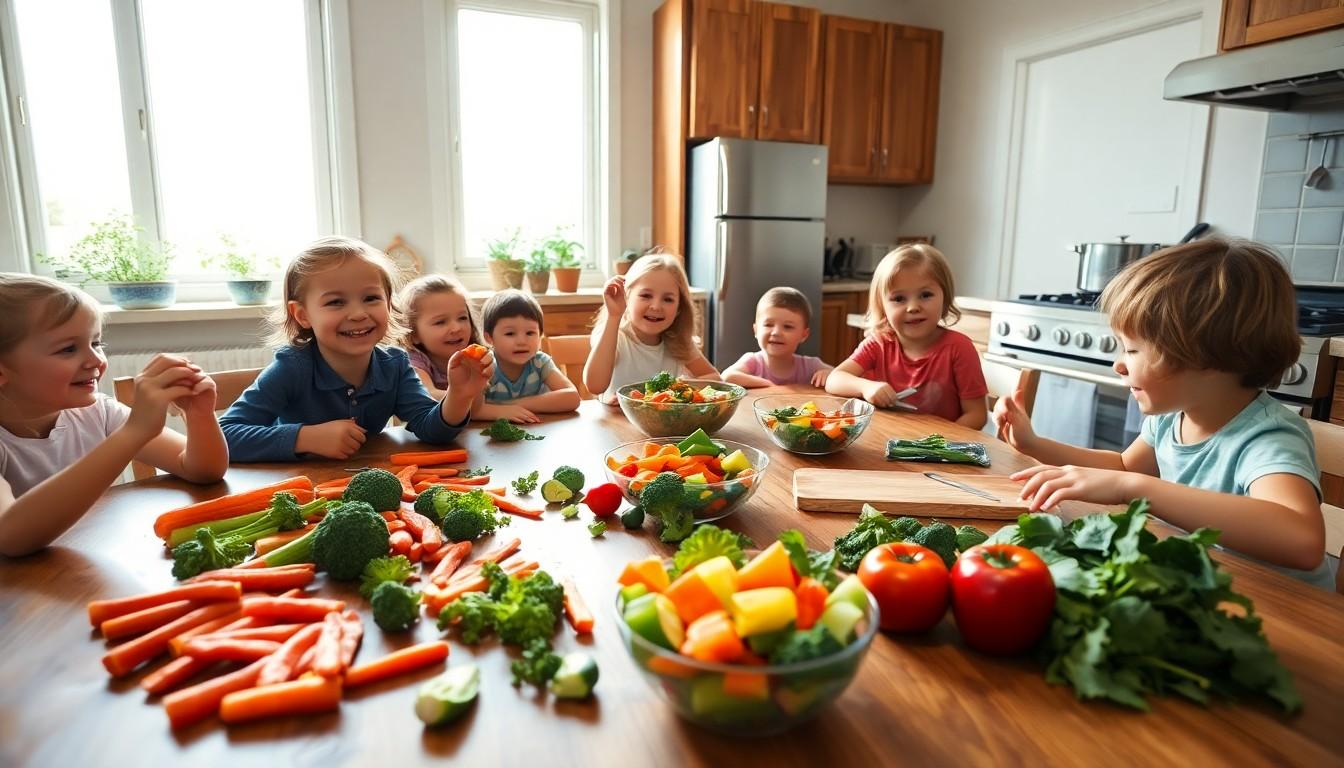

Encouraging children to eat more vegetables involves consistent routines, positive examples, and inventive approaches, according to health experts. Practical tips include integrating produce into meals, gardening, and creating a relaxed mealtime atmosphere to foster lasting healthy habits.
Getting children to eat vegetables is often less about persuasion than repetition, routine and example. Nutrition guidance from the Centres for Disease Control and Prevention says good eating habits begin early, while a recent national survey cited by Cecelia Health found that in 20 states, more than half of children aged one to five had not eaten a vegetable daily in the previous week. That gap matters because vegetables provide vitamins and minerals that support growth, brain development, immunity and other everyday functions.
One of the most effective tactics is also the simplest: children notice what adults do. If parents and carers regularly eat vegetables themselves, youngsters are more likely to see them as a normal part of the meal rather than an obligation placed only on them. The American Heart Association recommends including fruit or vegetables at every meal, and its wider guidance encourages making produce visible and routine rather than treating it as an occasional extra.
Practical changes at home can also help. Cecelia Health suggests limiting less nutritious snack foods so that fresh produce is the easier option when children are hungry between meals. The CDC similarly recommends keeping fruit and vegetables ready to eat in single portions, including fresh, frozen or tinned options, to make healthy choices more convenient. A calmer, more positive mealtime atmosphere can be just as important: Children’s Health advises parents to keep offering a variety of vegetables without pressure, allowing children to decide how much they will eat from the healthy choices on the table.
Creativity helps when children are reluctant to try a new food. Parents can blend spinach, carrots or avocado into smoothies, stir finely chopped vegetables into pasta sauces or add them to dishes children already like, such as meatloaf or scrambled eggs. Dips can also make vegetables more appealing, whether they are store-bought options such as hummus or yoghurt-based sauces made at home. The American Heart Association also recommends building meals around colourful produce, including fruit salads or vegetable-based side dishes, to make healthy eating feel more varied and inviting.
Gardening can make vegetables less mysterious and more appealing. Even a small pot on a windowsill can introduce children to tomatoes, lettuce, cucumbers, spinach or radishes and give them a sense of ownership over what they eat. Experts also caution against labelling foods as “good” or “bad”, since that can create resistance rather than interest. A more effective approach is to talk about what vegetables do for the body, such as supporting strong bones, healthy eyesight or better digestion.
Patience matters too. Children’s preferences change, and a vegetable refused today may be accepted later if it is offered again without pressure. The CDC and American Heart Association both stress that healthy eating is easier to build through repeated exposure and steady habits than through force. For families trying to improve diets, the goal is not perfection but persistence.
Disclaimer: This content is for informational purposes only and is not intended to be a substitute for professional medical judgment, advice, diagnosis, or treatment.