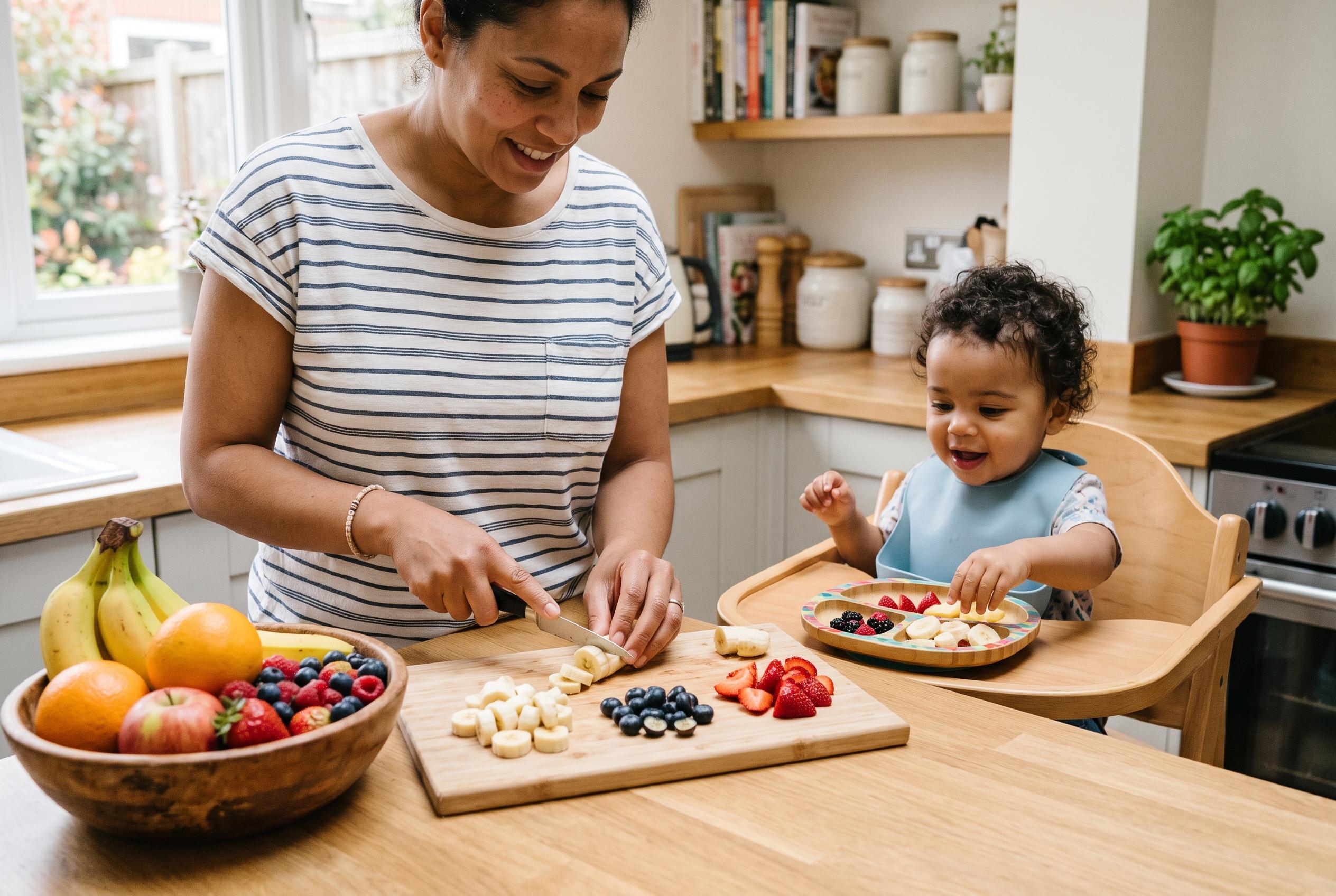

Bananas, oranges, berries and other fruits can provide children with fibre, vitamins and fluids, while age-appropriate portions and preparation help make them safe additions to daily meals.
Fruits can play a useful role in a child’s diet because they provide fibre, vitamins and fluids that support growth and general health. The US Centers for Disease Control and Prevention says children benefit from a varied diet that supports healthy growth, brain development, immunity and bone strength, while the Media Indonesia report highlights fruit as an easy way to add colour and texture to daily meals.
Among the most practical options is the banana. Healthline and WebMD note that bananas provide vitamin B6, potassium and fibre, nutrients linked with energy use, digestion and muscle and heart function. Oranges are another strong choice because they are rich in vitamin C, which supports immunity, helps the body make collagen and aids iron absorption. Strawberries can add variety for children who are ready for different flavours, while apples are a useful source of fibre, especially when eaten with the skin on, as long as they are prepared in age-appropriate pieces to reduce choking risk.
The report also points to mango, kiwi and pear as child-friendly options. Ripe mango is soft, naturally sweet and a source of beta-carotene, which the body converts into vitamin A for eye health. Kiwi provides a high amount of vitamin C and can help the body absorb iron more efficiently, according to nutrition summaries from Healthline. Pears, meanwhile, are high in water and have a gentle texture once ripe, making them easy to serve sliced, grated or lightly cooked.
Portion guidance depends on age. The Media Indonesia article suggests around one cup of fruit a day for children aged two to three, about one to one-and-a-half cups for those aged four to eight, and roughly one-and-a-half to two cups for children aged nine to 18. Mixing fruits of different colours and textures can help broaden nutrient intake, but parents should wash produce thoroughly and cut it into safe sizes before serving.
Disclaimer: This content is for informational purposes only and is not intended to be a substitute for professional medical judgment, advice, diagnosis, or treatment.