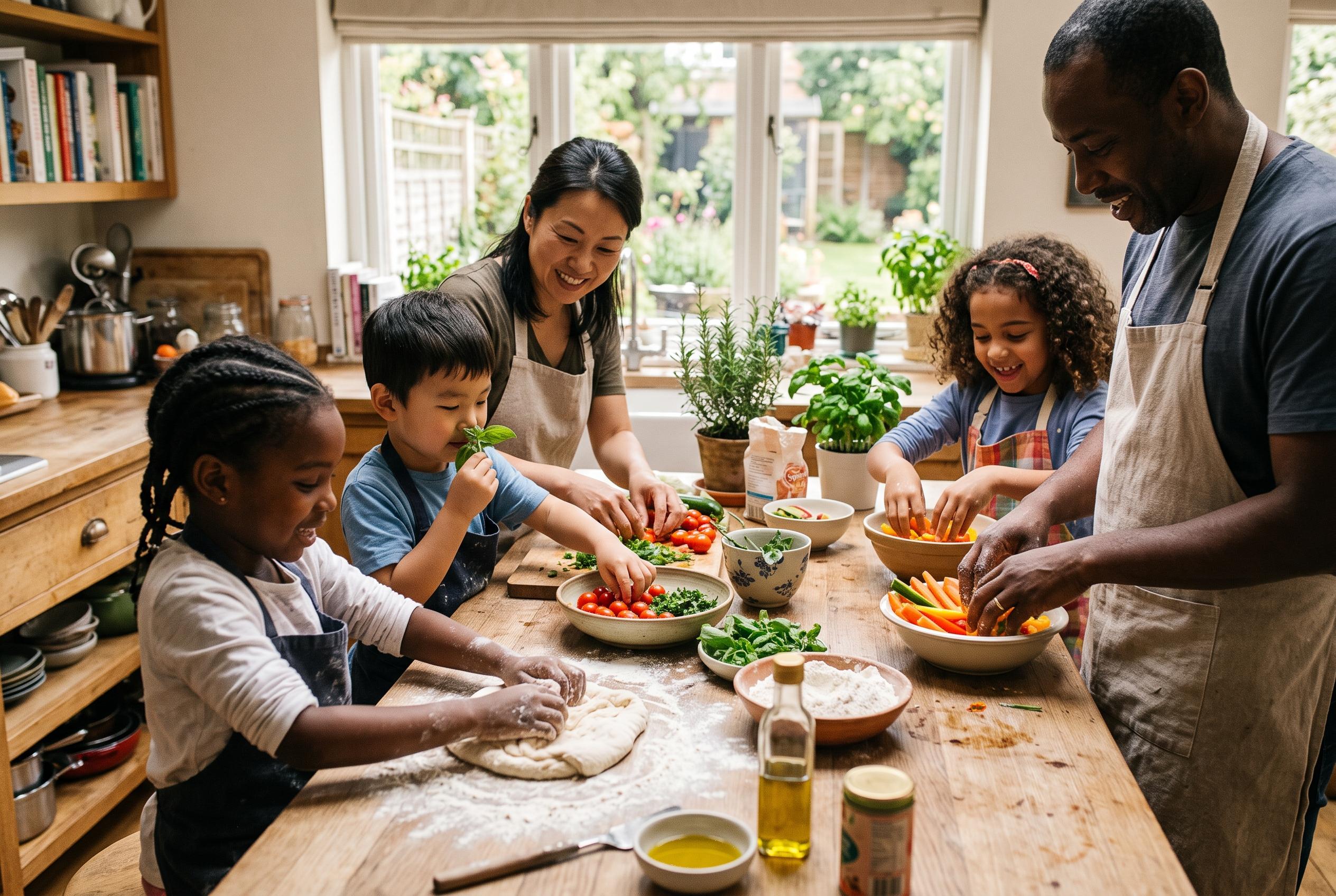

Encouraging children to participate in kitchen activities through fun sensory experiences fosters confidence, creativity, and a positive approach to trying new foods, all while ensuring safety and inclusion in family meals.
Getting children involved in the kitchen can be more than a way to keep them busy. Done well, it can help them explore food through smell, touch, taste and sight, while also building confidence and practical skills. The parent behind the original post describes how a simple evening of meal preparation became a lively sensory activity that encouraged hesitant eaters to look at familiar ingredients in a new way.
The approach was deliberately low-stress. Rather than trying to manage children around hot hobs and sharp tools, the ingredients were prepared in advance and placed in separate bowls. That meant the children could focus on the fun parts of cooking: pouring, stirring, guessing and tasting. One child was given a small, age-appropriate job peeling carrots, a reminder that even modest tasks can give young children a real sense of ownership.
Other parenting and health guides point to the same principle: children are more likely to engage when the kitchen feels like a place for discovery, not just instruction. Making food preparation playful can support creativity, coordination and early learning, including counting, following directions and understanding texture and colour. Health experts also note that children often become more willing to try unfamiliar foods when they have helped prepare them.
The original post turned dinner into a guessing game, with blindfolds used to identify ingredients by smell and taste before sight was allowed as a clue. The writer says the children were especially intrigued by the experiment, and one tried raw courgette and liked it immediately. For parents of fussy eaters, that kind of moment can be as valuable as the meal itself.
Safety remains important, though. Children’s hospital guidance stresses that kitchen jobs should match a child’s maturity and readiness, not just age, and that adults should choose tasks carefully. Simple duties such as rinsing vegetables, stirring, tearing leaves or assembling ingredients can be a good starting point, while more complex or hazardous equipment should wait until a child is ready. As the post suggests, a bit of preparation can turn cooking from a daily chore into a shared activity that helps children learn, grow and feel included.
Disclaimer: This content is for informational purposes only and is not intended to be a substitute for professional medical judgment, advice, diagnosis, or treatment.