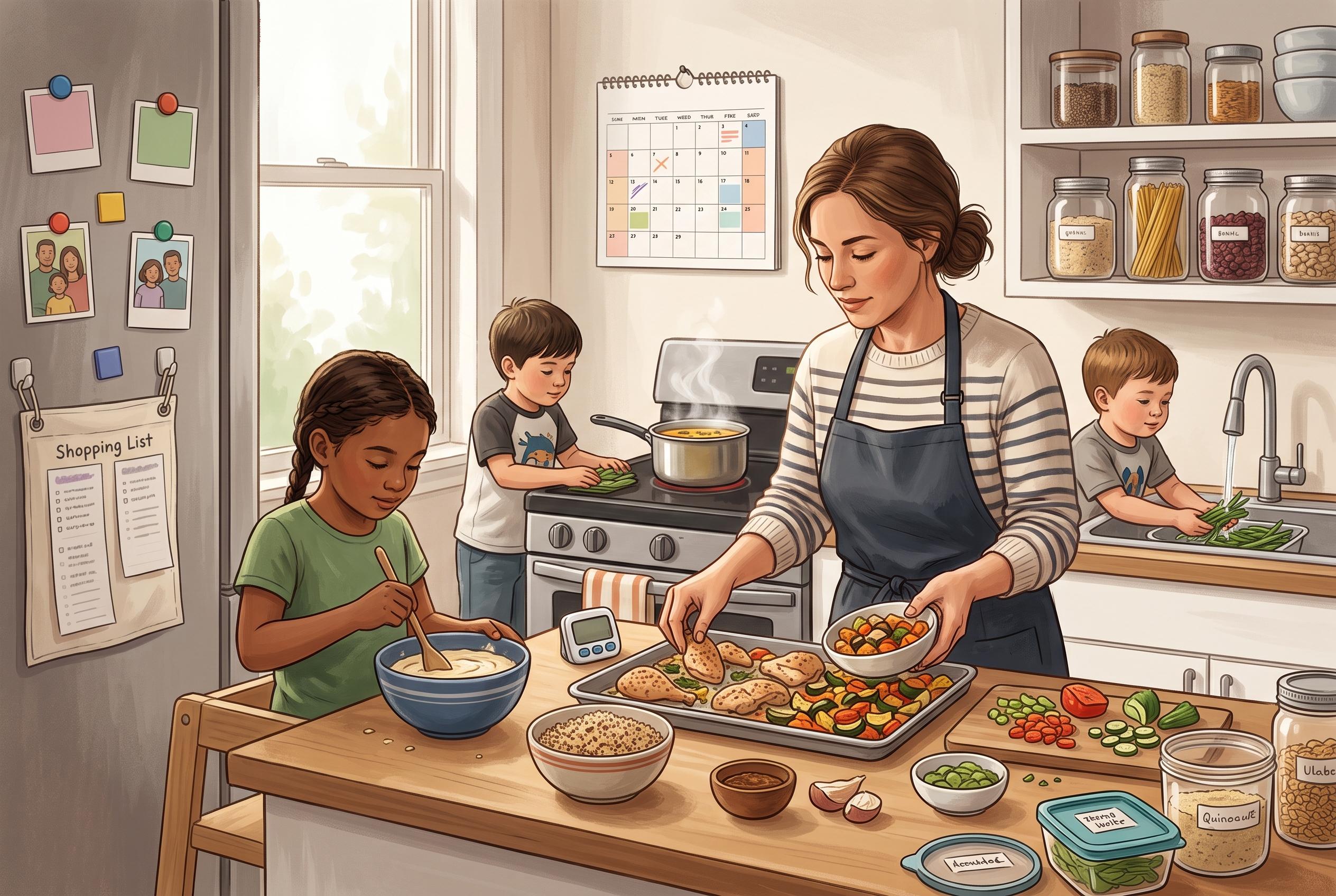

A new guide advocates realistic, flexible approaches to family meal preparation, highlighting the value of planning, shortcuts, and balanced eating without perfectionism to reduce stress and promote nutrition on busy days.
For busy parents, getting a nutritious dinner on the table can feel less like routine and more like a daily test of endurance. The Together to Eat guide argues that the answer is not perfection, but a workable system: plan ahead, keep a few shortcuts on hand and aim for balance across the week rather than at every single meal. Healthline similarly says meal planning can save time, reduce stress and make healthier eating easier to sustain.
That approach starts with realistic planning. Rather than deciding what to cook at the last minute, the article recommends setting out a weekly menu, shopping once and building in a mix of quick midweek dishes, slow-cooked meals, leftovers and a few convenience meals. Mayo Clinic Health System says this kind of preparation can make healthy eating on busy days far more manageable, especially when parents use a simple structure such as the plate method to keep meals balanced.
The guide also pushes back against the idea that every meal must be made from scratch. It suggests that processed foods, ready-made sauces and takeaway meals can still fit into an overall healthy pattern if they are used sparingly and paired with vegetables, wholegrains and protein. That is broadly in line with Health Canada’s advice, which says healthy cooking methods and lower-sodium choices can help limit saturated fat and salt without making family meals complicated.
Speed matters too. Stir-fries, air-fryer meals, grilling, one-pot dishes and slow-cooker recipes all feature prominently in the article because they cut both cooking time and washing-up. Dana-Farber Cancer Institute says techniques such as baking, broiling, grilling, microwaving and roasting can help preserve nutrients while keeping added fat to a minimum, while Health Canada also lists stir-frying, slow cooking and pressure cooking among useful everyday methods.
The same practical logic applies to batch cooking and leftovers. Making extra portions of chilli, curry or pasta sauce can create a second meal later in the week, and cooked rice, roast chicken or extra vegetables can be repurposed into wraps, soups, pasta dishes or stir-fries. FitandWell notes that beginning with one make-ahead meal, rather than an elaborate prep session, can be enough to build a useful habit without overwhelming the household.
The article’s final message is that healthy family cooking should reduce pressure, not add to it. Small swaps such as wholegrains, Greek yoghurt, extra vegetables and better-for-you convenience options can all improve the overall picture. For families with fussy eaters, the advice is to keep one familiar food on the plate and let children have some input into meal choices, while adults keep control of the menu. In the end, the strongest case made by the guide is a simple one: a good family meal is one that is nutritious enough, varied enough and realistic enough to happen again tomorrow.
Disclaimer: This content is for informational purposes only and is not intended to be a substitute for professional medical judgment, advice, diagnosis, or treatment.