

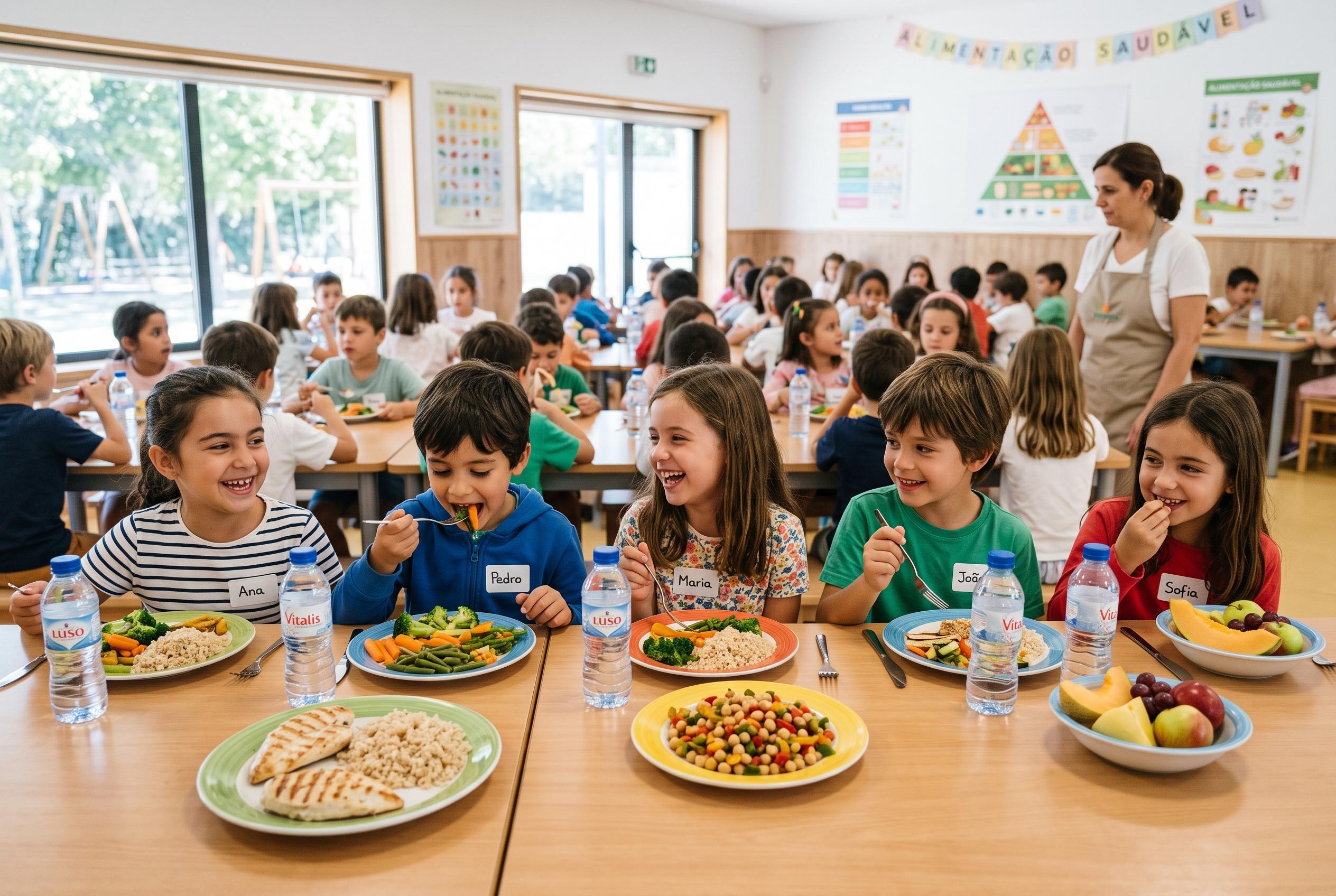

New guidance from Portugal’s education authorities would exclude ultra-processed meat and fish products, limit sweets and require daily legumes, vegetables and water in school canteens.
Portugal’s education authorities have issued new guidance that would reshape what pupils eat in school canteens, moving menus closer to the Mediterranean diet and sharply restricting foods high in salt, sugar and processing. The rules, published on Friday and prepared by EduQA with the Directorate-General of Health, are intended to help schools and other meal providers offer more balanced food while also using school dining rooms as places for food education.
Under the new framework, ultra-processed fish and meat products such as nuggets, fish fingers and seafood sticks are to be excluded, alongside prepared items including croquettes, cod fritters and similar snacks. Sweet desserts will be much less common, with dishes such as ice cream, dairy puddings and jelly limited to once a month. Fresh fruit is to become the default dessert, with schools expected to offer three varieties, while water is to be the only drink available in canteens.
The guidance also pushes schools towards meals built around more fish, pulses, vegetables and fruit, and less red meat. Fish meals should match or outnumber meat dishes, while red meat is to be served no more than four times a month. Eggs are to appear only once a week as the sole animal protein in a dish. Processed meats such as ham and sausages are to be used only sparingly, mainly to add flavour. Legumes are to feature every day, either in soup or as a main component of the meal, and vegetables are also to be served daily.
There is a similar effort to curb sugar, salt and fried food. The rules favour wholegrains, iodised salt and the use of herbs to reduce sodium intake. Frying will be limited to twice a month. The document also encourages local and seasonal ingredients, together with traditional Portuguese dishes and Mediterranean cooking methods. Vegetarian meals must still be available every day, although tofu, seitan, tempeh and comparable meat alternatives are to be offered only twice a month, with legumes taking priority.
The guidance goes beyond menus and into the rhythm of the school lunch break itself. Meals should last at least 30 minutes, not counting time spent queuing, and the wait to enter the dining room should not exceed 10 to 15 minutes. Once inside, vegetables should be placed first in the serving line and fruit displayed prominently and attractively. EduQA said the changes are designed not only to improve nutrition but also to reduce food waste and strengthen fairness, since school meals can provide proper nutrition for pupils regardless of family income.
Disclaimer: This content is for informational purposes only and is not intended to be a substitute for professional medical judgment, advice, diagnosis, or treatment.



