

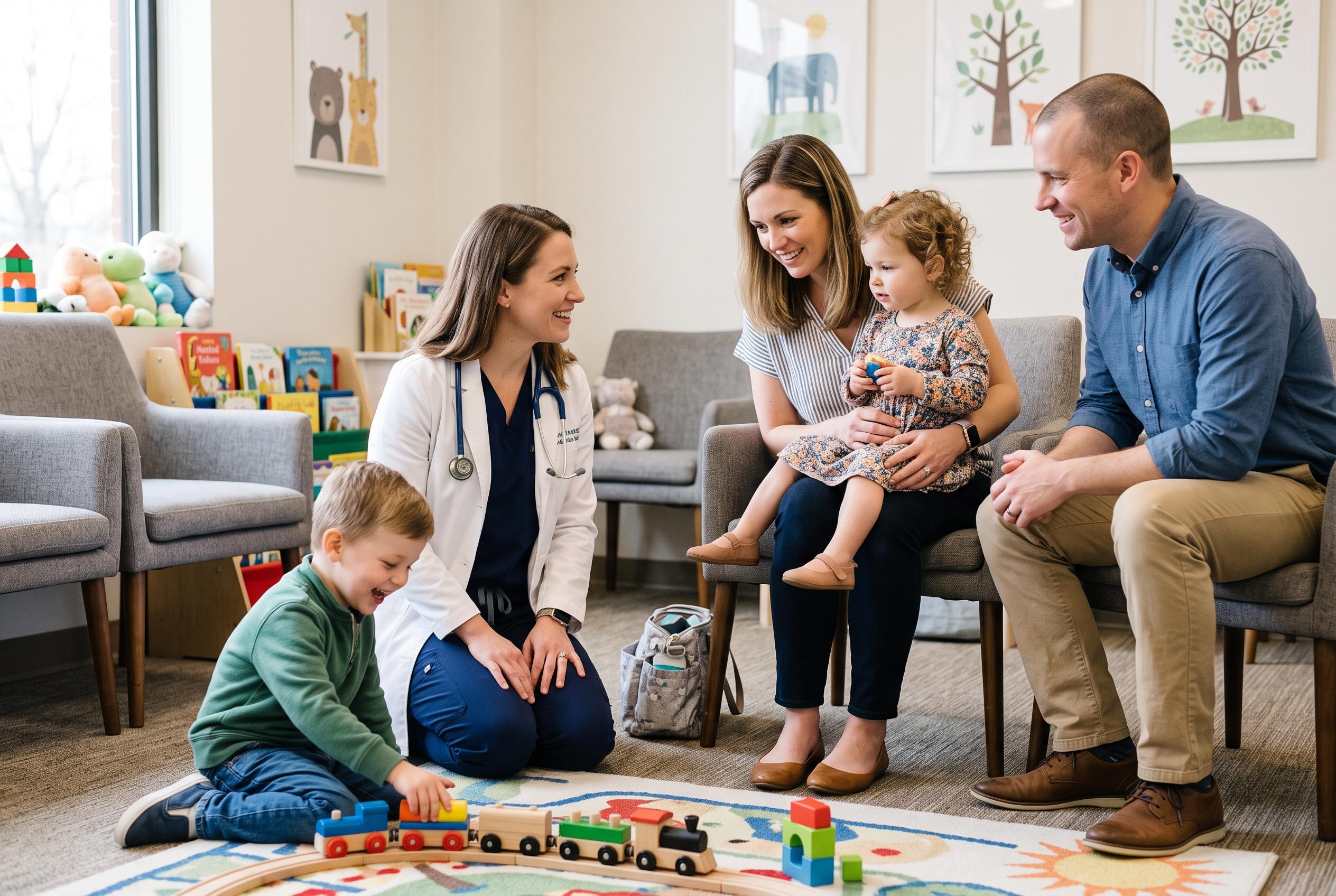

The STARKIDS trial found that structured, family-centred support delivered through paediatric practices improved children’s BMI over 12 months, but the advantage largely disappeared after regular contact ended.
A German trial suggests that childhood obesity treatment may be strengthened by bringing structured support into the place families already know best: the paediatric practice. Researchers behind the STARKIDS study found that a digitally supported, family-centred programme delivered through routine primary care helped more children and teenagers reduce their body mass index than standard counselling alone, at least over the first year of follow-up.
The findings come at a time when the scale of the problem continues to grow. A large forecasting study published in The Lancet and indexed by PubMed found that the combined prevalence of overweight and obesity among children and adolescents doubled between 1990 and 2021, while obesity alone tripled. The same research warned that rates are still expected to rise in every region of the world in the near term, underlining the urgency of treatments that can be delivered broadly rather than only in specialist clinics.
STARKIDS was designed to test that idea in everyday care. Conducted in paediatric and family practices across Baden-Württemberg, the cluster-randomised trial enrolled children and adolescents aged three to 17 who were living with overweight or obesity. Families in the intervention arm received repeated one-to-one sessions over a year from trained medical assistants, supported by an online platform with educational material, videos, games and reminder messages. The comparison group received a shorter, guideline-based counselling session without the same level of follow-up or digital support.
The programme showed its clearest benefit after 12 months. According to the study published in The Lancet Regional Health – Europe, 33% of children in the intervention group achieved a clinically meaningful drop in BMI z-score, compared with 22% in the control group. Mean BMI z-scores also fell more in the intervention arm. By 18 months, however, the difference had largely disappeared, suggesting that the digital component alone was not enough to sustain progress once regular face-to-face contact ended.
That pattern points to one of the trial’s key lessons: families seem to benefit from ongoing personal contact, not just information delivered online. The researchers said the programme was well received, with strong attendance at the in-person sessions and high levels of satisfaction among parents, adolescents, paediatricians and medical assistants. They also reported encouraging participation from families in the first phase, although uptake was poor when the programme moved to a later step that involved additional sessions through public health services.
The study also sheds light on the burden already present in many of these families. Participants entered the trial with a very high average BMI percentile, and many had signs that obesity was affecting their health, including snoring, headaches, concentration problems and foot or leg issues. A substantial minority also showed indications of fatty liver disease on ultrasound. In line with wider evidence linking parental weight with childhood obesity, many of the primary carers were mothers with overweight themselves.
For the researchers, the most practical implication is that paediatric practices may be able to offer a scalable first line of obesity care if the support is structured carefully and extended over time. They propose a revised stepped-care model in which brief counselling is offered first, followed by more intensive practice-based support for families who need it. The approach, they argue, could fit routine outpatient care more easily than programmes that rely on separate services or highly specialised settings.
Disclaimer: This content is for informational purposes only and is not intended to be a substitute for professional medical judgment, advice, diagnosis, or treatment.



