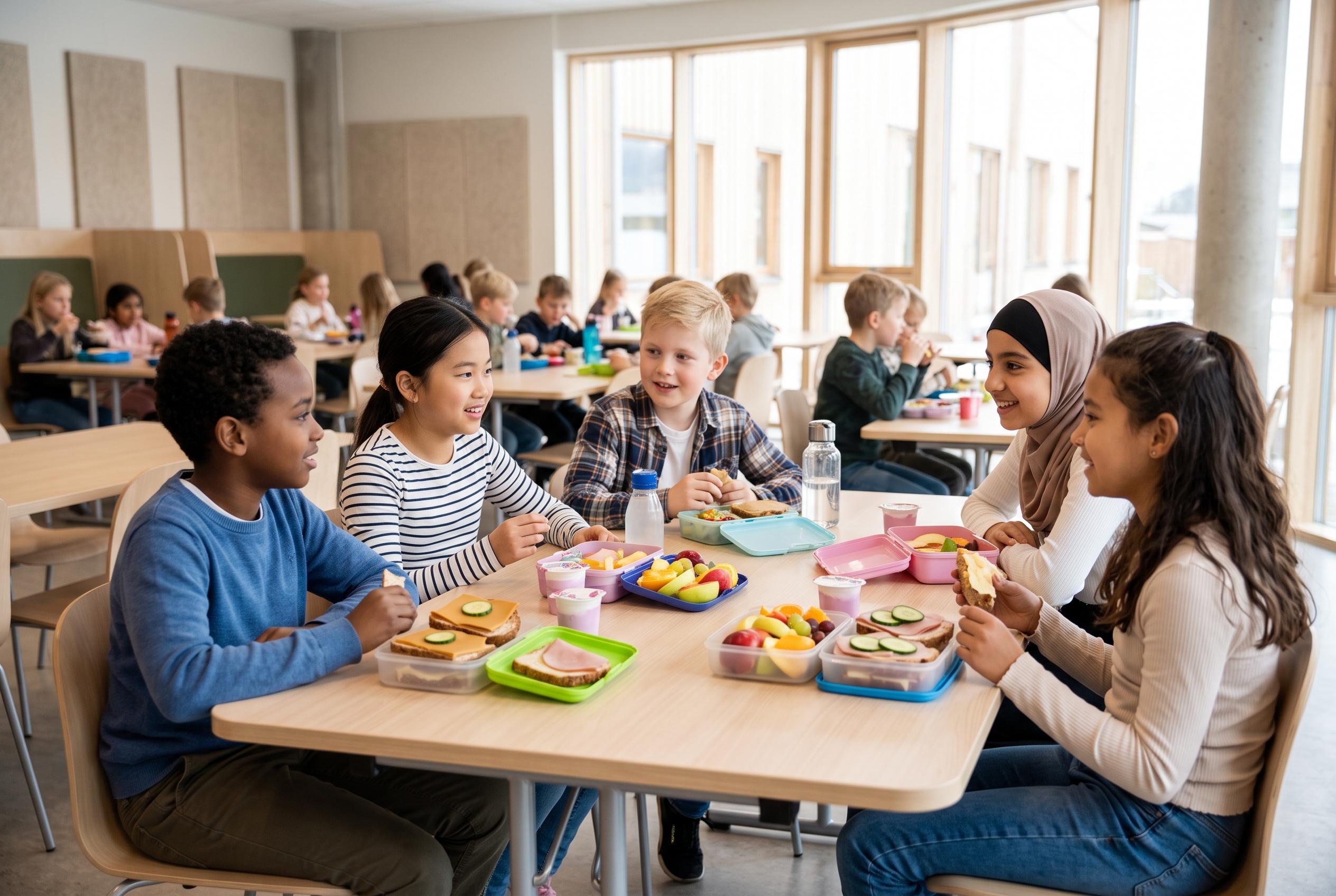

A recent report highlights the importance of fostering an inclusive lunchtime environment in Norwegian schools, urging open dialogue over food differences to prevent social pressure and promote equality among pupils.
A new school year can quickly become a season of comparison as well as learning, and one question raised in a recent report in Fædrelandsvennen was how parents and schools should deal with children who bring what some may see as overly fancy lunchboxes. The national adviser quoted by the paper gave a simple answer: be open. The point, as the article framed it, is less about policing food than about preventing embarrassment and keeping the classroom a place where children feel equal.
That advice fits with the Norwegian Directorate of Health’s guidance on meals in school, which treats lunch as more than a break between lessons. The directorate says school meals should be well organised, safe and socially supportive, because what children eat at school can affect both health and learning. Its guidance also stresses timing, supervision, hygiene and the physical and social setting around meals.
In practice, that means the lunchbox can become part of the school environment, even when nobody intends it that way. A packed meal that looks unusual or expensive may prompt envy, teasing or pressure to compare. The sensible response, according to the national adviser’s message, is not to shame the child or the family, but to address the atmosphere around food in a calm and inclusive way.
The directorate’s background material on the guidelines underlines why this matters. School meals make up a significant part of children’s daily intake, and they also influence the learning environment. That gives schools and parents a shared responsibility: to talk honestly about difference, encourage ordinary and varied food choices, and make sure mealtimes do not become another arena for status.
Disclaimer: This content is for informational purposes only and is not intended to be a substitute for professional medical judgment, advice, diagnosis, or treatment.