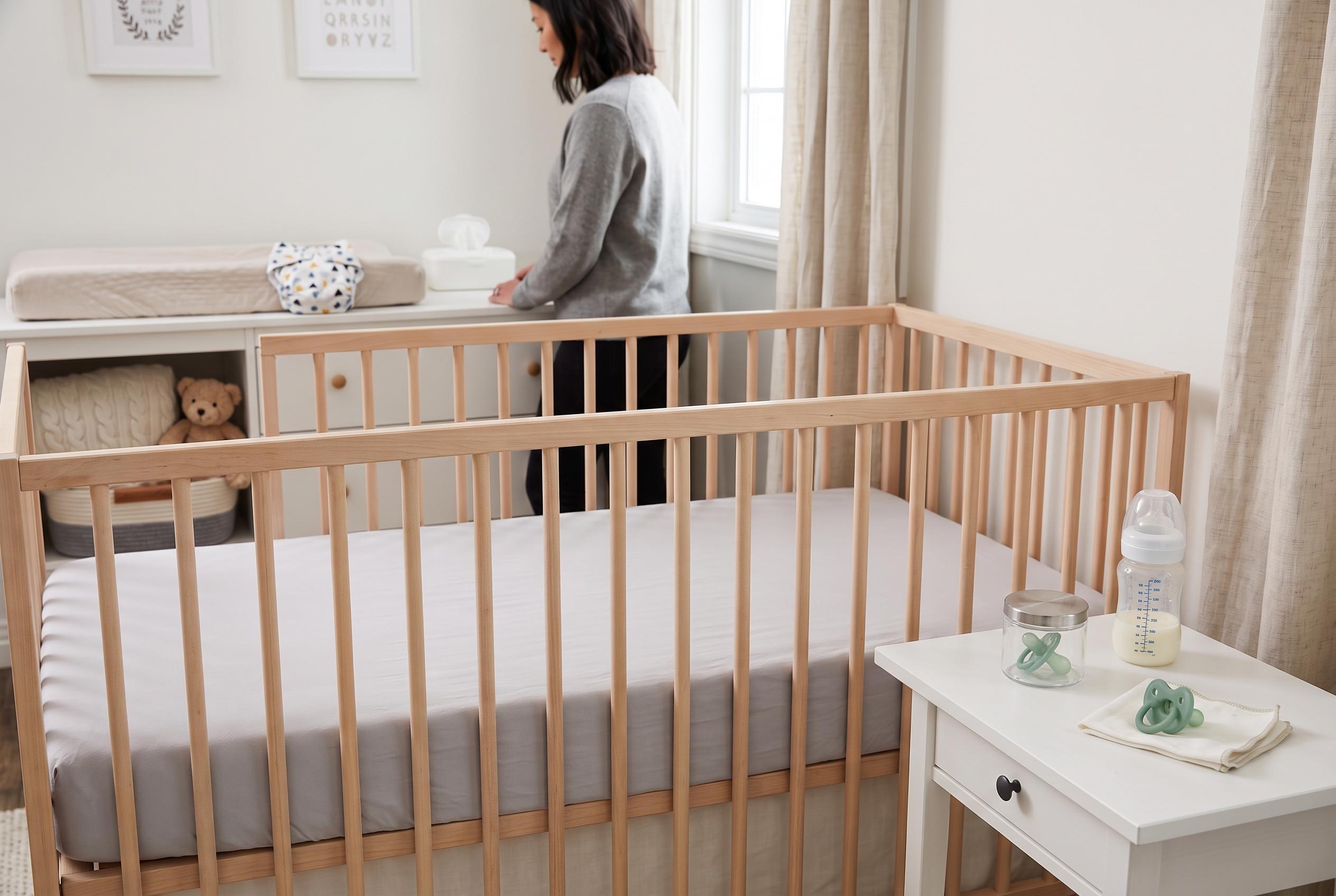

Experts warn that sleeping with infants or improper feeding routines can increase the risks of suffocation, ear infections, and sleep difficulties. Updated guidance emphasises safe sleep environments and practices to protect newborns.
Breastfeeding is widely regarded as the best first food for an infant, but specialists warn that feeding a baby to sleep, or allowing a bottle-feed to continue while a child is already drowsy, can create avoidable risks. Dr Mohammed Abdel Halim, a paediatric and neonatal consultant quoted in the lead report, said the danger depends partly on the child’s age and the way the feed is given, because some common habits can affect breathing, ear health and later sleep patterns.
The main concern is safety. The American Academy of Pediatrics has said that falling asleep while feeding on a bed, sofa or chair raises the risk of sleep-related infant death, particularly if the adult dozes off and the baby is left in an unsafe position. The Safe to Sleep campaign run by the US National Institute of Child Health and Human Development also advises against feeding infants on couches or armchairs, and recommends room-sharing with the baby sleeping in a separate cot or bassinet nearby. That approach can support breastfeeding while reducing the risk of accidental suffocation.
Bottle-feeding in bed carries its own problems. Cleveland Clinic says leaving a bottle in a crib can increase the chances of choking, ear infections and tooth decay once teeth have started to emerge. It also warns that babies can come to rely on feeding as the only way to fall asleep, which may make later sleep training more difficult. The clinic advises feeding before bedtime, keeping the baby upright afterwards and never propping a bottle in the cot.
Dr Abdel Halim also stressed that not every feed before sleep is harmful. A breastfeed as part of a normal bedtime routine can be appropriate, but parents should avoid unsafe sleeping arrangements, such as a baby dozing on a sofa or chair or being left alone with a bottle. After feeding, the safest course is to place the infant on their back on a firm, flat sleep surface designed for babies. Research published in JAMA Pediatrics has also linked bed-sharing with a sharply higher risk of sudden infant death syndrome, underscoring why sleep space and feeding position matter so much in the first months of life.
Disclaimer: This content is for informational purposes only and is not intended to be a substitute for professional medical judgment, advice, diagnosis, or treatment.