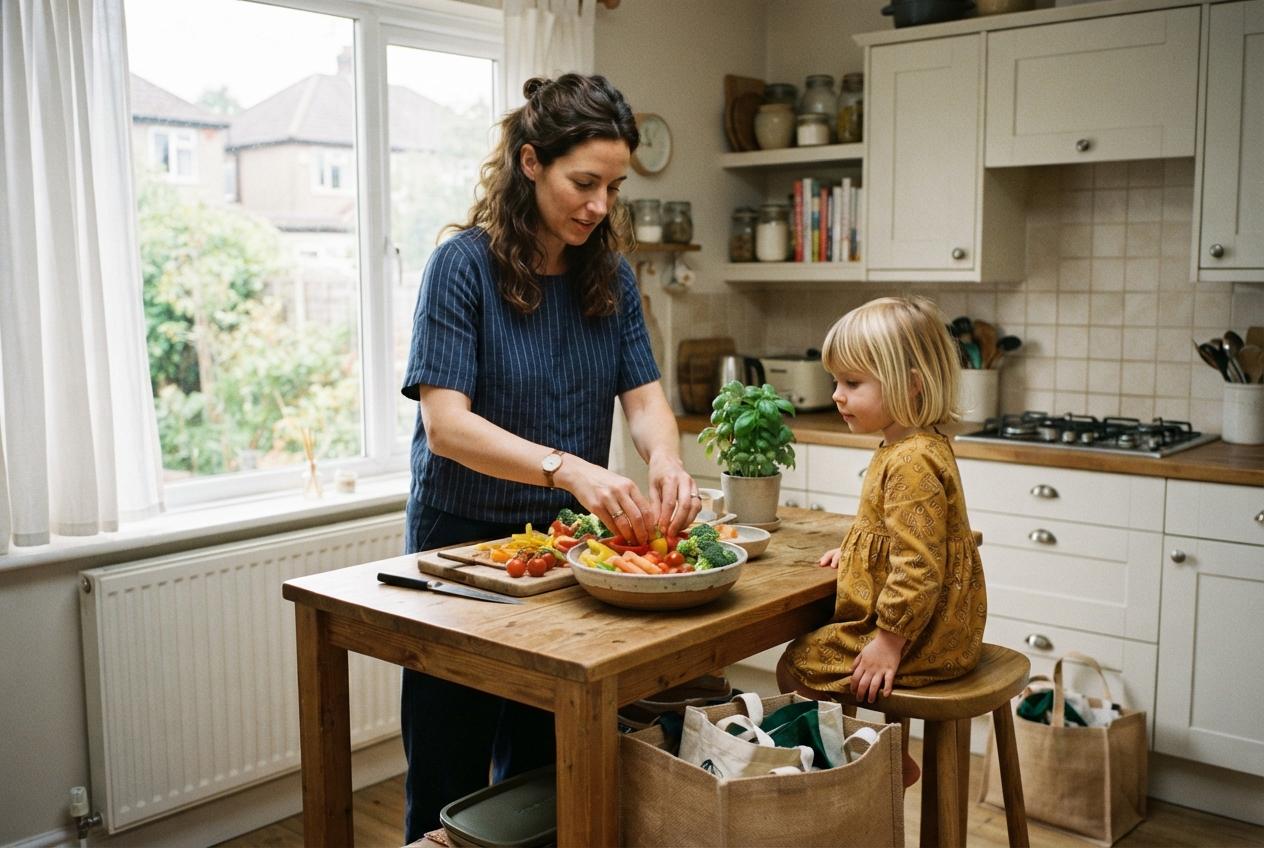

Growing evidence suggests that patience, presentation, and family habits are key to encouraging children to accept vegetables, shifting away from coercive tactics to a more rounded, routine approach.
For many families, persuading a child to eat vegetables can feel like a daily stand-off. But a broad body of nutrition and behavioural research points to the same conclusion: pressure rarely helps, while steady exposure, small adjustments to presentation and a calmer mealtime atmosphere often do. Experts cited by the American Academy of Pediatrics, the CDC, Stanford Medicine Children’s Health and university researchers say the aim is not to force a breakthrough at one sitting, but to make vegetables a routine part of family life.
One of the most reliable findings is that children usually need to encounter a new vegetable many times before they accept it. Research summaries on repeated exposure suggest that taste familiarity builds slowly, particularly in the pre-school years when food neophobia tends to peak. Marion Hetherington of the University of Leeds has argued that this stage is especially important for shaping later preferences, and the broader evidence supports persistence rather than insistence.
Timing also matters. Barbara Rolls of Penn State University has found that children are more likely to eat vegetables when they are offered first, or when they are hungriest, rather than left to compete with more tempting foods later in the meal. Penn State research suggests that increasing the share of fruit and vegetables on a child’s plate can lift intake, while practical guidance from HealthyChildren.org and Stanford Medicine Children’s Health recommends adding produce to snacks and every meal where possible.
Researchers also point to portion design as a useful lever. Studies indicate that children often eat roughly the same overall volume regardless of how much of the plate is filled with vegetables, which means a better balance can improve diet quality without making meals feel restrictive. The Penn State work found that increasing the amount of fruit and vegetables served by 50% could boost consumption, while other advice suggests mixing vegetables into familiar dishes so they feel less like a separate challenge.
Presentation can make a surprising difference too. The CDC says children are more willing to try foods that look fun, familiar or chosen from a small set of options, and Stanford Medicine Children’s Health recommends involving them in selecting and preparing ingredients. Other guidance points to simple changes such as cut-up produce, colourful combinations and vegetables served in ways that are easy to pick up, with food shape and layout helping to lower resistance.
Family habits are just as important as the food itself. The evidence reviewed in PubMed highlights parental modelling and a positive eating environment as key factors, while Stanford Medicine Children’s Health notes that children are more likely to copy adults who regularly eat fruit and vegetables. Shared meals, according to HealthyChildren.org and the CDC, can also help establish routines in which produce becomes the default rather than the exception.
Perhaps the most important point is that vegetables work best when they are not treated as a battleground. Researchers and child health organisations alike favour curiosity over coercion: letting children touch, smell and help prepare foods, offering familiar items alongside new ones, and trying again after a pause if something is refused. The lesson from the science is straightforward. Change tends to come from repetition, example and patience, not from a final argument at the dinner table.
Disclaimer: This content is for informational purposes only and is not intended to be a substitute for professional medical judgment, advice, diagnosis, or treatment.