

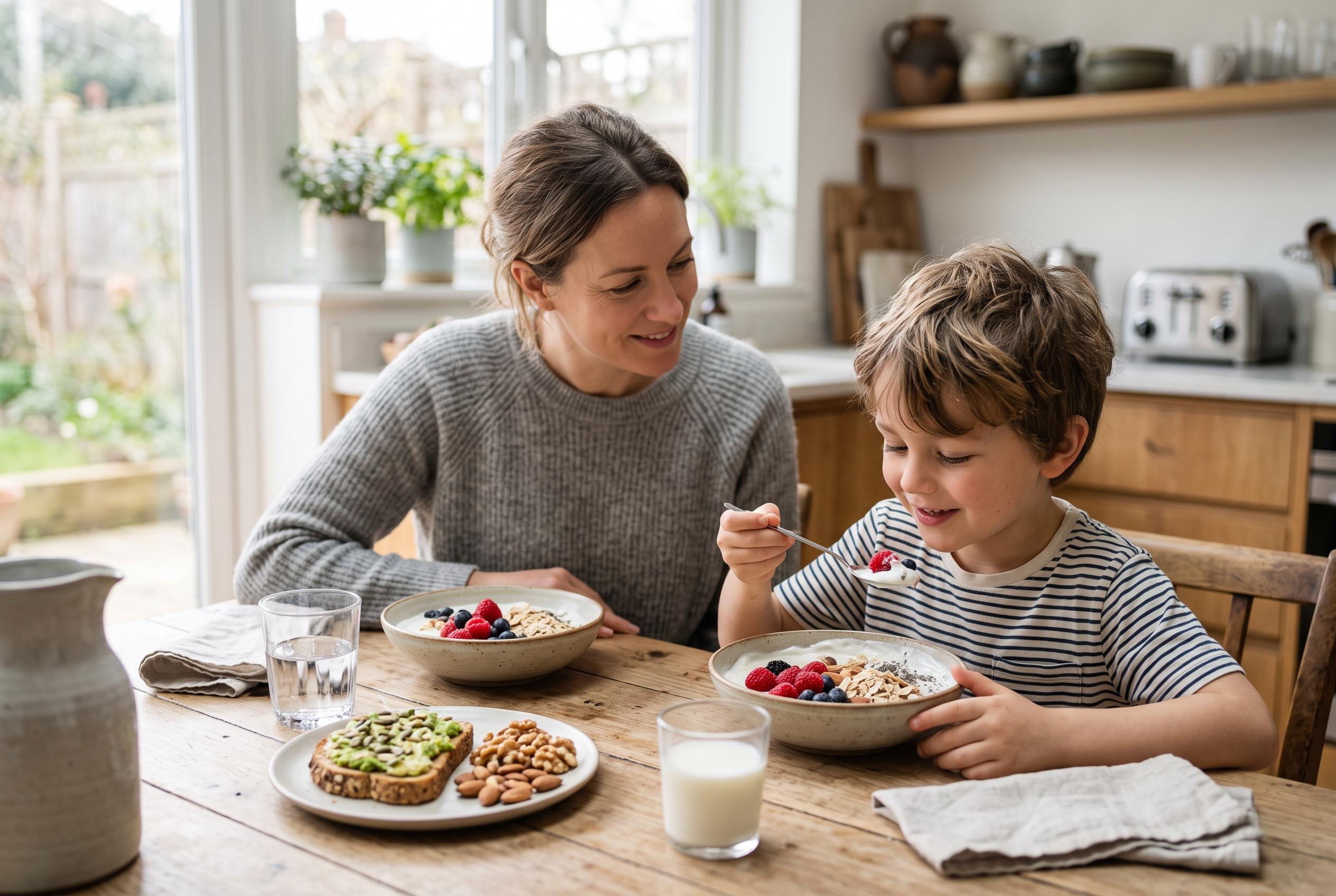

A balanced breakfast with adequate protein, fibre, and healthy fats can improve satiety, sustain energy, and curb mid-morning cravings, according to nutrition experts.
A breakfast that truly lasts until lunchtime usually has less to do with willpower than with composition. Meals that combine enough calories with protein, fibre and fat tend to be more satisfying than a light bowl of something that looks virtuous but leaves people reaching for snacks by mid-morning. Health experts cited by Healthline and the Cleveland Clinic say protein in particular can help curb appetite, support steadier energy and reduce cravings later in the day.
That is why the most useful way to think about breakfast is not as a rigid category, but as a balance. Protein brings staying power, fibre adds bulk and slows digestion, and fat helps a meal feel complete. When those elements are missing, breakfast often fails to do the job. When they are present together, even a simple plate can carry someone comfortably through a busy school run, commute or morning of meetings.
For families, that approach can be especially practical. A child who is hungry before the first lesson, or a parent who is running on coffee alone, usually needs something more substantial than toast or fruit on its own. Registered dietitian Julia Zumpano, quoted by the Cleveland Clinic, suggests aiming for about 20 to 30 grams of protein at breakfast, and that target can be reached with familiar ingredients such as eggs, Greek yoghurt, cottage cheese, tofu or quinoa. Healthline likewise notes that a protein-rich morning meal may help people feel fuller for longer and avoid overeating later in the day.
The easiest way to build that kind of meal is to start with one anchor ingredient, then add support. Eggs, Greek yoghurt, cottage cheese and tofu work well as protein bases. Oats, berries, wholegrain bread, fruit and vegetables bring fibre. Avocado, nuts, seeds and nut butter add healthy fats and make the meal more satisfying. Put together, those pieces can turn even a quick breakfast into something far more substantial than the sum of its parts.
That logic carries through the range of breakfast ideas in the article. No-cook options such as toast with hummus, yoghurt and peanut butter, or fruit-forward smoothies with nut butter, can become more filling with a little extra protein on the side. Make-ahead choices such as overnight oats, muffins, breakfast bowls and chia-based dishes are useful for busy mornings because they can be prepared in advance without sacrificing balance. The same principle applies to savoury plates: sourdough with eggs and yoghurt, sweet potato toast with toppings, or a breakfast burrito packed with tofu, beans, quinoa and avocado all deliver the mix of protein, fibre and fat that keeps hunger in check.
There is also a wider point here about breakfast and health. Cleveland Clinic says breakfast can help provide energy at the start of the day, while a protein-rich version may help reduce snacking. Healthline also points out that protein plays a role in muscle maintenance and appetite control, which helps explain why a more substantial breakfast can be useful well beyond the morning itself. For older adults, according to Medical News Today, a protein-rich breakfast may also support strength and independence by helping to meet daily protein needs more consistently.
In practical terms, the best breakfast is often the one that can be repeated without much effort. A bowl of yoghurt with fruit and seeds, eggs on toast with avocado, or overnight oats topped with nuts may not sound elaborate, but that is the point. The goal is not to create the most impressive plate; it is to build a meal that keeps everyone going, whether they are heading to school, work or simply trying to avoid an early snack attack.
Disclaimer: This content is for informational purposes only and is not intended to be a substitute for professional medical judgment, advice, diagnosis, or treatment.



