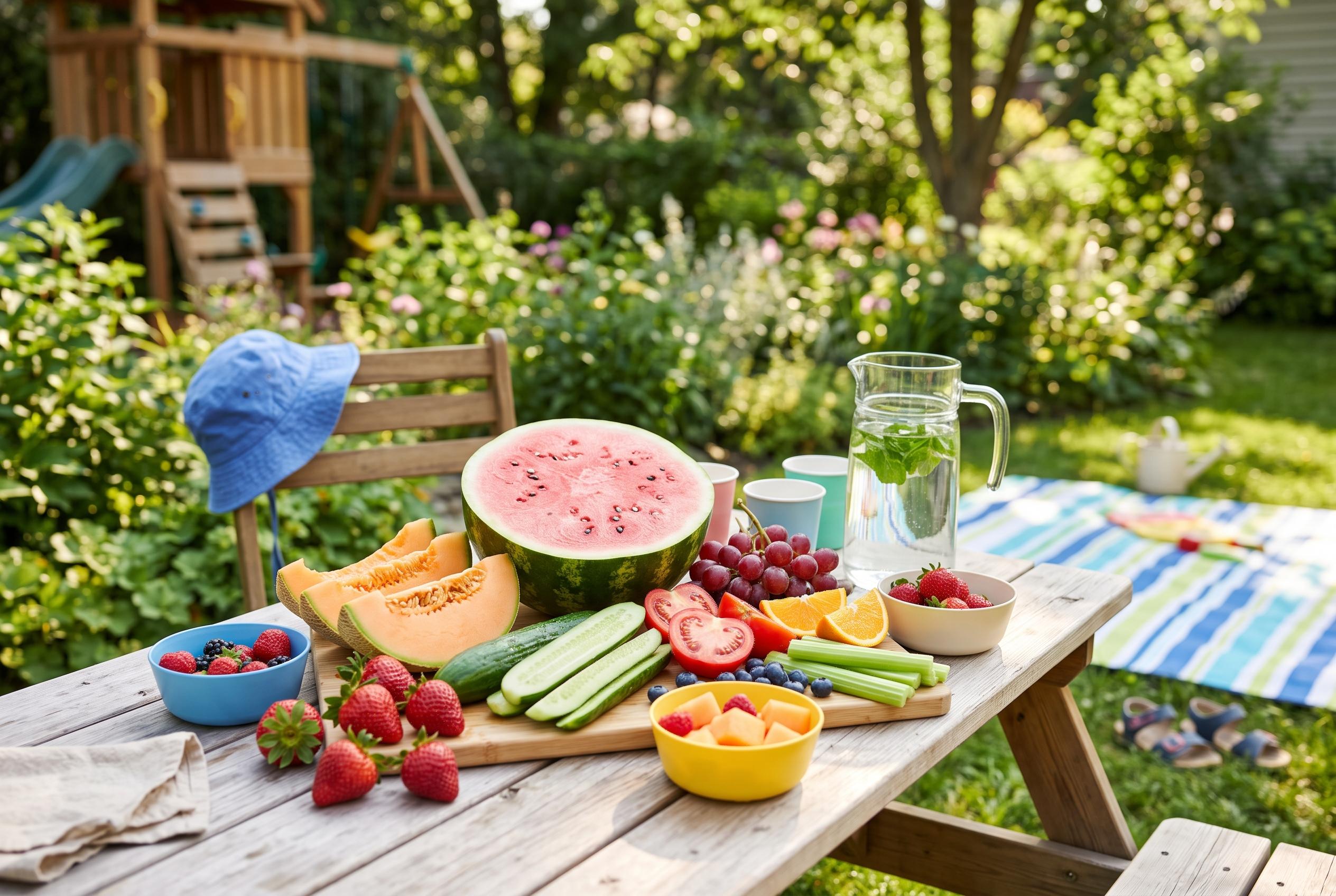

As temperatures rise, experts emphasise the importance of moisture-rich foods like fruit and vegetables to help children stay hydrated, offering an edible alternative to traditional drinks on hot days.
As temperatures climb, parents often find themselves nagging children to drink more water. But hydration does not come only from a glass or bottle. Food can make a meaningful contribution too, particularly when a child is too busy playing to sit down for a drink.
The Conversation said moisture from food accounted for 29% of total water intake among Australian children and adolescents, while research involving 4- to 10-year-olds found that higher fruit and vegetable consumption was linked with better hydration. Water-rich foods should not replace regular drinks, but they can help fill the gap on hot days.
Fruit is the most obvious place to start. Watermelon, strawberries, oranges, peaches and melon are all naturally high in water, and watermelon in particular is often described as about 92% water. Strawberries are similarly moisture-rich and also bring extra fibre and vitamin C to the plate.
If a child is resisting another drink, changing the format may help. Homemade ice lollies made from diluted fruit juice, yoghurt or blended fruit can offer fluid in a more appealing form. Recipes from food sites show that they can be made simply and adjusted to reduce sugar, while still giving children some control over what goes into them.
Vegetables deserve a place on hot-weather snack plates too. Cucumbers, tomatoes and peppers are all high in water, and cucumbers are especially useful because they are crisp, cooling and easy to serve without cooking. Paired with hummus or cream cheese, they can work as a light snack or part of a lunchbox.
Dairy foods can also contribute to fluid intake. Yoghurt and milk both contain water, and British research has linked yoghurt consumption with higher intakes of nutrients such as calcium, iodine and riboflavin. Fortified dairy alternatives may serve a similar role, although their nutritional value varies from product to product.
A snack-style meal can pull several of these ideas together. A plate with melon, berries, cucumber sticks, yoghurt, cheese, hummus and crackers may be easier to manage than a hot dinner when the weather is oppressive. Even so, hydration from food works best as a supplement to drinks, not a substitute for them.
Disclaimer: This content is for informational purposes only and is not intended to be a substitute for professional medical judgment, advice, diagnosis, or treatment.