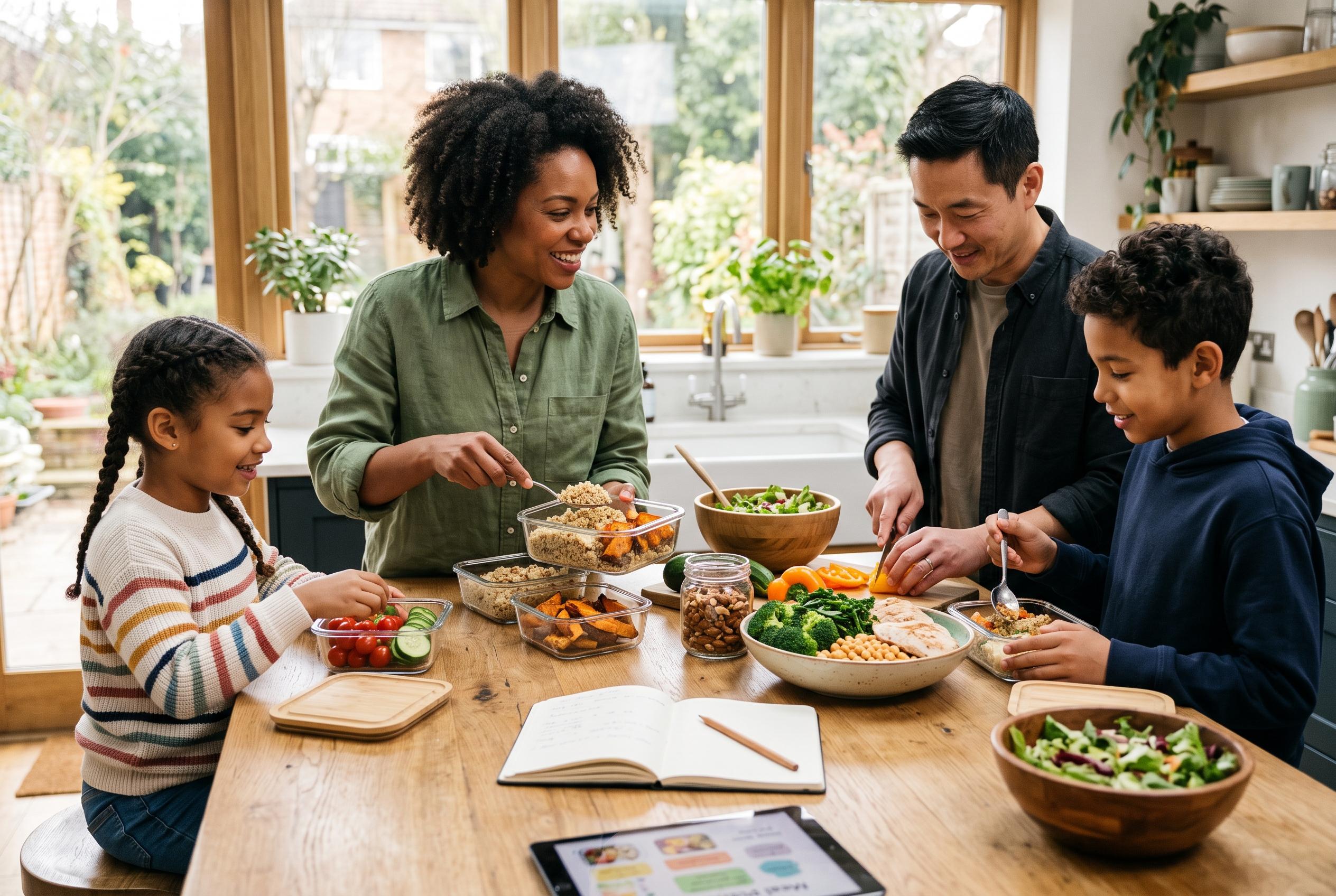

Public health experts stress that personalised, portion-aware diets rooted in balance and planning are essential for improving global health, as recent guidance from WHO, CDC, and Harvard underscores the importance of tailored strategies, mindful choices, and sustainable routines.
The question posed in a Kashmir Observer health video published on Friday – what should we eat, and how much of it – lands on a point that public-health agencies have been making with increasing urgency. The World Health Organization says unhealthy diets are a major risk factor for disease and disability, while the US Centers for Disease Control and Prevention says healthier eating depends not only on food choice but also on planning, portion awareness and the routines people build into daily life. (who.int)
That matters because there is no single formula that fits everybody. In the video, presenter Aabroo Hussain speaks to Aisa Trumboo, a senior dietician and clinical nutritionist at Paras Health Srinagar, about portion control and balanced eating. Broader guidance from WHO and Harvard’s Nutrition Source points in the same direction: a healthy diet should rest on what WHO calls “adequacy, balance, moderation and diversity”, but the exact make-up varies with age, body size, activity, lifestyle, culture and what food is actually available. Harvard also notes that its plate model is not built around a fixed calorie target or a set number of servings for every person. (who.int)
For readers looking for a practical rule of thumb, Harvard’s Healthy Eating Plate offers one of the clearest. It suggests filling half the plate with vegetables and fruits, a quarter with whole grains and a quarter with healthy protein, with water, tea or coffee preferred over sugary drinks. The guide adds a detail many people miss: potatoes are not counted as vegetables in this model because of their effect on blood sugar. The NHS uses a similar everyday framework in its Eatwell Guide, which divides daily intake across five main food groups and places foods high in fat, salt and sugar outside the main guide because they are not necessary for a healthy, balanced diet and should be eaten less often and in small amounts. (nutritionsource.hsph.harvard.edu)
The strongest advice, however, is often the least glamorous: plan ahead. The CDC says people now eat in many settings – at home, at work, in restaurants and even in the car – and that preparing meals at home can help people avoid less healthy drive-through choices. Its guidance recommends prioritising protein at each meal, including foods such as eggs, beans, lentils, nuts, seeds, soy, fish, poultry and meat, alongside vegetables and fruits in their original form, whole grains, healthy fats such as olive oil and dairy foods without added sugars. The same advice says to limit saturated fat, highly processed foods and added sugars; the NHS likewise stresses that balance applies across everything eaten and drunk in a day, not just the main meals. (cdc.gov)
When it comes to quantity, the simplest point may also be the easiest to ignore. The CDC says that “in addition to what you eat, how much you eat also matters to your health”, including extras such as sauces and condiments. Mayo Clinic’s portion-control guidance adds that people routinely eat more when they are served more, and recommends practical checks rather than guesswork: measuring cups and spoons, food labels, or familiar objects used as visual cues for serving sizes. Mayo also notes that some foods, particularly fruit and vegetables, provide relatively few calories even in larger portions, which is one reason a balanced plate does not mean every food should be served in the same amount. (cdc.gov)
Snacking is another area where healthy intentions often unravel. The CDC advises keeping straightforward options on hand, such as chopped celery, carrots and cucumbers, canned fruit without added sugar, nuts and seeds, plain yoghurt, and wholegrain crackers or breads. It also warns against eating straight from the packet, recommending that snacks be portioned into a bowl or container first. That small change is meant to make mindless overeating less likely, especially with foods that are easy to consume quickly. (cdc.gov)
Eating out presents its own challenge because portions are often inflated before a meal even begins. On one CDC page aimed at meal planning more generally, diners are advised to check menus online, split a main dish or ask for a take-away box and set aside half the meal as soon as it arrives. A separate CDC guide on eating out says restaurant portions “have gotten a lot bigger” and recommends choosing baked, steamed, grilled or broiled dishes, limiting fried or creamy options, and ordering sauces and dressings on the side. The broader message is that portion control is easier when the decision is made before the first few bites, not halfway through the plate. (cdc.gov)
The public-health stakes are larger than a single meal plan or a single video discussion. WHO says healthy dietary habits start early in life and often carry through from childhood and adolescence into adulthood. For everyone older than 10, it recommends at least 400 grams of fruit and vegetables a day and at least 25 grams of naturally occurring dietary fibre, while also advising that no more than 10% of total energy should come from saturated fat and no more than 1% from trans fat. Read alongside the NHS and Harvard guides, the takeaway is less about strict dieting than about repeatable proportions: more minimally processed foods, more fibre and produce, less ultra-processed food, and a realistic sense of how much is enough. (who.int)
Disclaimer: This content is for informational purposes only and is not intended to be a substitute for professional medical judgment, advice, diagnosis, or treatment.