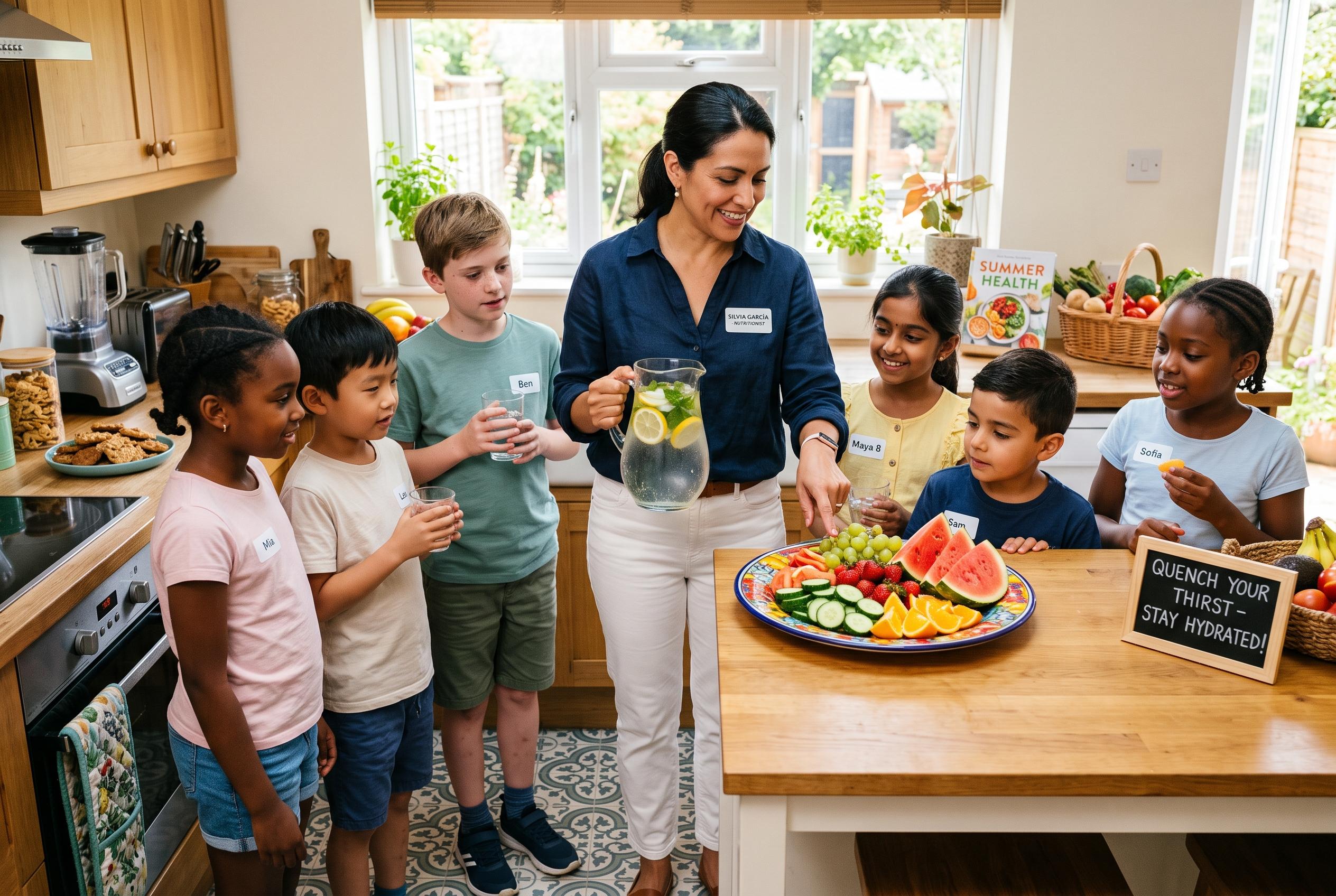

Nutritionist Silvia García highlights the importance of regular water reminders and mindful eating to keep children safe and healthy during hot days, encouraging parents to foster good hydration habits with practical signs and nutritious foods.
Children need regular reminders to drink water during hot weather and busy days, because many simply forget while playing, according to nutritionist and psychoneuroimmunologist Silvia García. She said one common mistake is waiting until children ask for water themselves. García added that older children may need roughly 1.5 to 2 litres a day, although the right amount depends on age, body weight, physical activity and temperature.
She also pointed to simple signs that can help parents judge whether a child is well hydrated. Frequent urination and very pale yellow urine are useful clues, she said, alongside good energy levels, a moist mouth and the absence of symptoms such as tiredness, irritability or headaches. Johns Hopkins Medicine makes a similar point, saying urine colour can be a practical indicator of hydration in children during summer.
The American Academy of Pediatrics says water, along with milk, is the best drink for children because it has no added sugar and no calories. Its guidance also encourages parents to steer children away from sugary drinks, while the Cleveland Clinic advises that fruit and vegetables with high water content, such as watermelon and cucumbers, can help support hydration. García made the same point, naming foods such as melon, strawberries, peaches, nectarines, cucumber, tomato and lettuce as useful additions to a child’s diet in warm weather.
García warned that holidays should not become an excuse for constant snacking, with meals replaced by a stream of small bites through the day. She also said ice cream and fizzy drinks should not become routine choices, and stressed the value of planning ahead by packing water, washed fruit, healthy snacks and food prepared at home. That, she said, helps families keep food safely cooled and reduces the risk of food poisoning in high temperatures. Even so, she said children do not need to eat perfectly every day; the key is to keep meals varied, built around fresh foods and suited to their needs over the course of the week.
Disclaimer: This content is for informational purposes only and is not intended to be a substitute for professional medical judgment, advice, diagnosis, or treatment.