

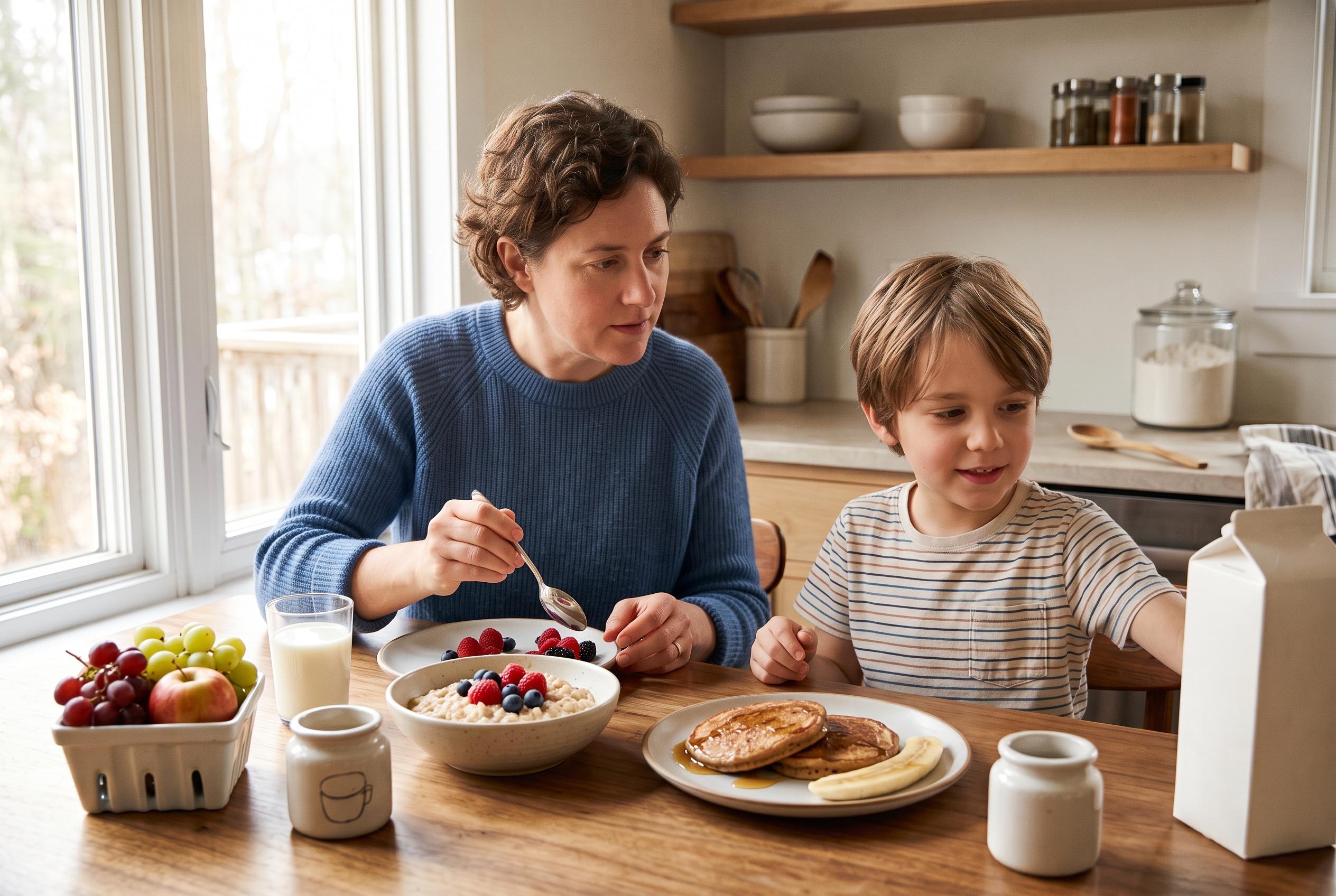

Families managing egg allergies can now access a wide range of quick, nutritious, and adaptable breakfast options that skip eggs altogether, emphasising convenience, variety, and careful ingredient awareness.
For families navigating egg allergy, morning meals do not have to become a daily compromise. Across allergy and recipe sites, the message is consistent: a useful egg-free breakfast is one that is quick, filling and flexible enough for both picky eaters and busy carers. Dietitian-approved collections from HealthECooks and EatWell101 also emphasise that it is possible to keep breakfasts nourishing without relying on eggs, provided protein, texture and labels are handled with care.
One of the simplest starting points is food that needs little or no cooking. Fruit-and-yoghurt parfaits, overnight chia pudding and oatmeal remain popular because they can be assembled in minutes and adapted to taste. Private Home Cooking Service highlights parfaits, oatmeal with toppings, smoothie bowls and toast as practical options for food sensitivities, while the original guide points to yoghurt parfaits and banana oatmeal cups as especially manageable on school mornings.
For children who prefer a savoury breakfast, there are more options than many families realise. Sweet potato hash, breakfast burritos and breakfast quesadilla-style meals can all be built without eggs while still feeling substantial. Breakfast Feast includes sweet potato hash and aquafaba-based chickpea ideas among its allergy-friendly suggestions, and The Allergy Chef points to casserole-style breakfasts as another route for households that want something heartier and suitable for batch cooking.
Batch preparation can make the biggest difference on hectic weekdays. Mini muffin cups, breakfast bars and breakfast meatballs are all designed to be made ahead, frozen and reheated when time is short. The original recipe collection makes that case clearly, noting that mini breakfast muffin cups and apple-cinnamon bars hold up well in the fridge or freezer, while meatballs offer a finger-food format that works particularly well for younger children.
Texture matters almost as much as taste, especially for children who reject crunchy toppings or mixed consistencies. The most successful egg-free breakfasts often keep soft foods separate from crisp ones, so a child can choose what to combine. That approach appears repeatedly in the related recipes, from parfaits with toppings served on the side to rice pudding, chia pudding and smoothies that can be adjusted for a smoother finish.
Label reading remains essential, particularly because hidden egg, wheat and dairy can turn up in unexpected places. The original guide repeatedly warns that tortillas, granola, oats and plant-based milks may all require closer inspection, especially if a child has more than one allergy. That caution is echoed across the broader allergy-focused recipes, which place equal emphasis on pantry management and ingredient swaps rather than on any single dish.
For families trying to broaden protein at breakfast without eggs, beans, seed butters, yoghurt, tofu and meat all play a role. HealthECooks notes that egg-free breakfasts can still be protein-rich, and Kitch Prep says plant foods, grains and beans can cover the morning meal without falling back on eggs or dairy. In practice, that means a child might eat a chia pudding one day, a black-bean burrito the next and a savoury muffin cup later in the week.
The strongest theme across these ideas is not novelty but repetition with variety. A short rotation of dependable breakfasts is usually easier to sustain than a long list of recipes that sound better than they fit into real life. The original guide’s most practical advice is also its most realistic: start with the easiest options, keep the favourites in regular circulation and build from there.
Disclaimer: This content is for informational purposes only and is not intended to be a substitute for professional medical judgment, advice, diagnosis, or treatment.



