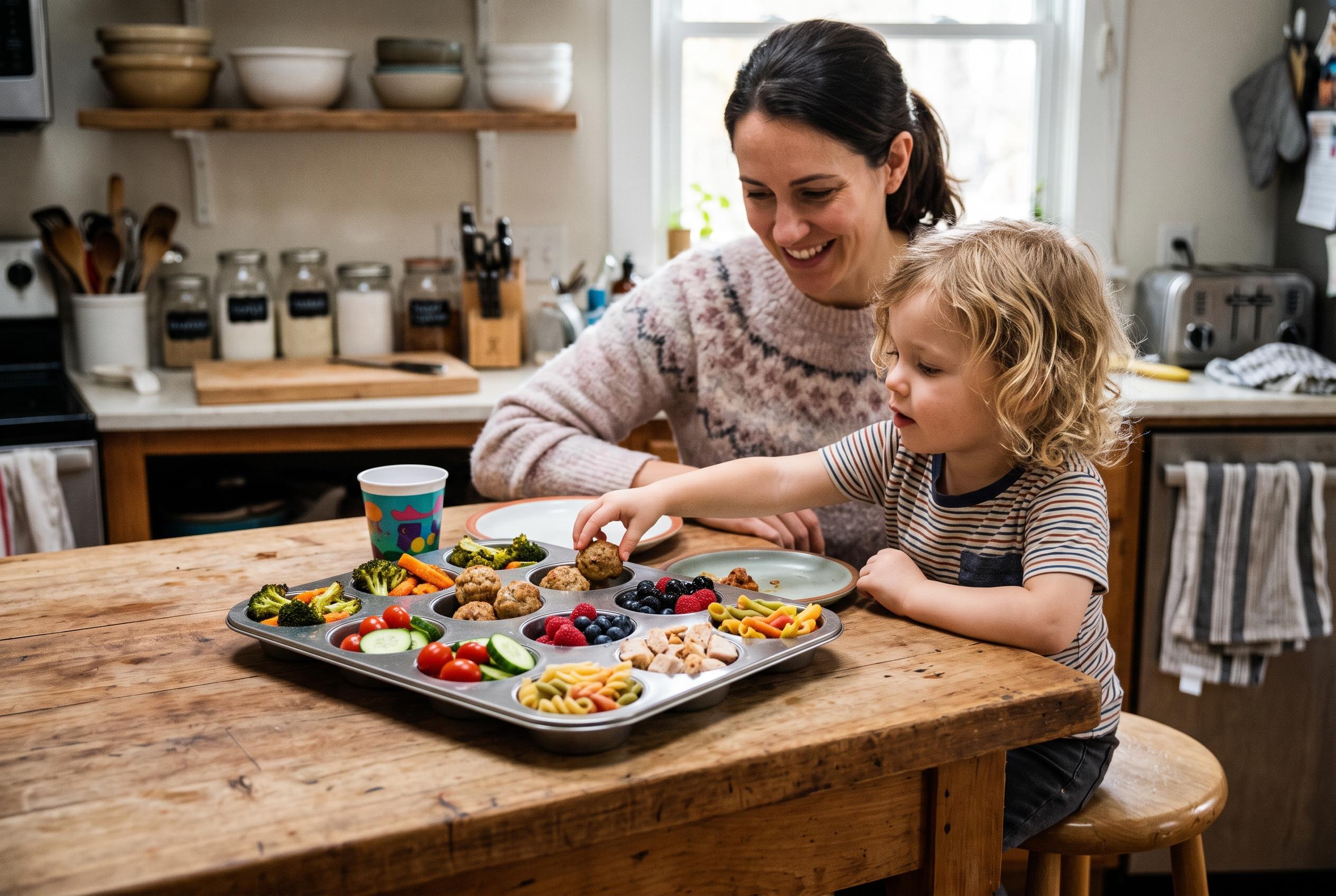

In response to hectic evenings and picky appetites, muffin tin dinners are emerging as a versatile way for families to make mealtimes simpler, neater, and more appealing for children, offering a customisable approach that balances routine with variety.
For parents juggling busy evenings and selective appetites, muffin tin dinners offer a simple way to make supper feel less like a battle. The idea is straightforward: serve a meal in separate compartments so each food keeps its own space. According to Tasting Table, that separation can matter for children who dislike mixed textures or foods touching on the plate, while still encouraging them to sample more than they might otherwise.
The appeal is partly practical. A muffin tin dinner can use whatever is already in the fridge, from cheese and sliced fruit to cooked vegetables, rice, eggs or leftover meat. That flexibility makes the format useful when families want to avoid waste or when everyone at the table needs something slightly different. As One Lovely Life notes, the approach also lends itself to variety, which can help children build familiarity with different foods without the pressure of a traditional plated meal.
It can also make mealtimes feel more playful. Small portions are easier for younger children to handle, and the divided tray gives them a sense of choice without turning dinner into a free-for-all. Recipe collections from sites such as No Biggie and 5 Dollar Dinners show how the same format can be adapted into mini shepherd’s pies, snack trays, or other child-sized dishes, all of which rely on the same basic principle: familiar foods, scaled down and neatly separated.
Some families use muffin tins to add structure as well as novelty. Sprouts suggests combining quick, recognisable foods such as pizza-style bites, pancakes or taco cups, which can help children feel more comfortable trying something new. That balance of routine and variety may be especially useful for parents trying to keep weekday meals manageable while still serving balanced plates. The method is not a replacement for every dinner, but as a once-or-twice-a-week option, it can lower stress and make food feel more approachable.
The main strength of muffin tin dinners is that they are adaptable. They can be built around leftovers, themed around a holiday or learning project, or used as a “build your own” meal with wraps, pitta bread or crackers on the side. For families dealing with picky eating, that combination of control, choice and convenience is often enough to turn an ordinary meal into one that gets eaten with far less resistance.
Disclaimer: This content is for informational purposes only and is not intended to be a substitute for professional medical judgment, advice, diagnosis, or treatment.