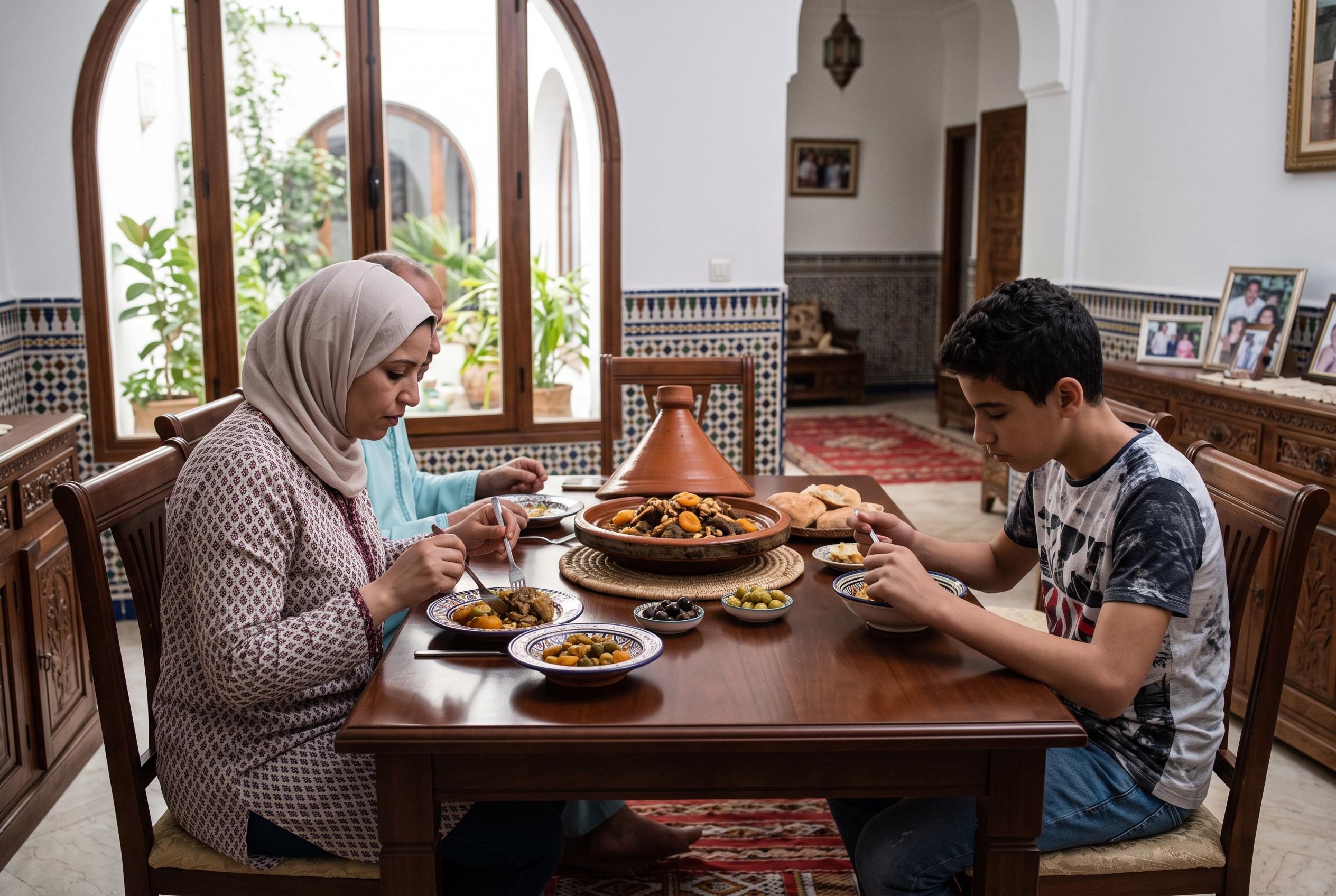

Traditional Moroccan communal dining is giving way to individualised eating patterns, raising questions about health and social cohesion as modern routines reshape the country’s food culture.
Morocco’s family table is changing. The shared meal built around a single tagine, couscous dish or other communal plate is giving way in many homes to a more individual approach, where each person eats according to taste, timing and appetite. Nutrition specialists say the shift reflects broader changes in family life, work patterns and daily routines, but it also raises questions about health, rhythm and the social value of eating together.
Mohammed Adehshour, a therapeutic and clinical nutrition specialist, told Hespress that the way food is prepared and eaten in Morocco has changed noticeably in recent years, with traditional dishes such as tagine, harira and couscous losing some of their central place at the table. He argued that these customs were not only part of the country’s food culture but also helped organise mealtimes, with households gathering at set hours for lunch and dinner. In his view, that regularity reduced random snacking and gave families a clearer sense of portion control.
Adehshour said individualised eating can have some benefits, especially when people tailor what they eat to their own nutritional needs. A person may, for example, choose a plate balanced with vegetables, fruit, protein and starches in amounts suited to their body and activity level. But he cautioned that the model also weakens the social function of the meal, since family members no longer necessarily sit down together, and it can lead to uneven schedules, extra eating between meals and, in some cases, larger overall consumption.
Laila Belhadi Bensami, an endocrinology, diabetes and nutrition specialist, told Hespress that Moroccan households have increasingly moved away from the traditional family meal towards a more fragmented pattern in which each person eats at a different time. She linked the change to pressure on time, working parents, staggered school and work schedules, and the growing reliance on quick food, including ready-made meals and fast food. She also pointed to advertising, digital media and rapid delivery services as forces making processed food more accessible than home-cooked meals.
That concern is echoed by research and reporting on Moroccan diets more broadly. A Penn State University summary of ongoing research says traditional eating patterns in Morocco are being replaced in some settings by processed flour, more meat and fewer legumes, while public-health discussions have also linked the erosion of older food habits to rising obesity and type 2 diabetes. A separate PubMed study on adult meal practices found that irregular schedules, shorter meal times and less frequent family eating are increasingly common, suggesting that the shift is not just cultural but measurable in everyday behaviour. Bensami warned that the health cost can be significant, particularly when convenience foods are low in fibre and high in salt and fat, increasing the risk of obesity, high blood pressure, cholesterol problems and diabetes.
At the same time, both specialists suggested that the old and new models do not have to be mutually exclusive. Regular mealtimes and the habit of eating together, they argued, still offer nutritional and social benefits, while greater attention to portion size and food composition can help meet individual needs. The challenge for many families is to preserve the discipline and togetherness of the traditional meal without ignoring the realities of modern working life.
Disclaimer: This content is for informational purposes only and is not intended to be a substitute for professional medical judgment, advice, diagnosis, or treatment.