

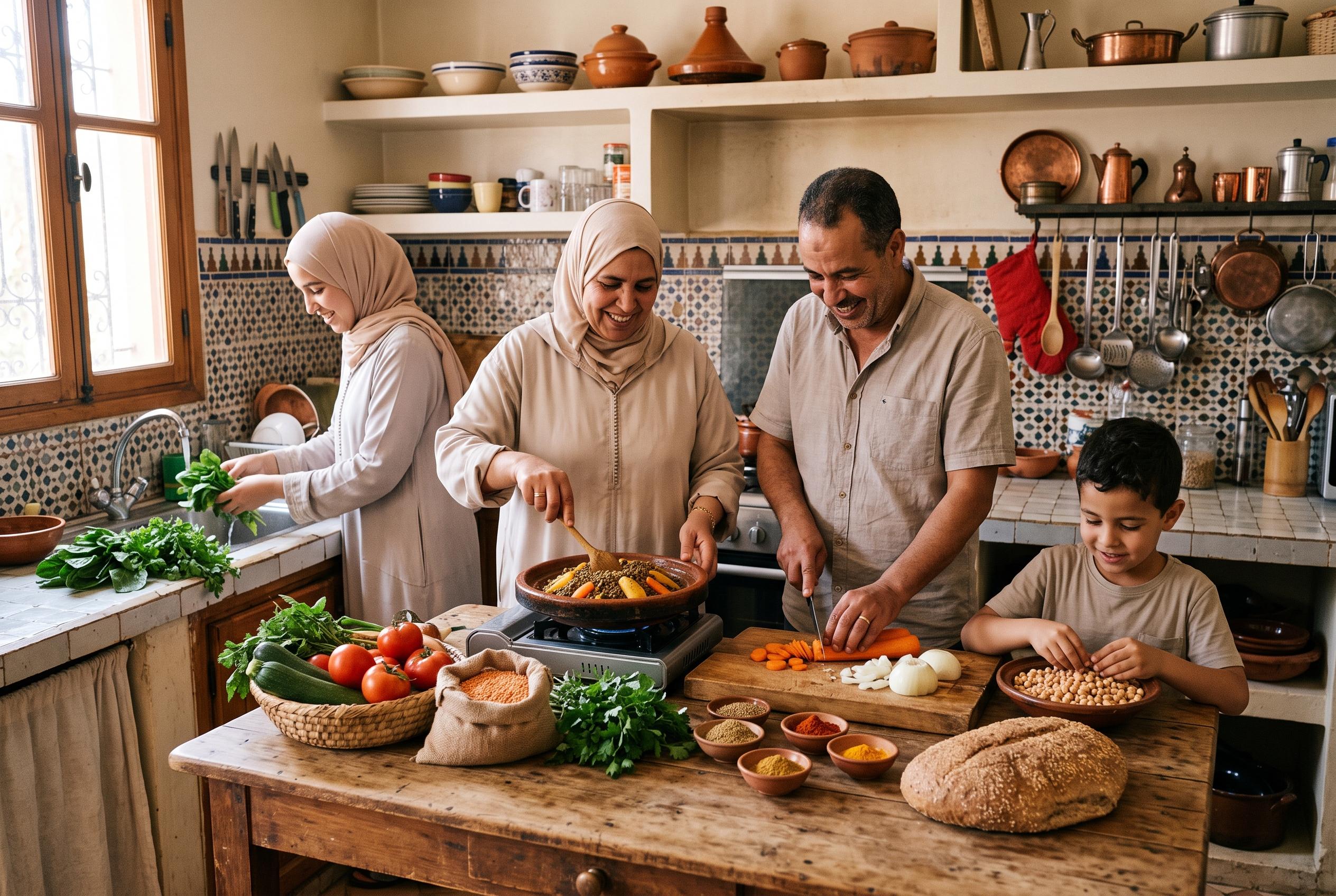

As living costs squeeze household budgets, Moroccan nutrition specialists are urging families to rely on familiar staples, pulses and seasonal produce rather than expensive health-food trends.
For many Moroccan households, the question is not whether healthier eating matters, but how to make it fit a monthly budget already squeezed by living costs. In that setting, nutrition specialists say the answer often lies less in expensive “superfoods” than in restoring familiar habits: simpler meals, sensible portions and ingredients that are already common in home kitchens.
Hiam El Youssfi, a dietitian and nutrition specialist, said healthier eating does not have to mean higher spending. Speaking to Hespress, she argued that social media can create the impression that good nutrition depends on costly products, when in reality families can improve the quality of their meals without materially increasing their food bill. Her advice begins with modest changes rather than a wholesale overhaul: bread in measured amounts, a little olive oil, soft or white cheese, and eggs boiled or cooked in water.
She also stressed that a balanced plate does not need meat at every sitting. El Youssfi recommended making room for salads and vegetables in daily meals, varying the ingredients rather than abandoning them, and using fish or chicken instead of red meat, which she described as expensive and best kept to about once a week. She added that staples such as bread, potatoes, rice, pulses and pasta can all form part of a healthy diet, provided households avoid piling several starches on to the same plate. For a lighter evening meal, she suggested salads, vegetables, eggs or plain unsweetened yoghurt.
Mohamed Adhachour, a specialist in clinical and therapeutic nutrition, made a similar case for returning to traditional eating habits as a practical response to rising food prices. According to his comments to Hespress, families can save money by eating from one shared dish, such as a tagine, rather than serving separate portions to each person. He said this can reduce waste, encourage moderation and preserve the social character of mealtimes.
Adhachour also pointed to pulses as a lower-cost substitute for meat. Lentils, fava beans and chickpeas, he said, provide protein, vitamins, minerals and fibre, while remaining more affordable than meat and poultry. He advised using such foods three or four times a week, cutting back on bread where possible and replacing some of it with vegetables, which help with satiety and add fibre and micronutrients.
For fish, he said households need not rely only on fresh varieties when prices climb. Cheaper options such as sardines and white fish can be a better fit for many families, while tinned fish can serve as a fallback when fresh fish is out of reach. He added that tinned fish can still offer strong nutritional value, though he recommended limiting tinned tuna to once a week because of price differences and market availability.
The wider picture supports their advice. Guides on food prices in Morocco note that basic local produce, bread, milk, eggs and oils can remain relatively affordable, especially when compared with imported brands and heavily processed foods. Other nutrition guides focused on Moroccan cuisine emphasise the Mediterranean pattern already present in many households: olive oil, legumes, vegetables, fresh herbs, grains and modest amounts of meat. In practice, that means healthier eating in Morocco may depend less on buying more and more on choosing better, cooking simply and keeping portions under control.
Disclaimer: This content is for informational purposes only and is not intended to be a substitute for professional medical judgment, advice, diagnosis, or treatment.



