

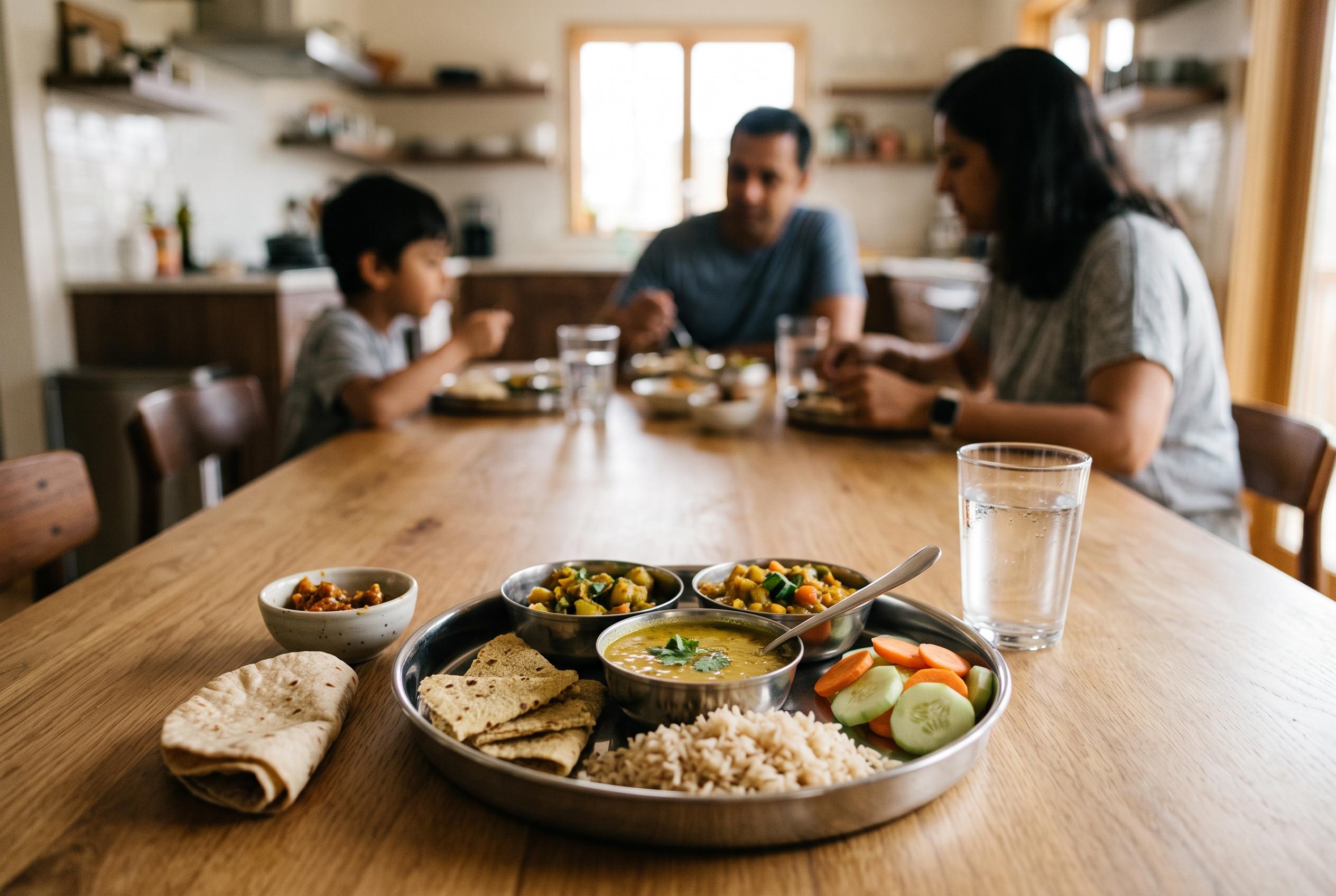

A traditional Indian meal, often based on a few key elements, can be simple yet satisfying when balanced thoughtfully. From choosing the right main dish to adding complementary sides and condiments, discover how to craft versatile and flavourful Indian plates for any occasion.
A complete Indian meal does not need to be elaborate. In practice, it often comes down to a few well-chosen elements: a main dish, a starch, a cooling or vegetable side, and a final touch of chutney, pickle, herbs or citrus. That balance is what makes the plate feel satisfying rather than crowded.
Food writers and nutrition guides often describe the traditional thali as the clearest expression of this idea. Healthline explains that a thali typically brings together rice, bread, lentils, vegetables and condiments in one meal, while other guides note that regional custom and household preference shape the exact combination. The point is not a fixed formula, but variety.
That flexibility is useful for home cooks. A weeknight dinner can be as simple as curry, rice and raita. For guests or a special occasion, the table can expand to include bread, dal, a vegetable dish, salad, chutney and dessert. The meal works because the flavours and textures offset one another.
The simplest place to start is the main dish. It might be chicken, paneer, lentils, beans or vegetables, and it should guide the rest of the menu. A rich curry usually calls for lighter sides, while a drier dish benefits from something saucy alongside it.
Rice and flatbreads do different jobs, so the choice depends on the main course. Plain basmati rice suits saucy curries and dals, while naan, roti or chapati work well with thicker gravies and scoopable dishes. Many households serve one starch; serving both is more common when entertaining.
A vegetable dish or a second legume-based preparation adds contrast and makes the meal more substantial. That might mean a dry sabzi, aloo gobi, chana masala or a simple lentil dish. A cooling side such as cucumber raita, yoghurt or sliced cucumber is especially useful when the curry is spicy or richly seasoned.
The idea of balance matters beyond mere fullness. A guide from Chef Bombay notes that Indian meals often aim to include multiple tastes, while Pravi Organic highlights the traditional six-taste framework of sweet, sour, salty, pungent, bitter and astringent. In home cooking, that usually translates into a deliberate mix of rich, tangy, fresh and hot elements.
That is why chutney, pickle and fresh garnish can matter so much. A spoonful of mint chutney, a sharp mango pickle or a squeeze of lemon can lift an entire plate. Even a simple handful of chopped coriander or sliced onion can stop a meal from feeling heavy.
For families with little time, the best approach is to keep one dish simple and let the others do less work. A curry in the pressure cooker, a pot of rice, a quick raita and a piece of fruit or a small sweet are enough to create a complete dinner. Many curries, dals and chutneys also keep well, so the meal can be assembled ahead of time and reheated without much effort.
Disclaimer: This content is for informational purposes only and is not intended to be a substitute for professional medical judgment, advice, diagnosis, or treatment.



