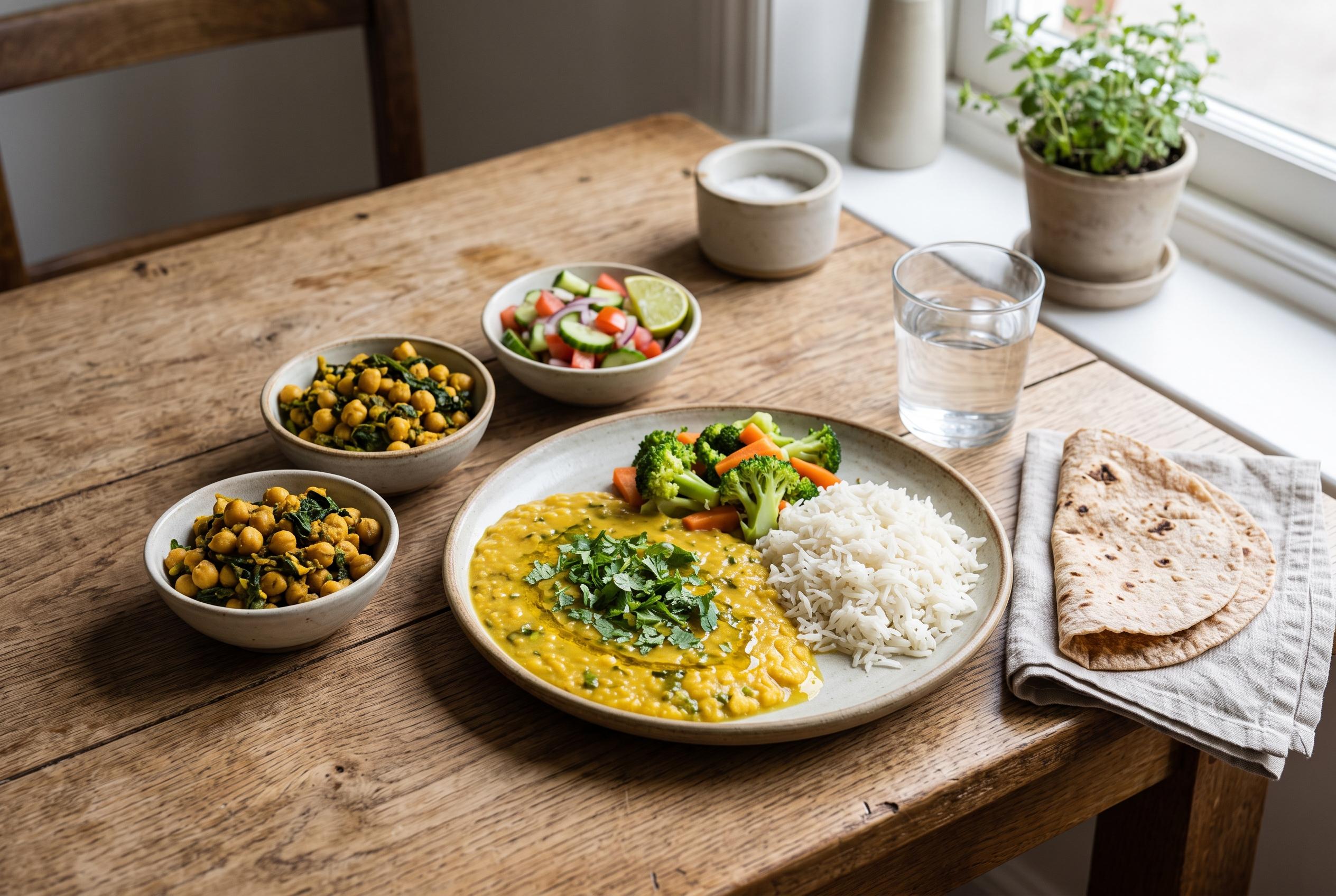

Eshanka Wahi advocates for enhancing traditional Indian dishes with modest, nutritious modifications rather than complete overhauls, promoting sustainable healthy eating without sacrificing flavour.
Healthy eating does not have to mean giving up the dishes people already love, says Eshanka Wahi, who argues that the aim should be to make familiar meals more balanced rather than to replace them entirely. That approach fits well with Indian cooking, which already relies on lentils, vegetables, spices, yoghurt and home-made staples that can be genuinely nourishing when portions and combinations are handled well. Health-focused Indian food guides also point to the same idea: traditional dishes can be both satisfying and nutritious when they are built around fibre, protein and spices rather than excess fat or processed ingredients.
Wahi says one of the most common mistakes is to strip meals of everything enjoyable in the name of discipline. A better method, she suggests, is to make modest changes, such as adding vegetables to a chilla, pairing it with curd or another protein source, or replacing packaged snacks with home-made alternatives. That view is echoed in low-fat Indian recipe collections that use fresh vegetables, legumes and spices to keep meals flavourful without relying on oil. The result, according to those examples, is not a bland diet but one that is easier to sustain.
Variety matters just as much as ingredients. Wahi points out that even wholesome foods can become unbalanced if they are eaten repeatedly in the same day, and nutrition guides support that idea by building meal plans around a wider mix of dals, grains, curries and vegetable dishes. Examples include moong-based snacks, khichdi, upma, poha, sambar, ragi roti and other combinations that spread protein, carbohydrates and micronutrients across the day. Cooking methods such as steaming, grilling and slow cooking can also help preserve flavour while keeping meals lighter.
The broader lesson is that healthy eating does not need to feel restrictive, especially for families trying to make better choices at home. Home-made sweets using dates, nuts and seeds can offer a more considered option than many packaged treats, while batch-prepared snacks can make it easier to avoid convenience foods when time is short. As health-focused Indian recipe round-ups show, the country’s food traditions already offer plenty of scope for meals that are colourful, varied and practical as well as nutritious.
Disclaimer: This content is for informational purposes only and is not intended to be a substitute for professional medical judgment, advice, diagnosis, or treatment.