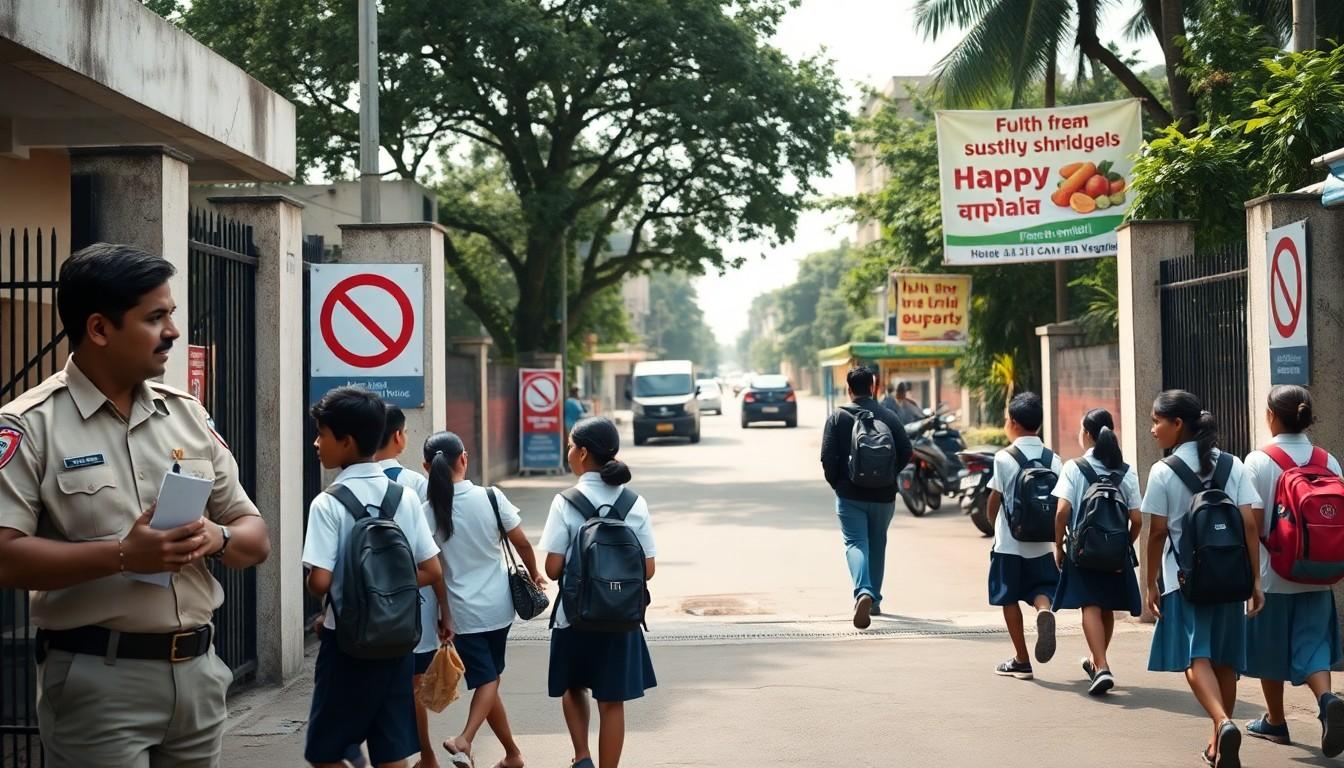

The Maharashtra Food and Drug Administration has introduced a comprehensive framework to restrict junk food sales and promote healthier diets in schools, aiming to improve children’s health and curb diet-related illnesses.
The Maharashtra Food and Drug Administration has moved to tighten control over what children can buy and see in schools, unveiling a statewide framework that bars the sale, display and promotion of foods high in fat, salt and sugar on school premises. According to the FDA’s announcement, the restrictions cover government, aided and private institutions affiliated to the state board, CBSE and ICSE, and extend to hostels, canteens and campus vendors, though crèches and day-care centres for children below 22 months are excluded. The move sits alongside long-standing national rules on balanced diets in schools, which the FSSAI notified in 2020.
Under the new regime, schools are being told to align meals with dietary guidance from the National Institute of Nutrition, with menus expected to include fruit, vegetables, whole grains, pulses and dairy. The FDA has also linked the policy to basic hygiene and safety measures, including access to clean drinking water and safer kitchen practices. Schools will be expected to obtain the relevant FSSAI licence or registration, appoint a trained health and wellness officer, and display warning boards discouraging junk food consumption.
The order also reaches beyond the school gate. Institutions are being asked to alert local food safety officers and civic bodies if unauthorised junk-food sales take place within 50 metres of campus, while inspectors are due to visit schools at least twice a year and take samples annually. Compliance will matter for affiliation and renewal of recognition, making the rules part of the regulatory infrastructure schools must satisfy rather than a voluntary health campaign.
Maharashtra’s FDA has paired enforcement with a public-awareness drive called “Safe Food. Healthy Childhood. Capable Maharashtra.”, aimed at schools, parents and teachers. The campaign reflects wider concern over childhood obesity, anaemia, micronutrient deficiencies and other diet-related illnesses, and schools have been told to draw up nutrition policies and hold regular awareness sessions. Food Safety Commissioner Tukaram Mundhe said the initiative was intended to create healthier school environments and to protect children’s right to safe, nutritious food, while the FDA said it had already trained 4,919 teachers from 3,567 schools through 42 workshops in preparation for the rollout.
Disclaimer: This content is for informational purposes only and is not intended to be a substitute for professional medical judgment, advice, diagnosis, or treatment.