

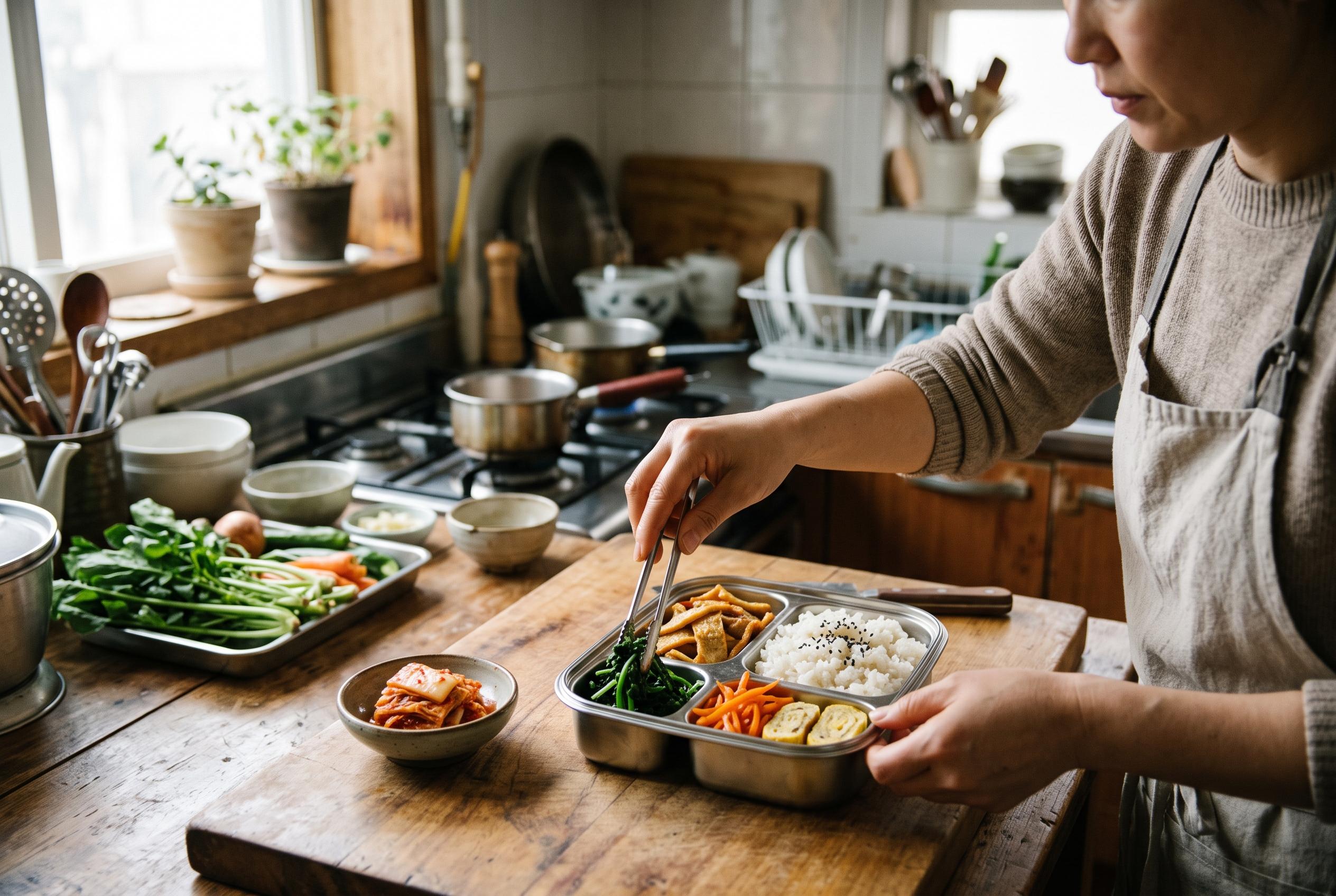

Korean school meals, known as gyoshik, focus on balanced, seasonal menus featuring staples like kimchi, rice, vegetables, and protein, offering practical insights for home cooks seeking nutritious and manageable weekday meals.
Korean school lunches, known as gyoshik, are built around balance rather than excess. The basic pattern is familiar: steamed rice, a soup or stew, a protein dish, several vegetable side dishes and kimchi. That structure is part of what gives the meals their reputation for being filling yet varied, and it is also what makes them practical to recreate at home or in a classroom setting. The key is not elaborate cooking, but careful planning so that carbohydrates, protein, fibre and vegetables are all present in modest portions.
The menu can be flexible while still feeling authentically Korean. Common dishes include bulgogi, dakgangjeong, doenjang jjigae, japchae and seasoned vegetables known as namul. A blog post on KoreanLunches.com describing an elementary school menu showed how much variety can fit into a single tray, with items such as hand-torn noodle soup with perilla seeds, white rice mixed with oats, spicy stir-fried pork with kimchi and cubed radish kimchi. That kind of assortment reflects a broader school-lunch pattern: fresh ingredients, changing daily menus and a strong emphasis on seasonal produce. In practical terms, the easiest way to build a menu is to choose one item from each main category and keep the portions small and balanced.
Recent menu analysis published by kschoolfood.com shows just how central kimchi remains in Korean school meals. In one 43-day review covering dozens of menus, napa cabbage kimchi appeared more often than any other dish, underlining its status as a near-constant side rather than an optional extra. The same analysis put average school-lunch energy intake at about 747 kilocalories, while another school-meal reference site put the figure at roughly 749 kilocalories. A Seoul Chinese primary school lunch page reported an average of 573.3 kilocalories for its own programme, along with sodium-reduction targets and allergen information, showing that menus can vary by school while still following the same overall principles of nutrition and safety.
For families trying to cook a Korean-style school lunch, the most useful advice is also the simplest: keep the meal hot, keep the list of dishes manageable and make room for vegetables. Rice should be washed properly before cooking, soups need a flavour base such as doenjang or broth, and banchan can often be prepared ahead of time. The original guide also recommends serving fruit or yoghurt at the end, using compartments or separate plates to keep flavours distinct, and adjusting for allergies or vegetarian diets where needed. In other words, a Korean school lunch is less about imitation and more about adopting a thoughtful structure that is colourful, nourishing and easy to repeat.
Disclaimer: This content is for informational purposes only and is not intended to be a substitute for professional medical judgment, advice, diagnosis, or treatment.



