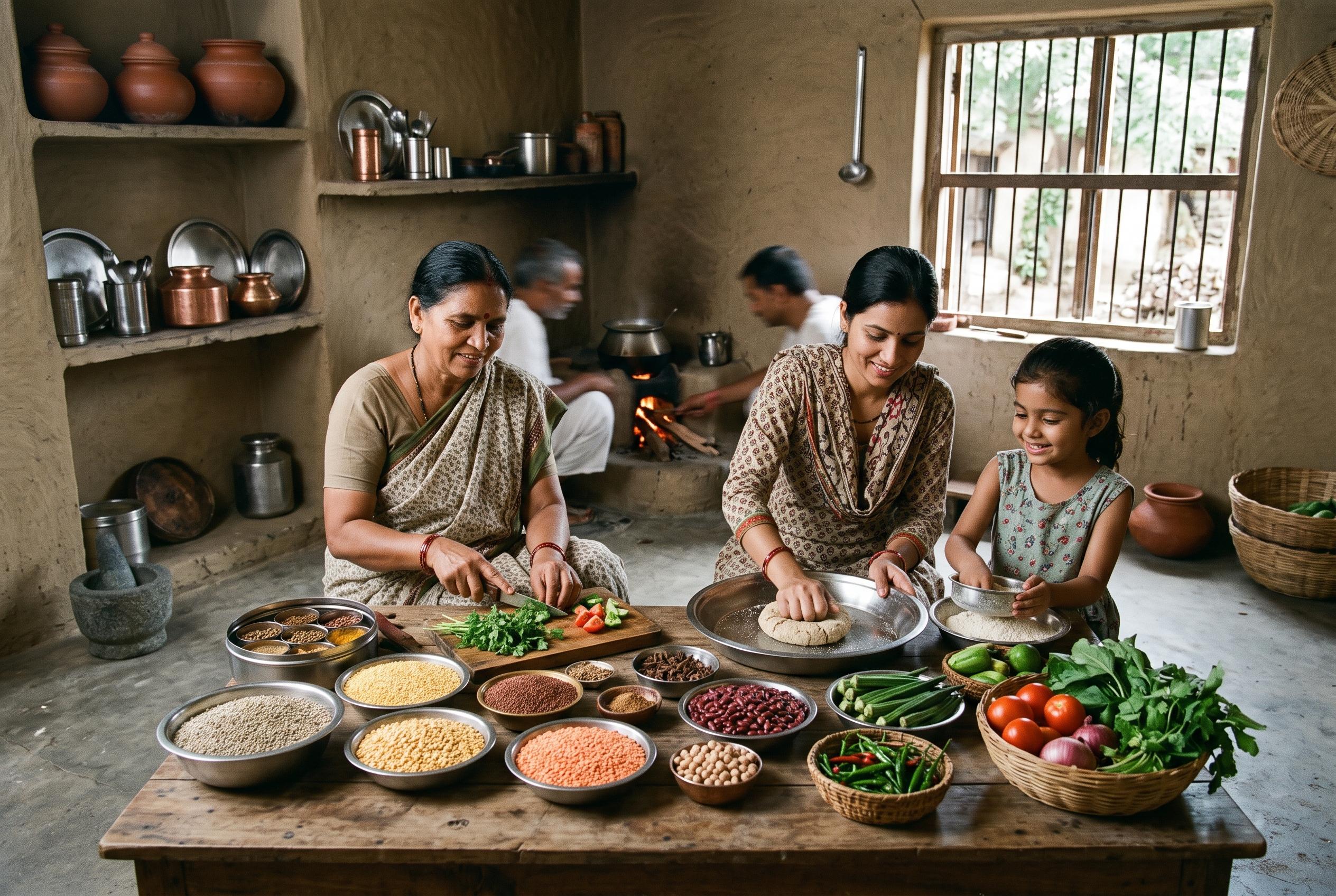

Millets, pulses, seasonal produce and traditional meal combinations are being recast as affordable, sustainable ways to improve nutrition without abandoning familiar food habits.
Traditional Indian diets are gaining renewed attention as families look for cheaper, simpler and more sustainable ways to eat well. The focus is increasingly on foods that are already familiar and widely available, including millets, pulses, seasonal fruit and vegetables, and whole grains. These staples are seen as practical alternatives to heavily processed products, especially because they are naturally rich in fibre, vitamins and minerals.
Dr Sujit Paul of Zota Healthcare said traditional meals can be a stronger foundation for everyday nutrition than many imported so-called superfoods. In his view, households already have access to a wide range of ingredients that can be combined to support health without making eating feel complicated or expensive. He argued that the real strength of these foods lies in how easily they fit into routines that people already follow, while still helping to make diets more affordable and sustainable.
A typical Indian meal, he said, already brings together grains, pulses, vegetables, fruit, dairy, nuts and spices in a way that can cover many nutritional needs. That balance can be strengthened by choosing brown rice, whole wheat, dal, masoor and seasonal vegetables, and by varying the foods eaten across the week. Seasonal produce such as guava, papaya, amla, oranges, gourds, carrots and leafy greens can add both variety and a broader mix of nutrients. Nutrition guides on Indian foods similarly point to the value of diversity, seasonal eating and traditional meal structures that pair carbohydrates with protein, fibre and healthy fats.
Cooking method matters as much as ingredients. Paul said using less oil and relying more on steaming, boiling, roasting and pressure cooking can reduce unnecessary fat and calories. He also pointed to familiar combinations such as dal with rice or roti with vegetables as examples of meals that can be nutritionally complete when portion sizes are sensible. Fermented foods such as curd and buttermilk can also play a useful role, and nutrition sources have increasingly highlighted their value for digestion and gut health. Taken together, the message is that traditional food habits do not need to be discarded to improve health; they can be adapted with modest changes that keep meals familiar, realistic and affordable.
Disclaimer: This content is for informational purposes only and is not intended to be a substitute for professional medical judgment, advice, diagnosis, or treatment.