

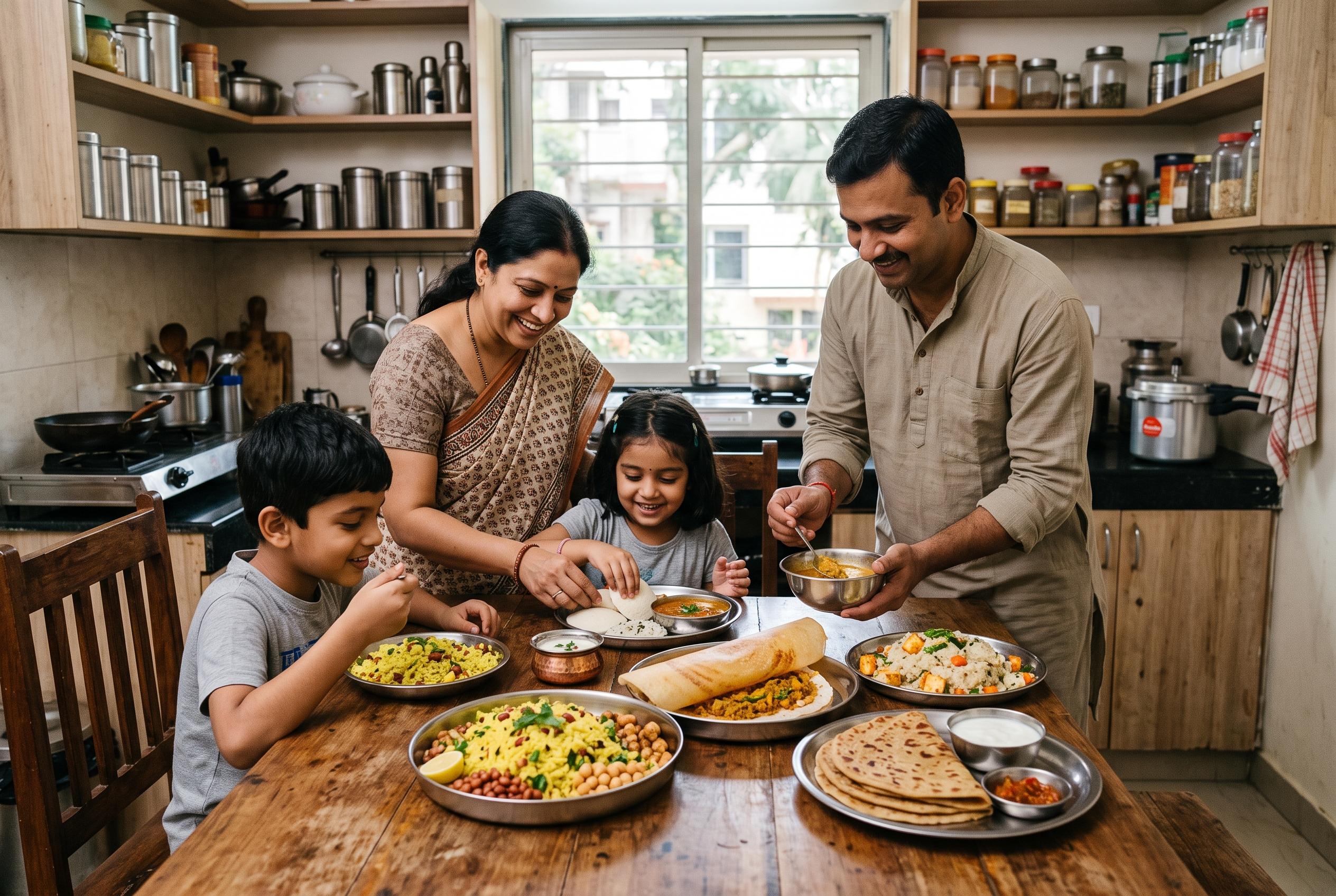

Nutritionist Rashi Chowdhary suggests simple ways to add protein to poha, idli, dosa, upma and paratha without abandoning familiar flavours or making breakfast more complicated.
Indian breakfasts such as poha, upma, idli, dosa and aloo paratha remain staples in many homes, but nutritionists say the way they are served can leave them heavy on carbohydrates and light on protein. The practical fix is not to abandon familiar dishes, but to adjust portions and add ingredients that make the meal more satisfying and better balanced, according to NDTV’s report on advice from nutritionist Rashi Chowdhary.
Chowdhary’s approach is built around small, realistic swaps. Rather than treating breakfast as a purely starch-based meal, she recommends pairing it with foods such as paneer, curd, eggs, pulses and peanuts. NDTV reported that her view is that these additions can help improve the overall nutrient profile of everyday meals without making the cooking process complicated or unfamiliar.
For dosa, she suggests moving towards moong dal chilla or pesarattu, served with curd. She also advises keeping poha on the menu, but enriching it with crumbled paneer and crushed peanuts, with curd on the side for extra protein. In her view, idli can be made more filling by cutting the number of pieces and serving it with thicker sambar, along with egg bhurji or paneer bhurji.
The same logic applies to upma and sandwiches. NDTV says Chowdhary recommends reducing the amount of rava in upma and replacing some of it with green peas, while adding paneer and eggs on the side. For a bread-and-cheese sandwich, she suggests using less bread and incorporating egg bhurji or chicken so the meal contains a more substantial protein source.
Paratha lovers are not left out either. Chowdhary’s recommendation is to choose a paneer-stuffed paratha rather than several potato-stuffed ones, then serve it with curd instead of relying only on pickle. That fits a broader trend seen across other Indian nutrition guides, which also favour combinations such as moong dal chilla with paneer, moong dal idli, quinoa upma with paneer, sprout-based cheela, kala chana chaat and besan chilla with curd as ways to build protein into breakfast without moving away from local food habits.
The wider argument is that breakfast should keep people fuller for longer and avoid the quick rise and fall in energy that often follows a meal dominated by refined grains. Several nutrition-focused Indian recipe guides make the same point, linking higher-protein breakfasts with steadier energy and fewer mid-morning hunger pangs. For parents and caregivers trying to feed a household quickly, the message is straightforward: familiar foods can stay on the table, but they work better when protein is part of the plan.
Disclaimer: This content is for informational purposes only and is not intended to be a substitute for professional medical judgment, advice, diagnosis, or treatment.



