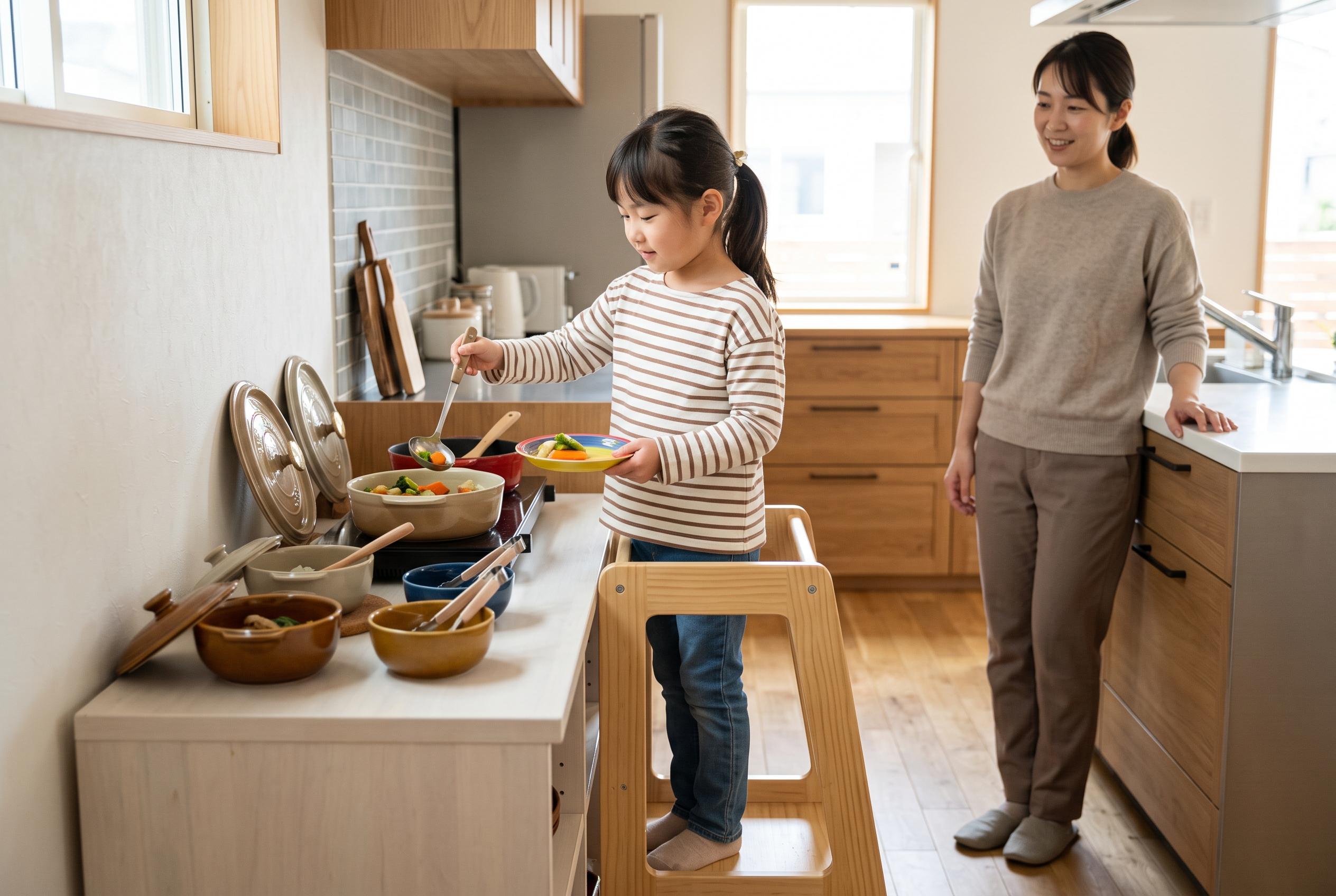

A family implementing self-serve breakfast and lunch routines aims to foster children’s independence and life skills, supported by child health experts who advocate safe, gradual cooking lessons for kids in homeschooling environments.
On homeschool days, one parent says breakfast and lunch in her house are often self-serve, a system shaped by life with seven children and the belief that children can be taught to handle ordinary meal preparation. The approach, shared on Instagram and expanded in a recent post, is less about a polished routine than about building confidence, reducing pressure on parents and giving children practical independence.
That idea is strongly backed by child-health guidance. The American Academy of Pediatrics says cooking with children can support healthier eating habits, family bonding and important life skills, provided adults assign age-appropriate tasks and supervise carefully. Similar advice from university extension programmes and the Academy of Nutrition and Dietetics stresses that children can learn gradually, starting with simple jobs and moving towards more complicated ones as their skills and safety awareness improve.
In this household, the breakfast rotation is intentionally simple: bagels with spreads, scrambled eggs, biscuits, pancakes, yoghurt with granola, sourdough toast and breakfast burritos or bowls. The parent says the real key is batch cooking, especially making a large pancake batch at the weekend and freezing most of it for the week. Lunch is equally straightforward, built around sandwiches, wraps, quesadillas, grilled cheese, soups, salads, snack plates and reheated leftovers. The wider pattern mirrors other family-focused recipe guides, which tend to recommend familiar foods children can assemble quickly and safely on their own.
The method depends as much on structure as on recipes. The parent says the family talks through menu ideas before shopping, but the final choices stay limited so the kitchen does not become a free-for-all. Group meals are encouraged, younger children are supervised, and everyone is expected to clear up after themselves. The kitchen closes for lunch in the early afternoon, after which snacks are the default. For families hoping to try the same approach, the message is straightforward: begin with assembly-only meals, teach basic knife and appliance safety step by step, and let children practise until they can genuinely handle the job alone.
Disclaimer: This content is for informational purposes only and is not intended to be a substitute for professional medical judgment, advice, diagnosis, or treatment.