

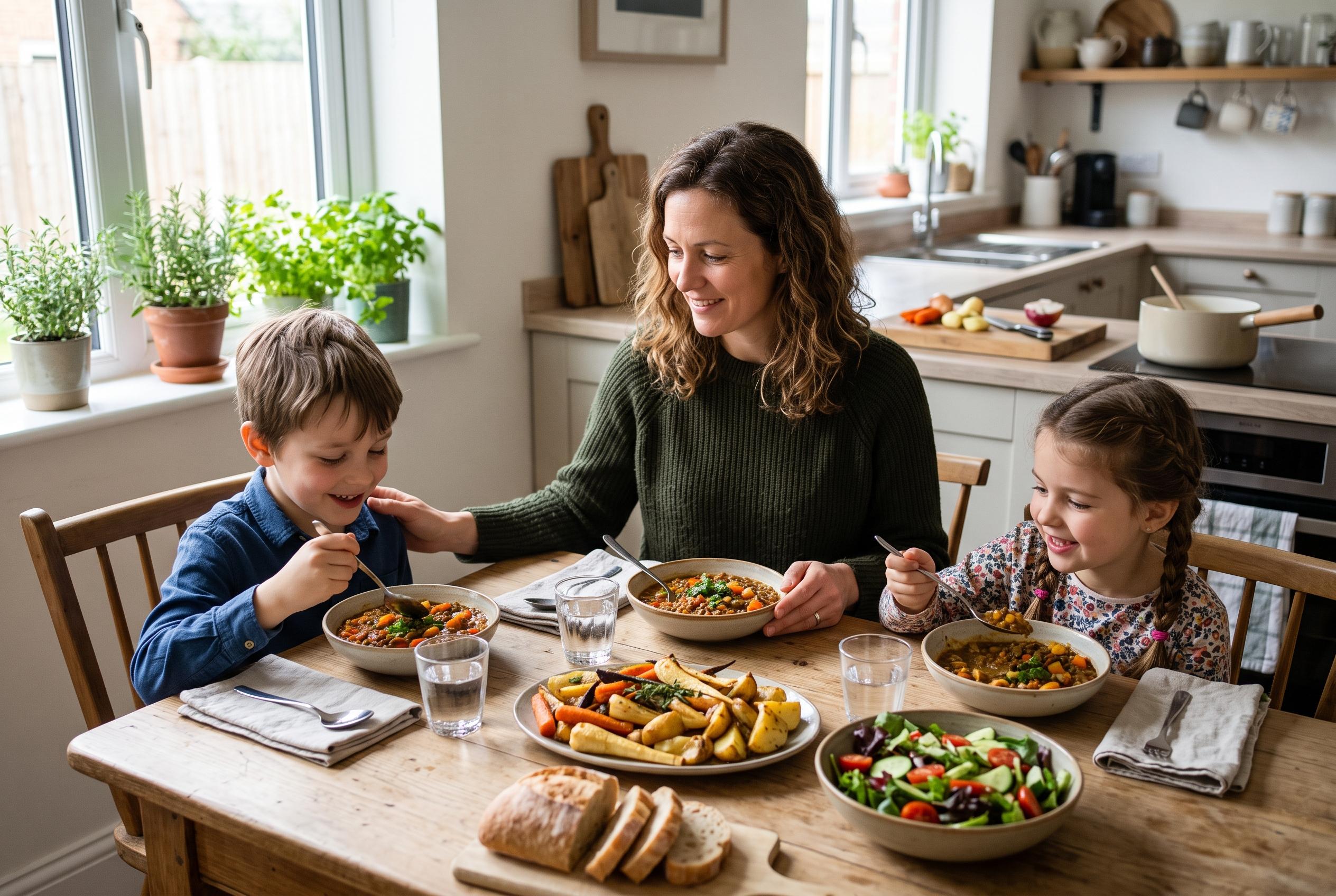

Healthy, affordable, and familiar, plant-based family meals are reinforcing better nutrition, easing routines, and strengthening bonds, without sacrificing flavour or convenience.
Family meals built around meat-free dishes can do more than stretch a grocery budget.They can also make weekday routines calmer, easier and, when planned well, just as filling as meat-based cooking. The family-focused guide from Moms-Favorites-and-More argues that the key is not replacing meat with gimmicks, but building meals around familiar, nourishing ingredients such as lentils, eggs, dairy, tofu, beans and seasonal vegetables.
That practical approach is in line with wider medical guidance. Johns Hopkins Medicine says regular family meals are linked with better nutrition, healthier habits and stronger family connections, while the American Academy of Pediatrics notes that plant-based diets can support children’s health when they are properly planned. Harvard Health has also reported that home-cooked meals tend to contain more fruit and vegetables and less sugar and fat, especially when children are involved in preparation.
For many parents, the attraction is as much about convenience as nutrition. Meat-free cooking often relies on ingredients that are cheap, quick to prepare and easy to batch-cook. Dishes based on red lentils, chickpeas, oats and vegetables can be made in one pot or on a single tray, which cuts down on washing up and helps busy households put dinner on the table faster. The article argues that this is one reason many families end up eating meat-free meals several times a week without treating it as a major dietary shift.
The nutritional case is also important. The American Academy of Pediatrics says children on plant-based diets still need careful attention to nutrients such as vitamin B12, calcium, zinc, vitamin D and iron. In the family guide, B12 is identified as the most important concern for households eating fully vegan diets, while vegetarian families who include eggs and dairy usually have an easier time meeting requirements. The article also highlights a simple point backed by nutrition advice more broadly: iron from plant sources is better absorbed when served with vitamin C-rich foods.
Protein remains another common worry, but it is usually less complicated than parents fear. Children’s Health says beans, nuts and whole grains are good protein sources for children, and the family guide makes the same case in more everyday language. Rather than chasing elaborate combinations, it recommends spreading protein through the day with breakfast eggs or yoghurt, a lunch containing beans or lentils, and dinner built around tofu, cheese or pulses. For most children, that is enough to support growth and development.
Acceptance at the table often depends less on nutrition theory than on routine. Johns Hopkins Medicine and Ohio State Medical Center both point out that children are more likely to try new foods when they help prepare them, and that shared meals can improve family relationships. The family guide echoes that view, suggesting that children are more likely to eat meat-free dishes when familiar flavours are repeated and when parents avoid turning dinner into a debate. Research summarised in the National Library of Medicine also found that longer family meals were associated with higher fruit and vegetable intake among children, which supports the idea that unhurried mealtimes matter.
The article’s recipe ideas reflect that reality. It favours dishes with soft textures, recognisable flavours and room for customisation: pasta with lentil sauce, quesadillas with cheese and beans, baked patties made from chickpeas, vegetable lasagne and simple soups that can be served with bread. For lunchboxes and snacks, it recommends practical options such as hummus on wholemeal bread, boiled eggs, cheese wraps and vegetable sticks. The aim is not to impress children with novelty, but to keep food familiar enough that they will eat it.
Cost is another reason these meals are gaining ground. Dried lentils and beans are much cheaper than meat, and the guide says seasonal vegetables and bulk pantry staples can significantly reduce weekly spending. That makes meat-free family cooking not just a health choice, but an economic one. When done well, it is also flexible: leftovers can become soup, filling for wraps or the base for another dinner later in the week.
Disclaimer: This content is for informational purposes only and is not intended to be a substitute for professional medical judgment, advice, diagnosis, or treatment.



