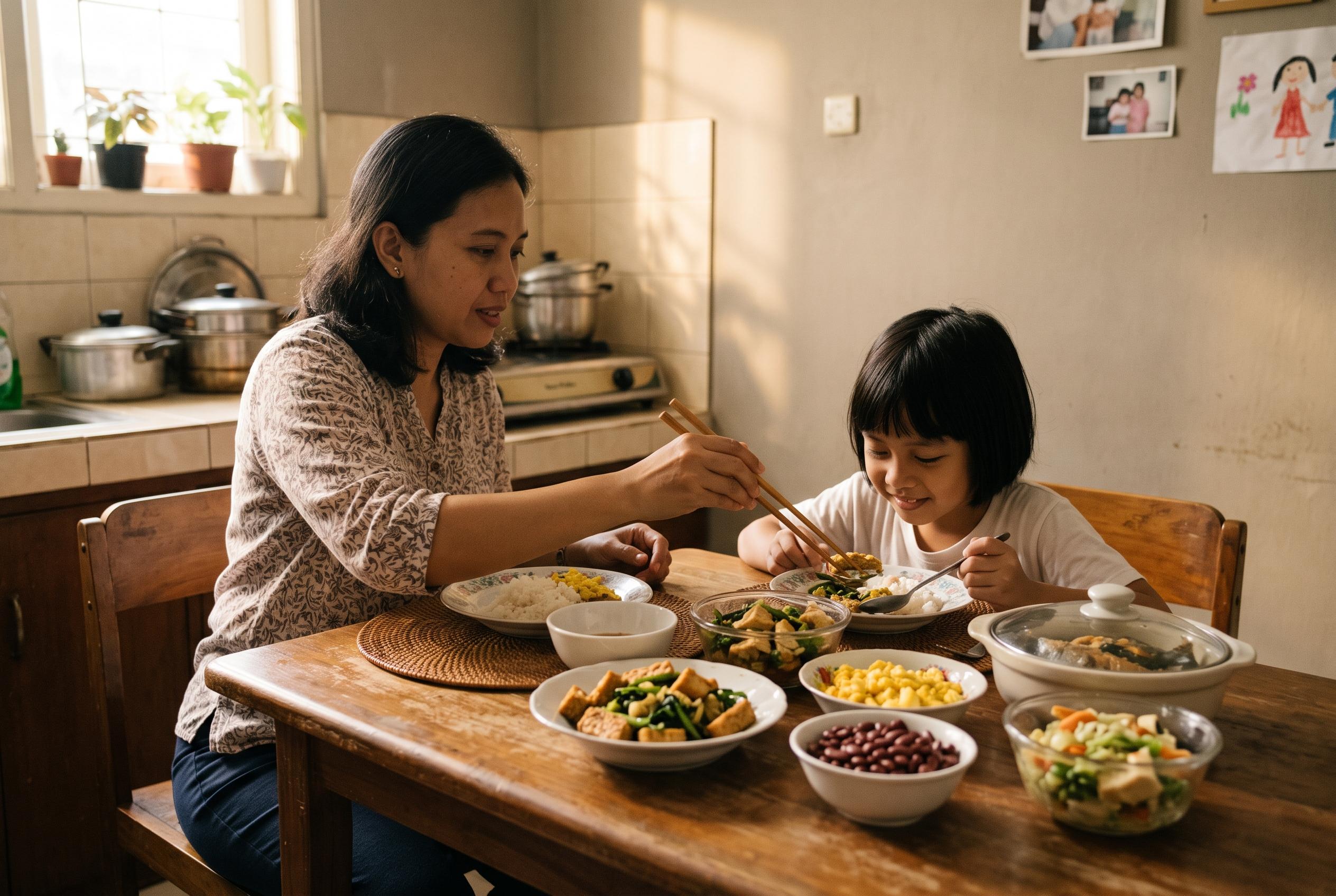

Nutrition specialists in Jakarta emphasise that a balanced, varied diet using local foods is sufficient for children’s protein needs, challenging the notion that expensive ingredients are necessary to ensure proper growth.
Families do not need expensive food to help children get enough protein, experts say. At a media forum in Jakarta on Wednesday, 26 August 2026, nutrition specialist Tara Mutiara Ramdani said the priority is not the price of ingredients but a balanced and varied diet that gives children the nutrients they need to grow well. She urged parents to think beyond a single protein source and make better use of foods already available in local markets and neighbourhoods.
Ramdani said a healthy diet should combine different foods rather than rely on one item alone. That view matches guidance from the US Centres for Disease Control and Prevention, which says children and teenagers need a range of protein foods, along with fruit, vegetables, whole grains and dairy, to support growth and development. The CDC also notes that good eating habits in childhood can help lower the risk of long-term health problems.
The challenge for many households is not only money but also knowledge, Ramdani said. She argued that parents need stronger nutrition literacy so they can choose affordable foods more carefully, plan menus more creatively and match portions to a child’s age and needs. The American Academy of Pediatrics’ HealthyChildren.org offers similar budget advice, including buying seasonal produce, using beans, peas and eggs as lower-cost protein options, and cutting waste by reusing leftovers.
I Dewa Gede Karma Wisana, head of the Demography Institute at the Faculty of Economics and Business, University of Indonesia, said household food choices have a direct effect on the quality of family nutrition. That point is echoed by US research showing that many children still eat poor-quality diets, especially in lower-income households. Taken together, the evidence suggests that protecting children’s nutrition is less about spending more and more about spending wisely.
Disclaimer: This content is for informational purposes only and is not intended to be a substitute for professional medical judgment, advice, diagnosis, or treatment.