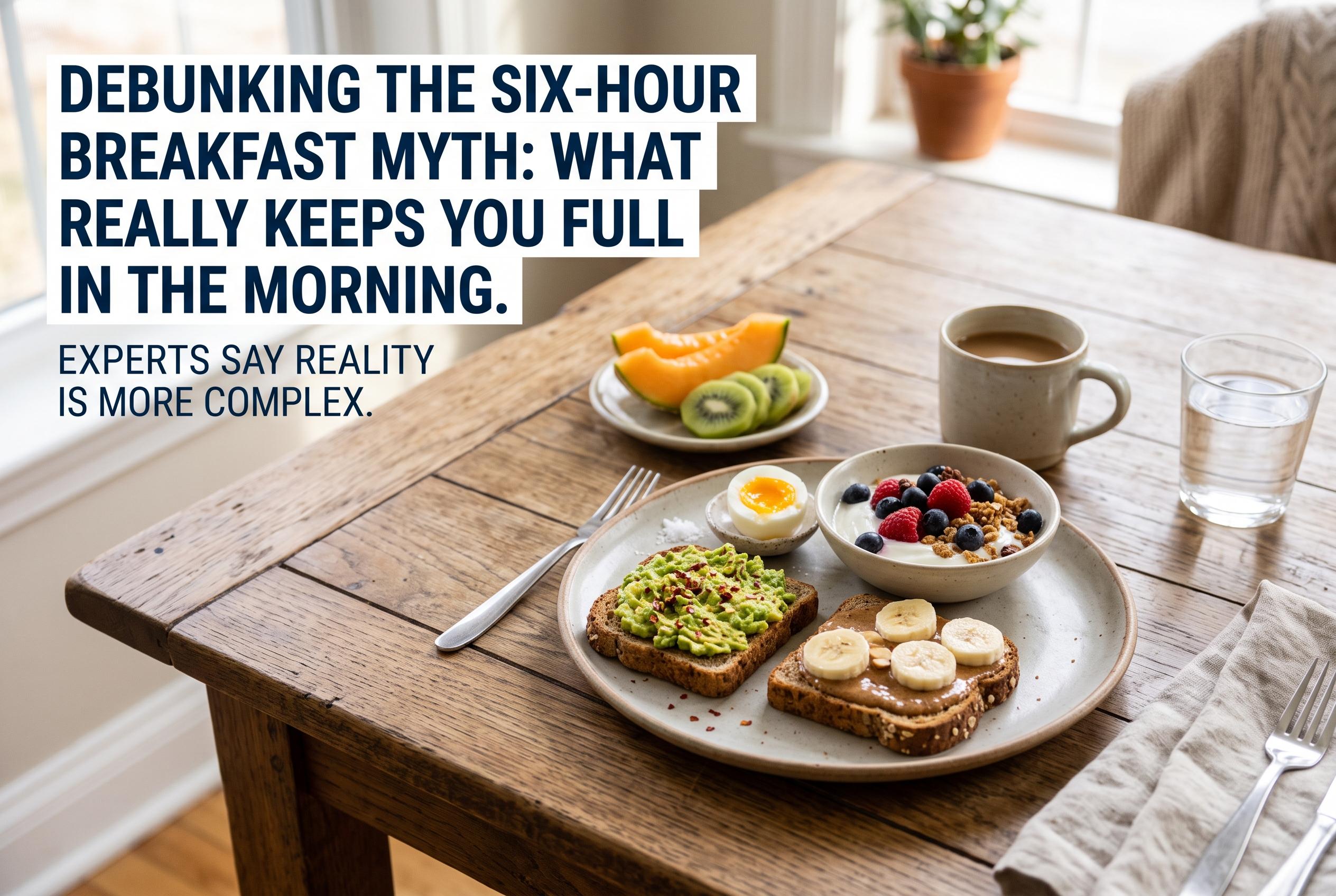

A viral social media claim suggests some breakfast foods can stave off hunger for six hours, but experts say the reality is more complex, highlighting the importance of balanced eating for lasting fullness.
A viral Instagram post has revived a familiar breakfast claim: that a handful of popular morning meals can keep someone full for six hours. The list included protein oats, egg and avocado toast, Greek yoghurt parfaits, cottage cheese bowls, turkey wraps and a peanut butter-banana smoothie. But dietitians say the reality is less tidy than a social media slogan suggests.
According to Dt Shalini Bliss, head of dietetics at PSRI Hospital, protein can help slow hunger, but satiety is influenced by far more than one nutrient. Research published in PubMed and in the journal Nutrients has found that higher-protein breakfasts can reduce ghrelin, a hormone linked with hunger, while also boosting satiety hormones such as peptide YY and GLP-1. Even so, those studies also point to individual variation, which means the same breakfast may not keep every person full for the same length of time.
Bliss says a more reliable formula is to build breakfast around protein, fibre, healthy fats and complex carbohydrates. That can mean eggs with vegetables and whole-grain toast, oats paired with yoghurt, fruit, nuts and seeds, or paneer served with whole grains. Healthline and other nutrition guides make the same basic point: foods such as eggs, Greek yoghurt, oats, chia seeds, berries, cottage cheese, whole-grain bread and nuts tend to work best when combined rather than eaten in isolation.
That also applies to smoothies, which are often marketed as an easy fix for hunger. Bliss says a smoothie made only from fruit is unlikely to be as satisfying as one that also includes milk, Greek yoghurt, oats or seeds. In practice, whether breakfast lasts an hour or most of the morning depends on portion size, activity level, sleep, metabolism and what was eaten the night before. The six-hour promise, then, is more marketing than rule.
Disclaimer: This content is for informational purposes only and is not intended to be a substitute for professional medical judgment, advice, diagnosis, or treatment.