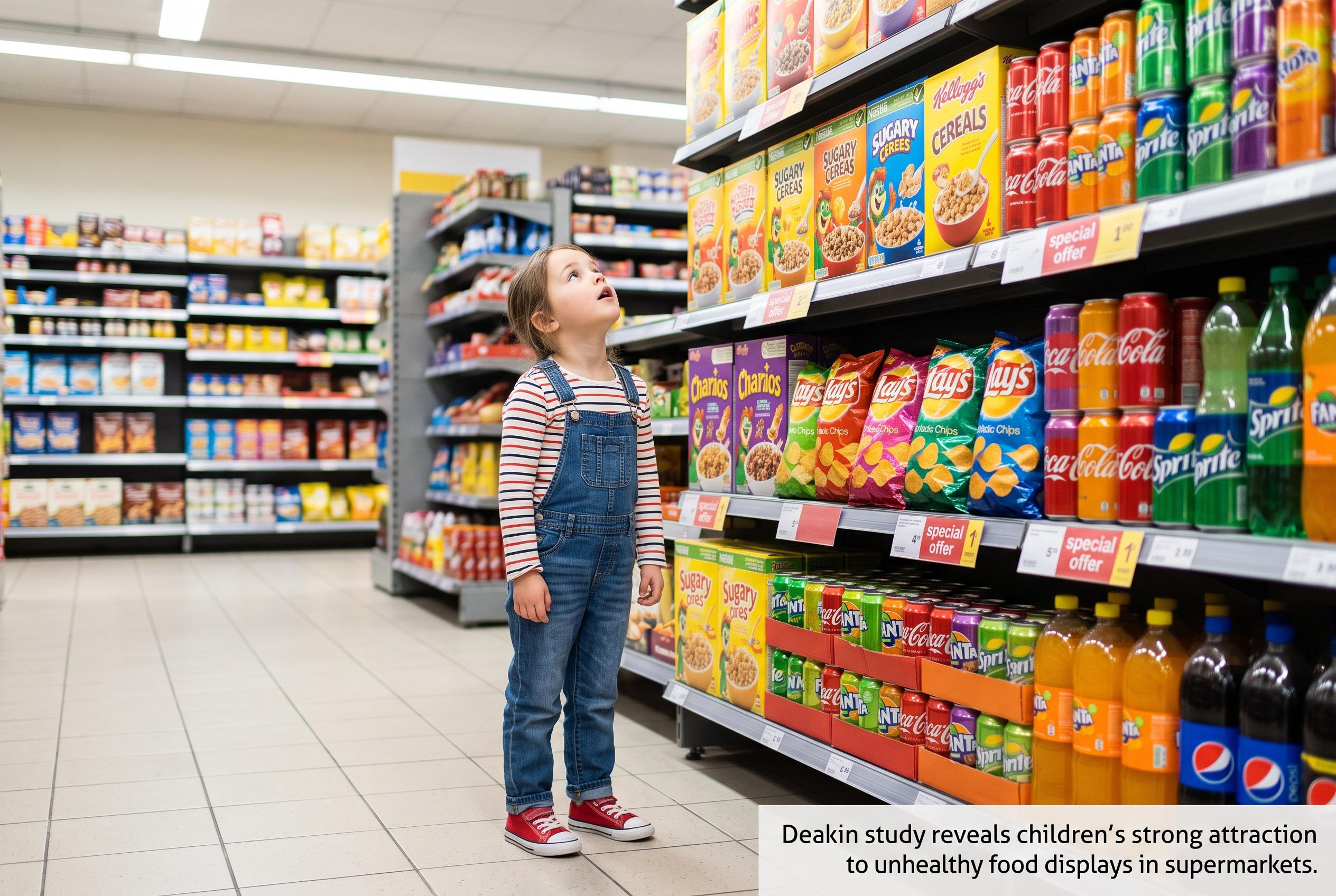

A groundbreaking Deakin University study using eye-tracking technology uncovers how supermarket layouts and prominent displays of unhealthy foods attract children, raising concerns over marketing practices and their influence on young people’s eating habits.
A Deakin University study has found that children are strongly drawn to unhealthy food and drink promotions placed in the most visible parts of supermarkets, raising fresh concerns about how retail environments shape young people’s eating habits. Using eye-tracking glasses, researchers observed children shopping with their parents and found that displays at entrances and checkouts accounted for most of their attention to in-store promotions.
Christine Dove, a public health nutritionist and PhD candidate at the Deakin Institute for Health Transformation, said the study, published in the Australian and New Zealand Journal of Public Health, is thought to be the first to measure both children’s exposure to and engagement with prominent supermarket food displays. She said 90% of the displays featured products such as soft drinks, chocolate, lollies and processed snacks, adding that such marketing can influence what children ask for, prefer and eventually eat.
The study followed 15 children aged seven to 12 as they shopped with their parents and later asked them to recall what they had seen. According to Deakin, the children remembered the products they had focused on in store, including items they had also noticed in other shops and online, especially on YouTube and TikTok. The researchers said children spent about one in every five minutes visually engaged with unhealthy products placed in entrances, checkouts, end-of-aisle displays and walkways.
The findings build on wider Deakin research showing that supermarkets often give unhealthy foods more shelf space, more frequent discounts and more prominent placement than healthier options. That work found products with lower Health Star Ratings were more likely to be discounted, reinforcing concerns that pricing and placement strategies can push shoppers towards less nutritious choices. The researchers argue that stronger rules on in-store food placement, along the lines of restrictions already used in the UK, would better protect children and support parents trying to make healthier choices.
Disclaimer: This content is for informational purposes only and is not intended to be a substitute for professional medical judgment, advice, diagnosis, or treatment.