

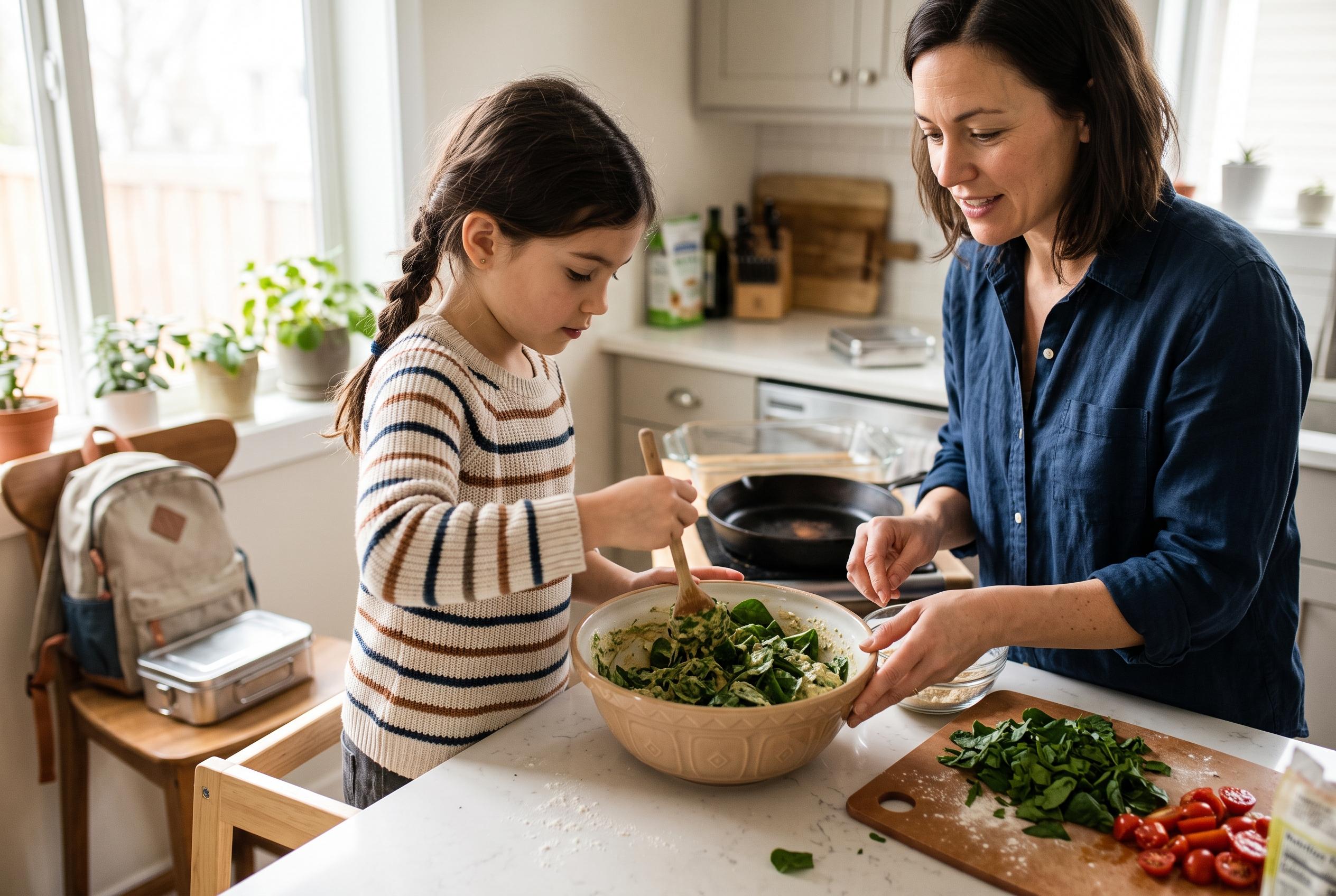

Parents seeking to boost their children’s nutrient intake can turn to creative and child-friendly spinach recipes, from sauces and pastries to soups and omelettes, that improve acceptance while offering essential vitamins and minerals.
Spinach can be an easy win for parents looking to add more nutrients to a child’s diet without turning every meal into a battle. The leafy green is naturally rich in iron, folate, vitamins A, C and K, and fibre, and nutrition sources such as Healthline and the Cleveland Clinic say it also brings antioxidants and other plant compounds that may support eye health, blood health and digestion. For children who turn up their noses at a bowl of plain greens, the key is often presentation: small portions, familiar flavours and recipes that hide or soften the texture can make spinach far more acceptable.
One of the simplest options is the classic spinach dish, prepared with onion, garlic and a light tomato sauce, then served with rice and a protein such as chicken or meat for a more complete meal. To keep it child-friendly, cooks can go easy on salt and hot spices and, if needed, mash the spinach a little so the leaves are less obvious. That same approach works well in spinach-and-cheese pastries, where the cooked greens are mixed with low-salt white cheese or cottage cheese, an egg and a little flour or oats before being baked into small rounds. These bite-sized pieces can be offered with yoghurt or fresh vegetables.
Spinach also blends neatly into foods many children already enjoy. Mixed into pasta with milk and a moderate amount of cream cheese or grated cheese, it becomes a smooth sauce that can be served warm and, if preferred, blended until no leafy pieces remain. A little chicken can be added for extra protein. Another quick option is a spinach omelette, with the greens lightly sautéed with onion before beaten eggs and a little cheese are added. Baking the omelette rather than frying it can reduce the amount of fat used, and cutting it into small triangles or fun shapes may make it more appealing.
For children who like soup, a lighter spinach and potato version can be made with onion, garlic, a small amount of oil and either water or a low-salt homemade stock. Once the vegetables are cooked, the mixture can be blended into a smooth purée and finished with a splash of milk for a creamier texture. Nutrition specialists also note that spinach pairs well with vitamin C-rich foods such as tomatoes or sweet peppers, which can help the body absorb plant-based iron more efficiently. Even so, it should be part of a varied diet rather than treated as the only answer to a child’s nutritional needs. The Cleveland Clinic and Healthline also caution that spinach contains oxalates and vitamin K, so children with specific medical issues, including kidney-stone risk or certain blood-thinner treatments, may need tailored advice.
Disclaimer: This content is for informational purposes only and is not intended to be a substitute for professional medical judgment, advice, diagnosis, or treatment.



