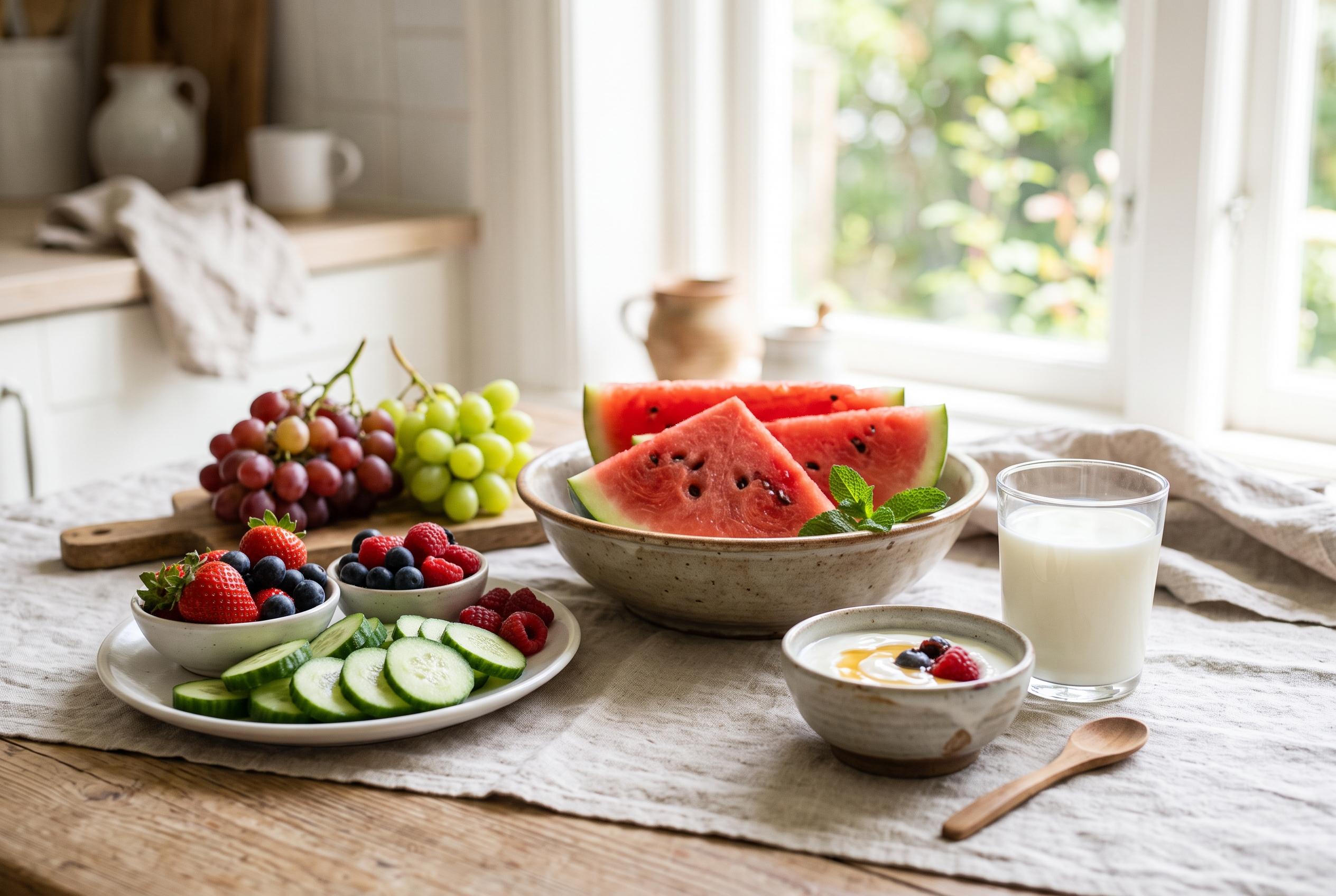

As temperatures rise, parents are encouraged to incorporate water-rich foods like fruit, vegetables, and dairy into children’s diets to help maintain hydration without over-relying on drinks alone. Experts highlight practical ways to keep kids hydrated and nourished during hot weather.
When temperatures climb, parents often find themselves repeatedly urging children to drink more. That matters because heat increases fluid loss through sweating, but hydration does not have to come only from a glass or bottle. According to Rachel Woods, an associate professor at the University of Nottingham and the University of Lincoln, moisture in food can make a meaningful contribution to a child’s daily water intake, although it should complement rather than replace regular drinks.
Fruit is the easiest place to start. Watermelon, strawberries, oranges, peaches and melon are all naturally rich in water, and research involving children aged four to 10 found that those who ate more fruit and vegetables tended to have better hydration markers. Health sources also note that food can provide roughly a fifth of daily fluid intake, which is why watermelon and other juicy fruit can be a practical addition during hot weather.
Vegetables can help too. Cucumber, tomatoes and peppers can all be served raw as snack food, in lunchboxes or alongside dips such as hummus or cream cheese. The Cleveland Clinic and Healthline both say many vegetables have high water content, while guidance from HealthyChildren.org stresses that children should keep drinking water before, during and after exercise in warm conditions.
Dairy can also play a part. Woods points out that yoghurt and milk contribute to both hydration and nutrition, and research in British children has linked yoghurt eating with higher intakes of key nutrients including calcium, iodine and riboflavin. Fortified plant-based alternatives may also work, although their nutritional value varies by brand. Homemade ice lollies made with yoghurt, fruit or diluted juice can offer a colder way to encourage fluid intake, especially for children who resist plain water.
A simple “picky tea” can combine several of these foods on one plate: melon or berries, cucumber and pepper sticks, yoghurt, cheese, hummus and crackers. Woods says that kind of flexible approach can be especially useful on very hot days, when a child may not want a full cooked meal. Even so, experts caution that watery foods are only part of the answer. Studies suggest that what children drink still accounts for most of the variation in total water intake, and no single sign reliably proves dehydration, so parents should keep offering drinks while also watching for broader changes in appearance, behaviour and appetite.
Disclaimer: This content is for informational purposes only and is not intended to be a substitute for professional medical judgment, advice, diagnosis, or treatment.