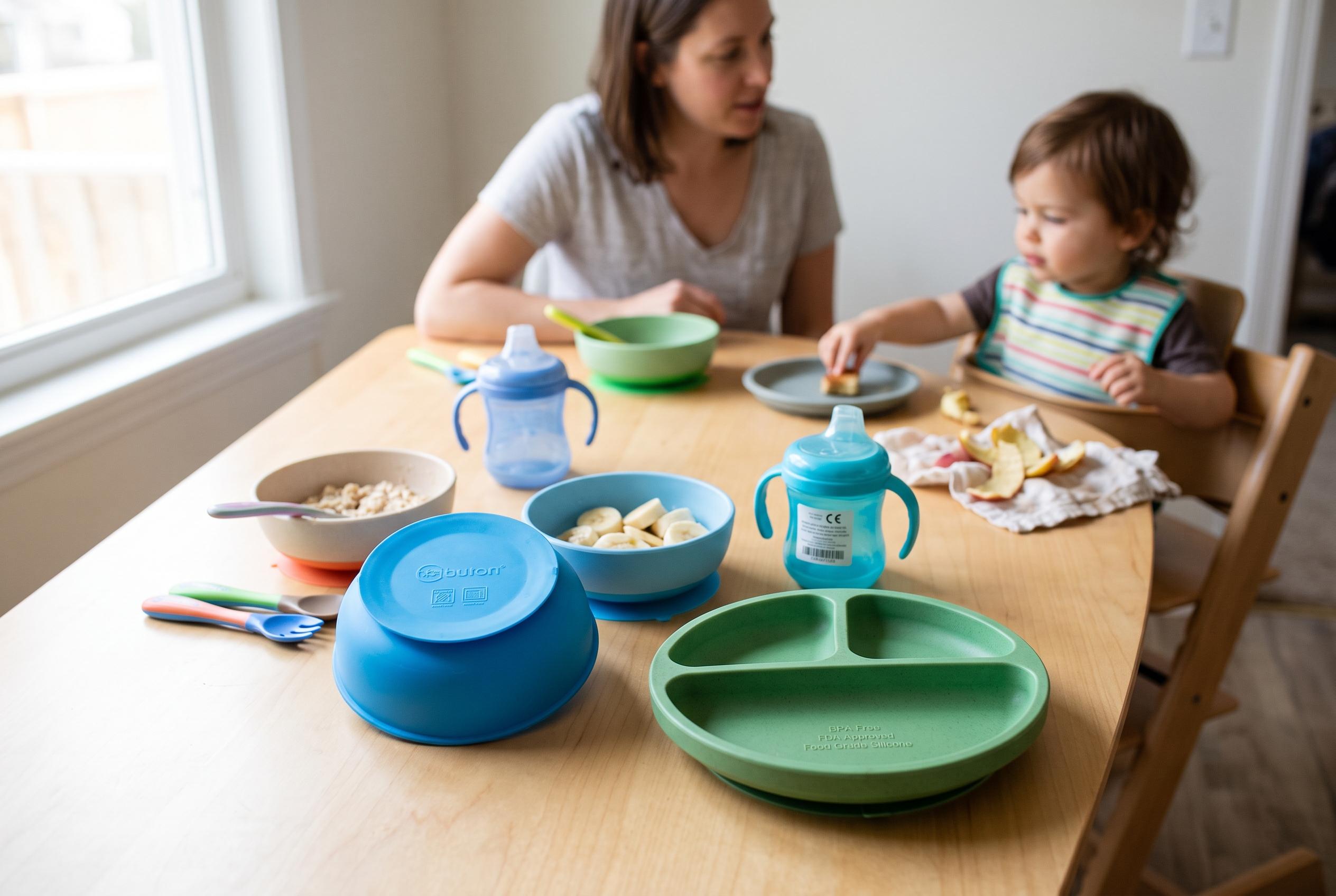

Experts emphasise that parents should prioritise material markings and safety features over design when selecting children’s bowls and cups to minimise health risks and ensure proper hygiene.
Parents often choose a child’s first bowl or cup for its colour and shape, but experts say the safer choice begins with the label, not the cartoon on the side. Olga Anishchenkova, who leads the food products division at the Law and Health Foundation, told Aif.ru that children’s tableware should be judged first on material, marking and how easily it can be cleaned.
For infants and toddlers, she said food-grade polypropylene is among the most practical options because it is light, durable and less likely to break if dropped. Silicone is also widely used for suction plates, spoons and bibs because it is soft and flexible, but she warned against buying items with a strong chemical smell, sticky surface, damage or no clear maker’s information. Reviews of children’s tableware materials also point to polypropylene, silicone and stainless steel as common choices, while noting that bamboo and wood need especially careful drying and maintenance.
The markings matter. On plastic items, the triangle symbol can indicate the type of material, and the numbers are not just packaging details. Polypropylene is usually marked PP and the number 5; high-density polyethylene is often marked HDPE and the number 2; PET, commonly number 1, is generally used for bottles and single-use packaging rather than regular hot-meal use; and polystyrene, number 6 or PS, can warp with heat. Products marked PVC, number 3, or items with no information about composition should not be treated as safe children’s dishes.
Microwave use is a separate question. Even a polypropylene bowl is not automatically suitable for reheating unless the package or manufacturer specifically says so. Guidance on microwave-safe baby bowls agrees that parents should look for a clear microwave symbol or explicit heating instructions and avoid metal, metal trim, damaged containers and tightly sealed lids without a steam vent. When in doubt, it is safer to warm food in another container and transfer it afterward.
Material alone does not determine safety. Anishchenkova also advised parents to wash new tableware before first use, avoid leaving purees, porridge or milk mixtures sitting in a dish for long, and never taste food with the same spoon used to feed a child. She said leftover food from a jar should not be stored after a spoon has been dipped into it, because saliva can introduce microorganisms. Glass and ceramic are hygienic but can break; stainless steel is durable but heats up quickly; and any dish with deep scratches, cracks, a lingering smell, stickiness, fading decoration or heat damage should be replaced.
Disclaimer: This content is for informational purposes only and is not intended to be a substitute for professional medical judgment, advice, diagnosis, or treatment.