

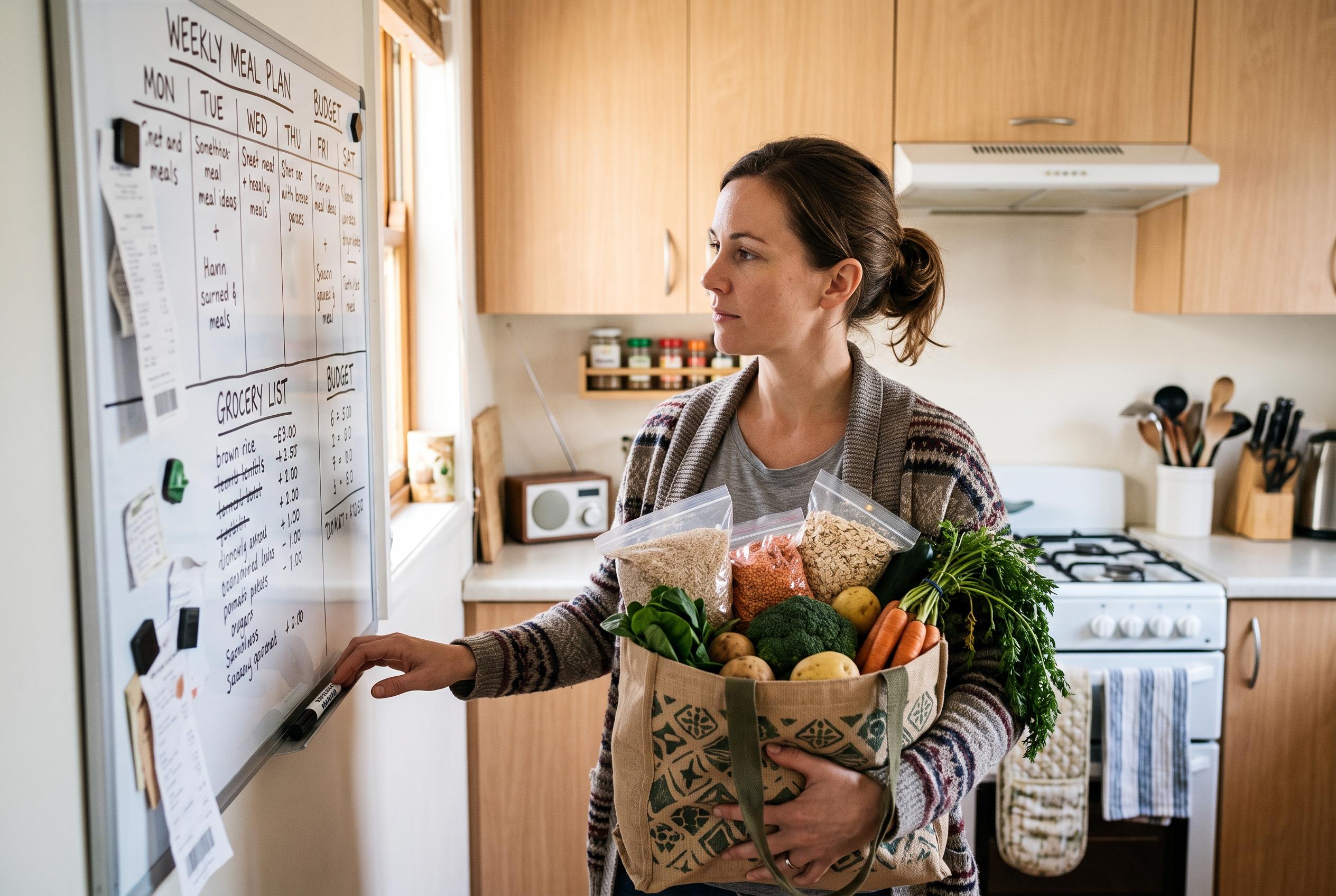

A dietitian and single mother shares her strategic approach to maintaining a predictable grocery budget of under $200 a week through careful planning, bulk buying, and home cooking, showing that disciplined shopping can keep food expenses manageable even during inflationary periods.
For one dietitian and single mother of two young children, the weekly question is not whether groceries will be expensive, but how to keep them predictable. After spending the summer tightening her budget, she says her target was to stay under $200 a week, though her recent average has been closer to $154. That put her household, by her reckoning, nearer the United States Department of Agriculture’s low-cost food plan than the agency’s higher spending tiers.
Her method is built on a few habits that align closely with standard budget advice from nutrition and meal-planning guides: plan meals before shopping, buy with purpose, and use a list to avoid impulse purchases. She breaks the family’s shopping between Costco, Trader Joe’s and King Soopers, choosing whichever store offers the best value for particular items. She also leans on curbside pickup when possible, saying it reduces the chances of grabbing extras and makes it easier to use discounts and coupons.
Buying in bulk is central to the approach. The family stocks up on larger packs of meat, bread, fruit and butter, then freezes what will not be used quickly. That strategy echoes other budget guides that recommend bulk buying for staples, especially when the food can be portioned and stored safely. She also favours generic versions of some products, such as canned beans and baking basics, while paying more for items where brand or quality matters more to her family.
The same logic shapes how she cooks. Instead of relying on takeaway, she tries to make home cooking easier with appliances such as an air fryer, slow cooker, rice cooker or pressure cooker. Meal planning is not just about deciding what sounds good; it is also about choosing recipes that share ingredients, so one shopping trip can cover several meals. Her weekly menu often follows a loose theme, moving from soup or casserole to grain bowls, Mexican food, pasta, breakfast-for-dinner and pizza, a structure that helps reduce waste and limits last-minute spending.
Small swaps also add up. She cuts costs by serving meatless meals a few times a week, stretching rotisserie chicken across more than one dish, making coffee at home and choosing simple snacks over more expensive packaged ones. In one recent week, that meant meals built around leftovers and previously bought staples, with a total grocery bill of $144.79 before tax and several pantry items, frozen foods and bulk purchases left out because they had already been paid for on earlier trips. The bigger lesson, she says, is that food budgets can rise and fall from week to week, but a system built on planning, freezing and thoughtful shopping can keep the average under control.
Disclaimer: This content is for informational purposes only and is not intended to be a substitute for professional medical judgment, advice, diagnosis, or treatment.



