

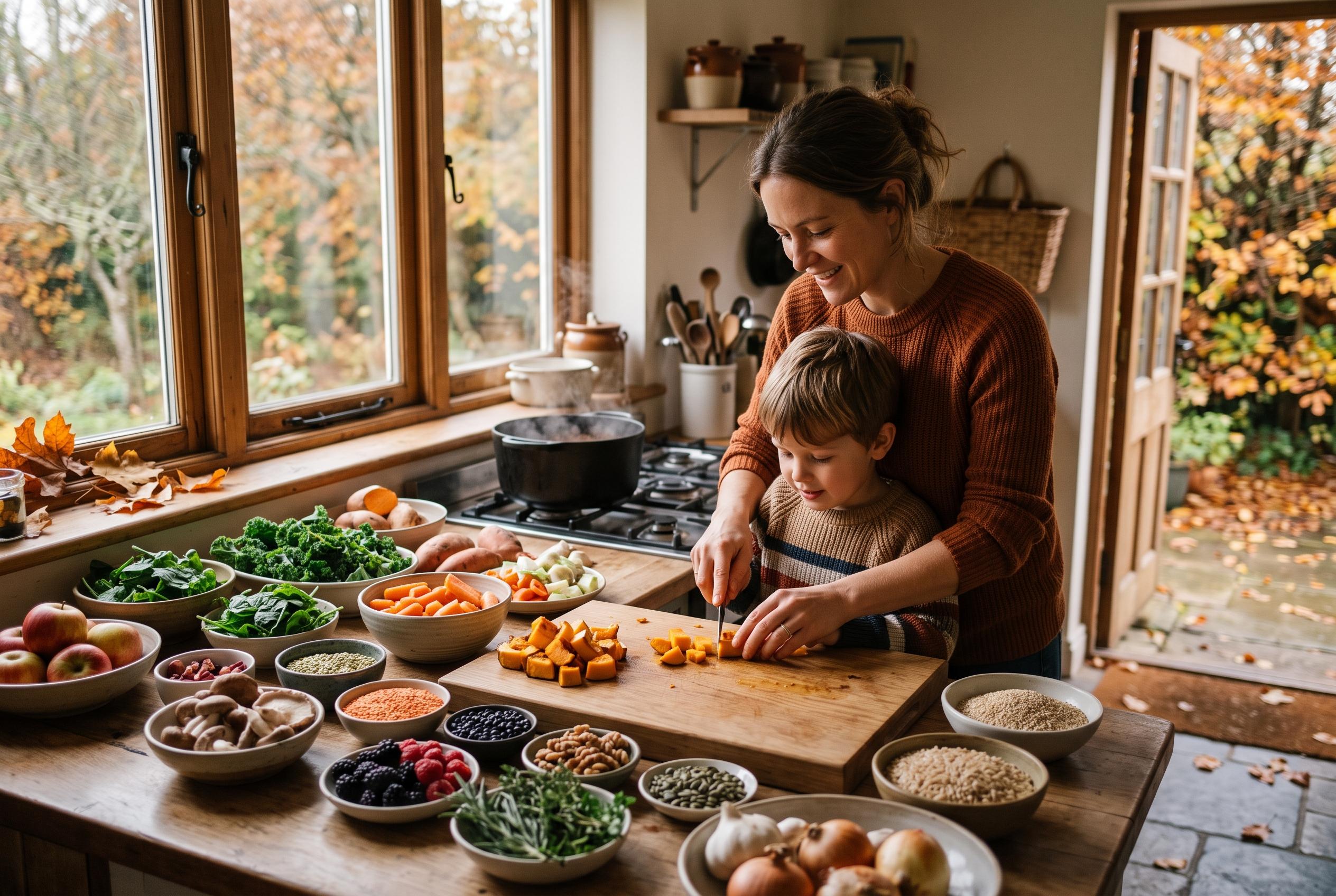

Including 30 different plant foods weekly, especially during autumn, can enhance gut microbiome diversity and support mental wellbeing amid shorter days, making this season an ideal time to diversify your diet with seasonal and cupboard ingredients.
As the seasons turn and the evenings draw in, many people notice a shift in appetite, energy and mood. Cooler weather can make comfort food more appealing, but it can also be a useful prompt to think more deliberately about what ends up on the plate. A plant-rich diet, especially one built around autumn produce, can make that change of pace feel less like a compromise and more like an opportunity.
The idea behind “30 plants a week” is simple: aim to eat 30 different plant foods over seven days. The concept grew out of research linked to the American Gut Project, which found that people who ate a wider range of plant foods tended to have more diverse gut microbiomes than those whose diets were more limited. Several explainers on the topic, including guidance from ZOE and other gut-health resources, say the point is not volume but variety, because different plants feed different microbes in different ways.
That diversity matters because the gut microbiome plays a role in digestion, immune function and the production of compounds that affect the body more widely. The latest summaries of the research say plant diversity appears to matter as much as, and sometimes more than, fibre intake alone. Legumes, wholegrains, nuts, seeds, herbs and spices all count towards the total, and so do frozen, tinned and dried foods. The practical message is that a tin of chickpeas, a spoonful of herbs or a handful of seeds can be just as useful as a fresh salad ingredient in helping to widen the mix.
Autumn is one of the easiest times of year to build that variety into everyday meals. British harvest produce such as squash, carrots, parsnips, beetroot, leeks, kale, cabbage, mushrooms, apples, pears and blackberries can be combined with cupboard staples like oats, barley, lentils, beans, nuts and seeds to make the target easier to reach. Guides to the “30 plants a week” approach also recommend mixing ingredients within the same meal, such as combining different grains, adding pulses to soups and stews, or finishing dishes with herbs and spices for extra breadth and flavour.
There is also a broader wellbeing angle. Shorter days often coincide with lower energy and a stronger pull towards sugary or heavily processed foods, and some people find their mood worsens as the light fades. Seasonal affective disorder affects about 2 million people in the UK, according to health organisations cited in the original guide, and diet is only one part of a wider response. Still, a more varied plant-based diet may support resilience by helping to nurture the gut microbiome, while daylight, movement and social contact remain important parts of looking after mental health through the darker months.
Fermented foods can add another layer. Small amounts of sauerkraut, kimchi, kefir, live yoghurt, miso or tempeh are often suggested as an easy way to introduce live microbes and the compounds they produce. The advice across the linked guides is consistent: little and often is enough. For anyone trying the approach for the first time, autumn is a practical season to start, because soups, stews, grain bowls and traybakes can carry a surprising amount of plant variety without requiring a completely different way of eating.
Disclaimer: This content is for informational purposes only and is not intended to be a substitute for professional medical judgment, advice, diagnosis, or treatment.



