

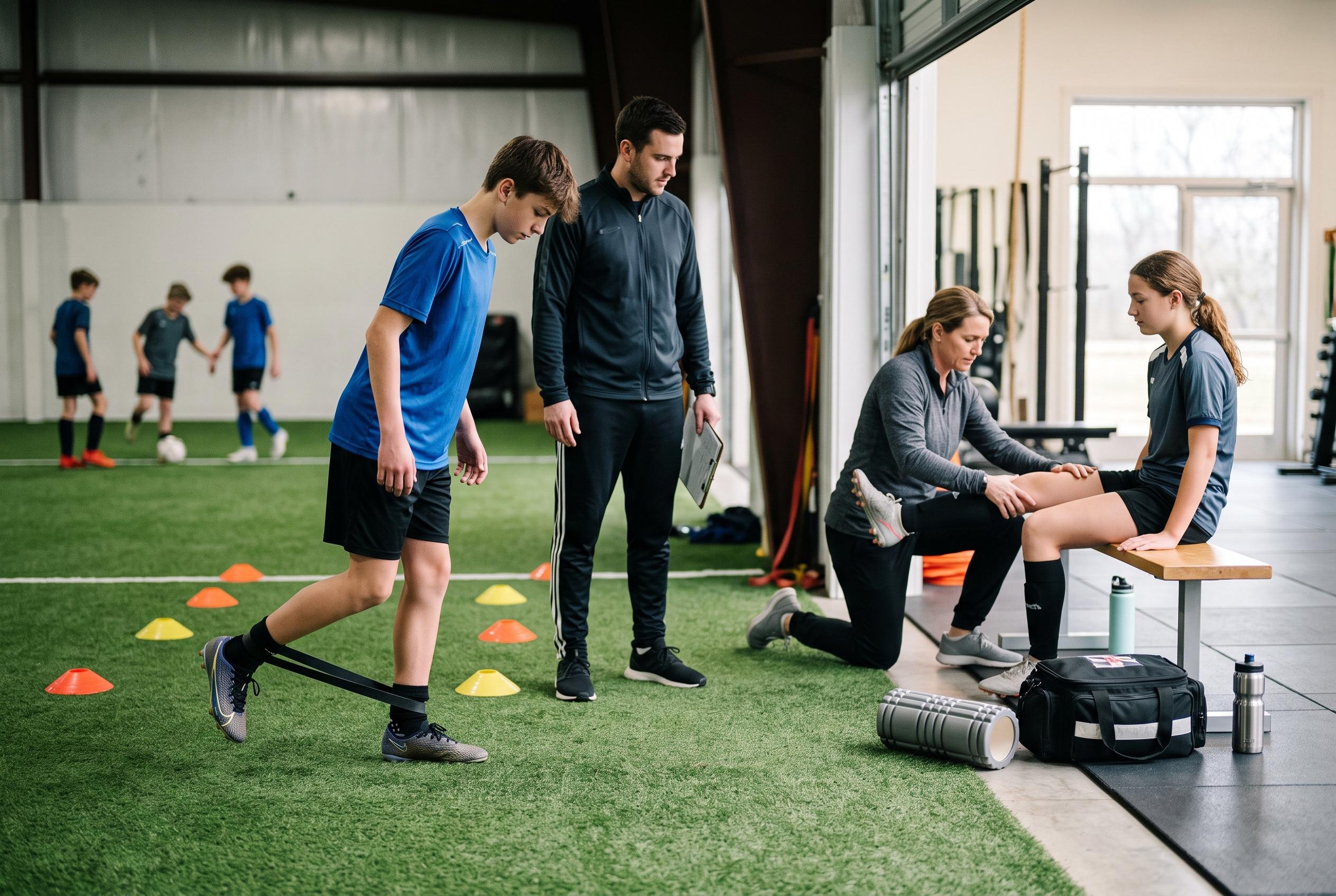

As soccer remains broadly popular across all ages, experts highlight the importance of targeted training and cautious return-to-play strategies to reduce injury risks among players re-engaging with the field.
Soccer’s broad appeal is one reason it remains one of the most durable sports at every age. The game draws teenagers, adults and older players alike, and the participation base is still strong among younger players while adults in their 50s and 60s are also returning to recreational leagues, according to a post from JAG Physical Therapy. That mix of ages brings different needs, but the shared challenge is the same: staying healthy enough to keep playing.
The sport’s stop-start rhythm is part of what makes it so demanding. Quick sprints, sharp turns, sudden braking and repeated changes of direction place constant stress on the knees, ankles, muscles and tendons. JAG Physical Therapy says those movements can become especially risky for players who are easing back in after time away or returning to a body part that was previously injured. For parents and caregivers, that means a past ankle sprain, muscle strain or ACL injury should be treated as a warning sign, not a forgotten problem.
Research backs up that caution. The American Academy of Pediatrics has reported that youth soccer has long been among the most widely played sports in the United States, with millions of participants and notable growth in girls’ and women’s play. At the same time, the academy and later reviews have found that soccer injury rates can be higher than in many other sports, particularly for lower-limb injuries that do not involve direct contact. A systematic review in the medical literature found that injuries are more common in matches than in training, and that adolescents are generally hurt more often than younger children.
Prevention efforts can make a real difference, especially when they focus on strength, balance and movement control. A 2018 study in the journal Sports Medicine found that neuromuscular training programmes, which teach athletes how to land, pivot and stabilise more safely, can reduce lower-limb injuries in youth soccer. A separate article from the American Orthopaedic Society for Sports Medicine said the growing pressure on young athletes, including earlier specialisation and more training time, has increased overuse injuries and made repeat injuries a particular concern. For families, the practical takeaway is clear: a careful return to play, proper conditioning and awareness of previous injuries are essential if the goal is not just to get back on the field, but to stay there.
Disclaimer: This content is for informational purposes only and is not intended to be a substitute for professional medical judgment, advice, diagnosis, or treatment.



