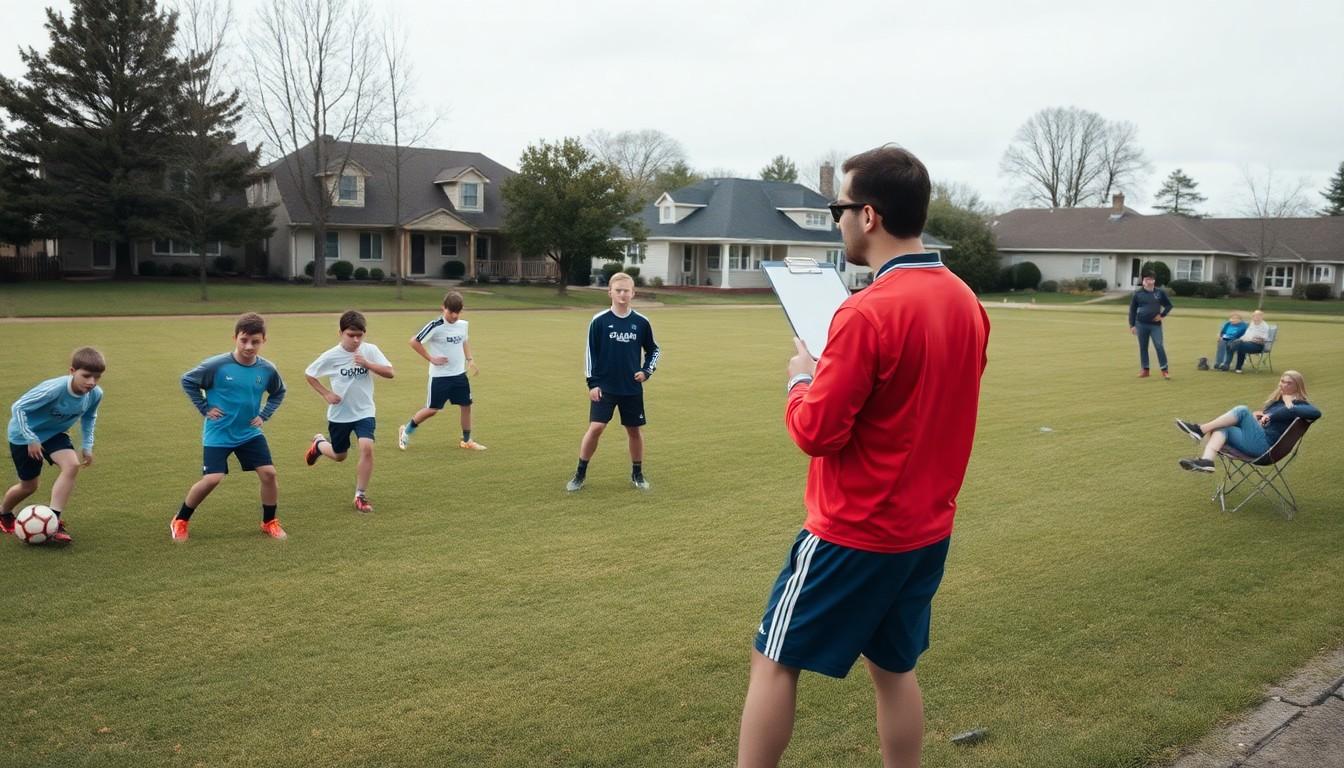

Emerging research and club philosophies emphasise the importance of meaningful involvement over rushing into competitive selection, with calls for fairer, more transparent playing time policies to boost long-term participation and skill growth in youth soccer.
Youth soccer’s fiercest arguments are often not about tactics or trophies, but about minutes. For many families, the question of whether a child gets on the pitch enough is the difference between staying engaged and drifting away altogether. Dutch Football Club in Frisco, Texas, argues that the issue is not simply one of fairness, but of development, confidence and whether young players come to see football as a place where they belong. That view is echoed by Mingle Sport, which says consistent involvement helps sustain motivation and long-term participation. The club’s position is clear: if youngsters are rostered, they should be meaningfully involved.
That argument matters because the early drop-off in youth sport is stark. The Aspen Institute’s Project Play has repeatedly warned that participation declines sharply as children move into adolescence, and the broader research cited by the club links bench time with frustration, reduced enjoyment and a weaker sense of attachment to the game. The idea is not that every match should be treated the same at every age, but that very young players need real game exposure to learn, improve and feel part of a team. Mingle Sport similarly frames playing time as central to enjoyment and skill growth rather than as an optional reward.
The best evidence also suggests that coaches can be misled by short-term physical advantages. A 2026 study in Frontiers in Sports and Active Living found that late-maturing players in an elite academy tended to receive less playing time, while defenders and players in certain relative-age groups were favoured. Earlier research on elite youth football also found that biological maturity and fitness markers, including VO2max and growth hormone levels, were strongly associated with minutes played. In practical terms, that means the biggest, quickest 12-year-old is not necessarily the best long-term prospect, and the late developer may simply need more patience.
For that reason, the sharpest divide in playing-time policy tends to be age-related. Guides from Mingle Sport and Flicktec both recommend near-equal involvement at U10 and below, with a gradual shift towards more performance-based selection from around U12 onwards. Dutch Football Club follows a similar logic, arguing that younger children should mostly be protected from prolonged benching, while older age groups can move towards a merit-based model as long as rostered players still receive meaningful minutes. That approach reflects a compromise between development and competition, rather than a simple winner-takes-all system.
Just as important is having a system that parents and players can understand. Mingle Sport’s guide argues that teams perform better when playing-time rules are clear, measurable and consistently applied, because ambiguity breeds resentment and stalls development. Dutch Football Club makes a similar case for structure, saying that coaches should not improvise minute by minute but instead apply a recognisable framework that accounts for attendance, attitude, effort, position and match context. That does not make the coach a spreadsheet, but it does make selection more transparent and easier to defend.
The football literature also suggests that training design matters as much as match selection. Research published in ScienceDirect found that altering exercise-to-rest ratios in small-sided games changed both physical and technical outcomes for elite youth players, reinforcing the idea that game-like repetition is essential for development. In other words, children do not simply learn by listening to instructions or watching from the touchline; they improve through repeated decision-making under pressure. That is one reason advocates for fairer playing time argue that every child needs enough competitive exposure to develop touch, awareness and confidence.
Taken together, the evidence points to a simple conclusion: youth football should be developmental first and selective only as players mature. Dutch Football Club’s philosophy, like the wider guidance emerging from coaching and sports-science circles, is that children are more likely to keep playing when they feel valued, challenged and involved. Winning still matters, but not at the cost of driving out the next generation before they have had a chance to grow.
Disclaimer: This content is for informational purposes only and is not intended to be a substitute for professional medical judgment, advice, diagnosis, or treatment.