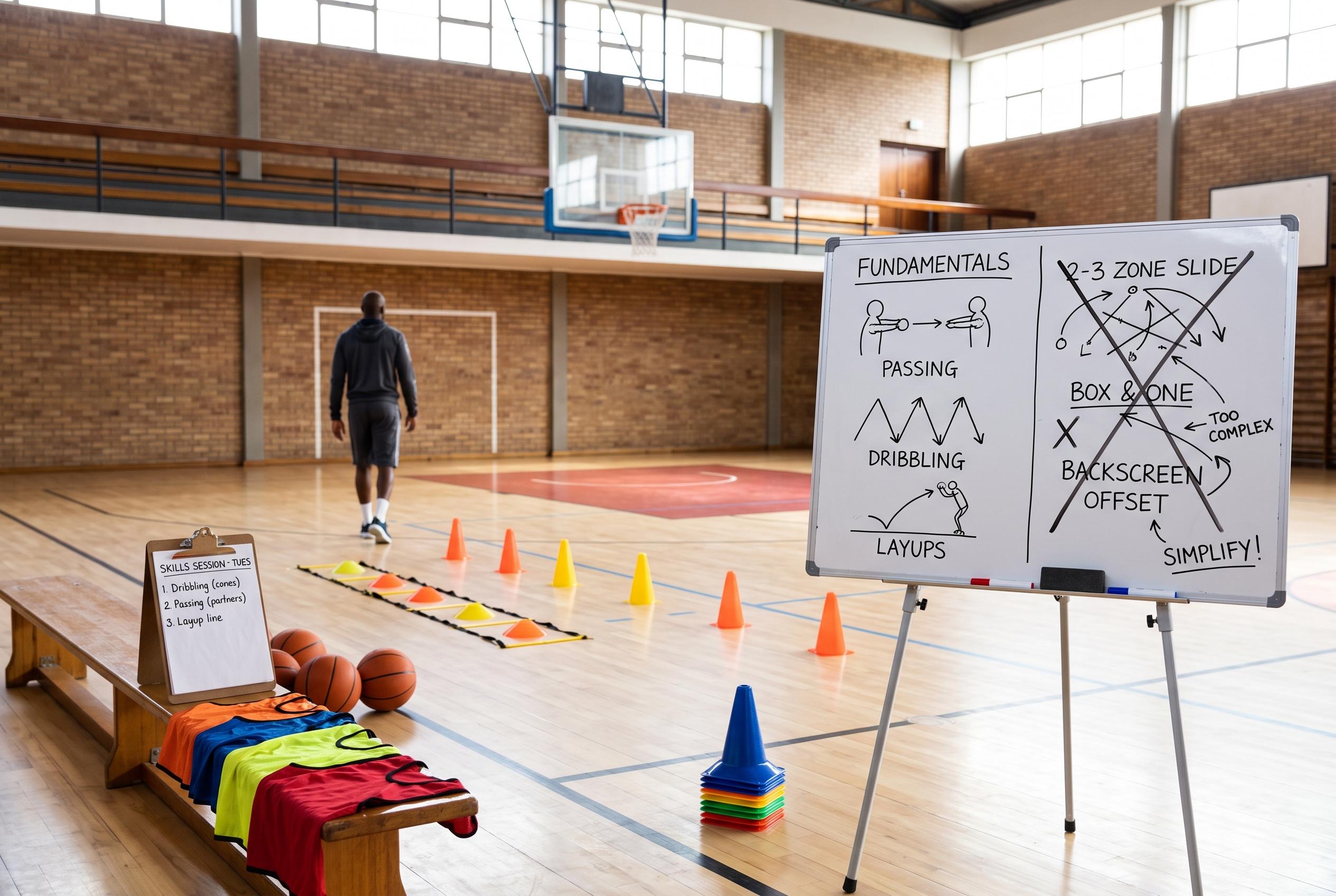

Many youth basketball coaches fall into common pitfalls, such as overemphasising zone defence and complex plays, which can hinder young players’ fundamental skills and enjoyment. Experts advocate a focus on basic skills, simple tactics, and age-appropriate practice structures to foster long-term growth and love for the game.
Youth basketball coaches often make the same mistake: they try to do too much before players are ready. Winning, tactics and preparation all matter, but younger players need time to learn the basics first. Coaches who keep development at the centre of practice are more likely to build players who can think, move and adapt as they get older.
One of the biggest traps, according to TeachHoops, is leaning too heavily on zone defence. It can help a team cope with opponents who cannot shoot well, but it does little to teach youngsters how to guard the ball, communicate and recover on defence. YouthBasketballPracticePlans also stresses that practice time should not drift away from fundamental defensive work. The better approach is to treat zone as one option, not the whole identity of a team.
The same problem appears on offence when coaches overload children with plays. Breakthrough Basketball warns that complicated systems can overwhelm young players and crowd out skill development, while TeachHoops argues that a simple structure is usually enough at this level. Rather than memorising multiple sets, players benefit more from learning how to read the defence: whether to drive, pass, pivot or keep moving towards the basket. That approach helps them understand the game instead of just repeating instructions.
TeachHoops also argues against locking children into positions too early. A tall fourth-grader may not be a post player forever, and a youngster who handles the ball well now may grow into a different role later. Rockline Basketball and Hoopleaders both emphasise the danger of neglecting core skills in favour of advanced ideas too soon. Letting players rebound, pass, screen, finish and handle the ball in different roles helps them develop a fuller game and avoids boxing them in by size or current ability.
Practice structure matters just as much as tactics. TeachHoops warns that long lines and too much waiting can waste valuable time, and Basketball for Coaches says practices should be age-appropriate, purposeful and enjoyable. Smaller groups, more movement and fewer lectures usually mean more touches, more feedback and better focus. The goal is not to keep every child moving every second, but to cut out unnecessary downtime.
The common theme across all of these coaching mistakes is simple: youth basketball should build foundations, not shortcuts. Coaches can still compete and teach teamwork, but the best long-term results usually come from simplifying the game, reinforcing basic skills and giving players time to learn by doing. That is what helps young athletes enjoy the sport now and become better prepared for later.
Disclaimer: This content is for informational purposes only and is not intended to be a substitute for professional medical judgment, advice, diagnosis, or treatment.