

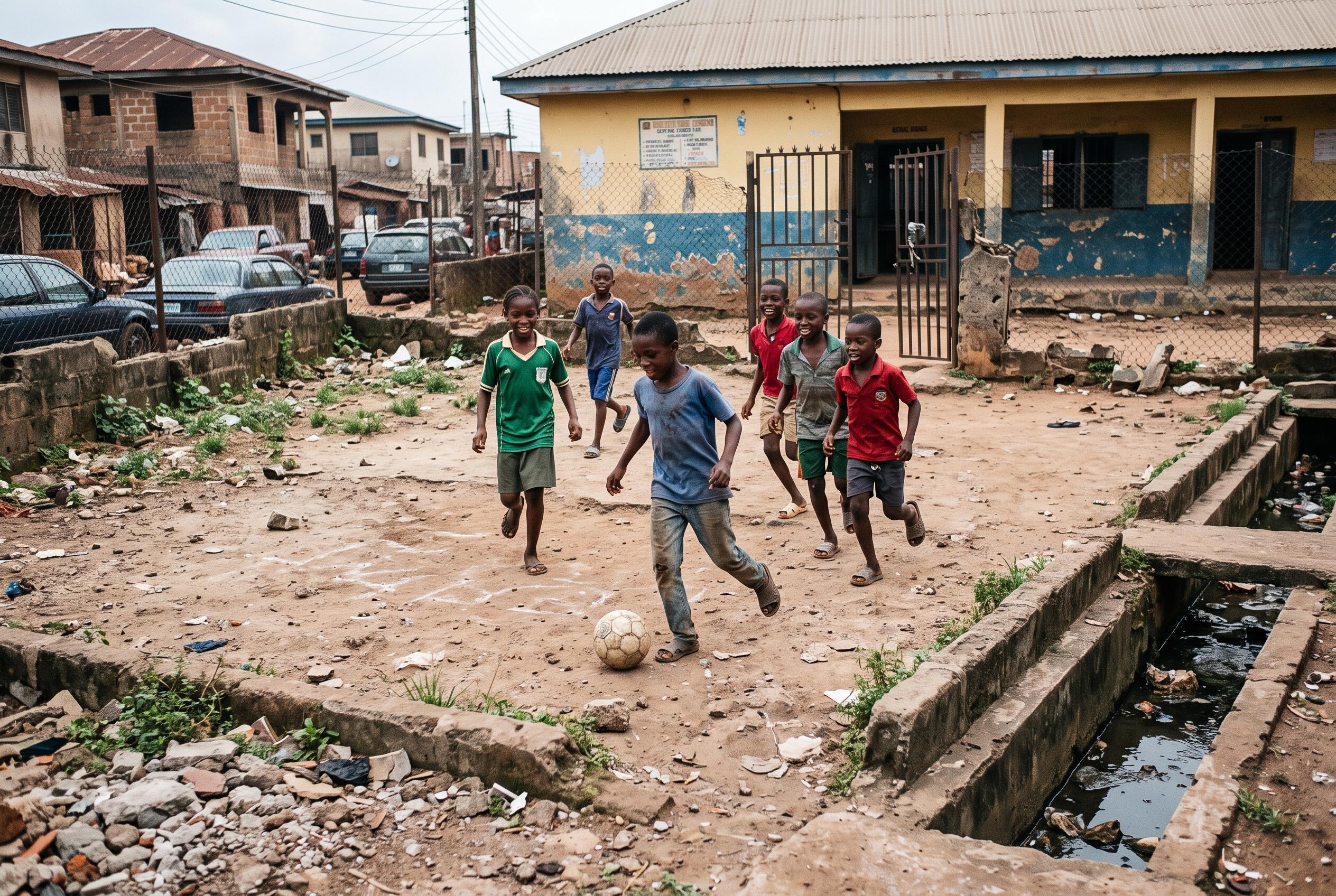

A new study reveals that children in Enugu are less active due to limited safe spaces, school priorities, and community infrastructure, emphasising the need for integrated solutions to promote active lifestyles.
Parents in Enugu, Nigeria, see children’s physical activity as uneven and heavily shaped by context, according to a new PLoS One study. Some children were described as lively and active at home but quiet in school, while others were more engaged when adults deliberately built movement into family routines. The authors say this pattern reflects a broader reality: participation in exercise and play is not simply a matter of personal choice, but of time, space, support and competing demands.
The study, based on in-depth interviews with 20 parents of nursery, primary and secondary school pupils, found that satisfaction with physical activity opportunities ranged from pleased to deeply dissatisfied. A few parents praised organised sports and set physical education periods, but many said school life leaves too little room for movement because academic work takes priority. The paper says this frustration was often tied to short timetables, homework, extra lessons and tired children returning home late.
Parents also pointed to factors that made activity easier. These included safe places to play, encouragement from family members, peer support and schools that made time for exercise. But the barriers were more prominent in many accounts. Safety fears, traffic, poor recreational facilities, limited playgrounds and the lack of consistent physical education all featured strongly. A medRxiv preprint on the same research questions reports the same five themes and reaches the same conclusion: school provision, community infrastructure and parental engagement all need to improve together.
The findings fit with earlier Nigerian research showing that weak school facilities can hinder learning and that physical education is often pushed aside when schools prioritise academic performance. A separate University of Ibadan study cited in the paper also found that school-level barriers, including too few trained physical education teachers and low institutional support, restrict children’s activity opportunities. Taken together, the studies suggest that the problem is not only household behaviour but also the wider design of schools and neighbourhoods.
The authors argue that improving children’s activity levels will require more than telling families to be active. They call for stronger school-based physical activity programmes, better community spaces and policies that treat movement as part of healthy child development rather than a distraction from academic success. For parents in Enugu, the message is clear: children are more likely to move when schools, families and communities all make room for it.
Disclaimer: This content is for informational purposes only and is not intended to be a substitute for professional medical judgment, advice, diagnosis, or treatment.



