

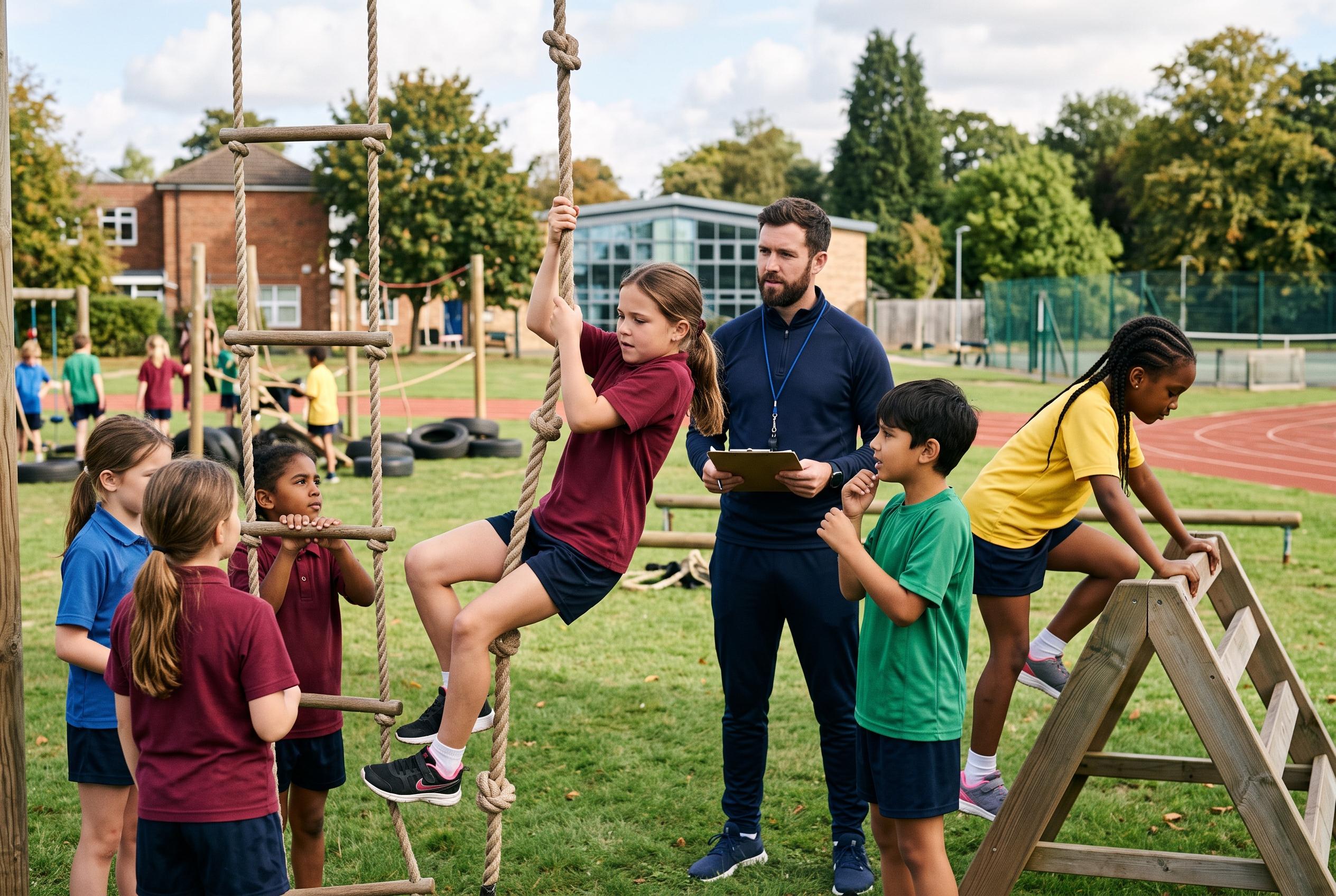

Difficulty can build confidence and resilience in PE, but only when pupils have the feedback, support and manageable next step needed to turn effort into progress.
In physical education, difficulty is not automatically valuable. What matters is whether a student has a real chance to learn from the challenge in front of them. A missed catch followed by another attempt can be productive if the pupil has a clear next step, usable feedback and enough support to improve. Without that, the same moment can quickly turn into embarrassment, withdrawal or avoidance.
Motor-learning research behind the challenge point framework says the best practice sits at the point where task demands match the learner’s current ability. If the activity is too easy, there is little new to discover. If it is too hard, the student may not know what to change. The practical lesson for PE teachers is that the same task can educate one child and frustrate another, depending on skill level and the way the task is set up.
That logic matters because confidence is built from evidence. Work on self-efficacy, the belief that a person can succeed at a specific task, shows that mastery experiences are especially powerful. In PE, that means a pupil who begins with a manageable version of a skill, then sees improvement after adjusting technique, is more likely to believe effort can lead to progress. By contrast, repeated failure without a path forward can erode confidence rather than strengthen it.
Motivation also depends on how students experience the lesson. Research on challenge-based approaches in physical education has linked better outcomes to the satisfaction of three basic psychological needs: autonomy, competence and relatedness. In practice, that means pupils need some choice, a sensible route to success and a sense that the teacher and their peers are supporting them. Hard work alone does not create engagement; the challenge has to feel usable, fair and safe.
That is why productive struggle in PE is better understood as supported effort, not as repeated defeat. A teacher might move a throwing target closer, reduce the distance of a catch, remove a defender or simplify a movement sequence before adding complexity again. The point is not to remove difficulty altogether, but to strip away unnecessary barriers so the child can focus on the specific skill under development. A lesson that demands more effort without adjusting the task risks confusing the student rather than teaching them.
The same principle applies to resilience. A missed shot or an awkward landing can become a moment for practising calm, reflection and adjustment, but only if those responses are taught deliberately. Approaches that focus on responsibility in PE treat self-direction, effort and transfer beyond the gym as explicit goals. Teachers should not assume that persistence will automatically emerge from a hard task; they need to name the coping skill, model it and build it into the lesson.
For that reason, the most useful question is not how much a student can be made to endure. It is whether the student still has a workable route ahead. If the answer is yes, the struggle may be productive. If the answer is no, the teacher may need to change the equipment, the rules, the distance, the social pressure or the amount of guidance. Done well, PE can help children discover that a difficult movement becomes manageable through practice, support and adjustment, rather than through pressure alone.
Disclaimer: This content is for informational purposes only and is not intended to be a substitute for professional medical judgment, advice, diagnosis, or treatment.



