

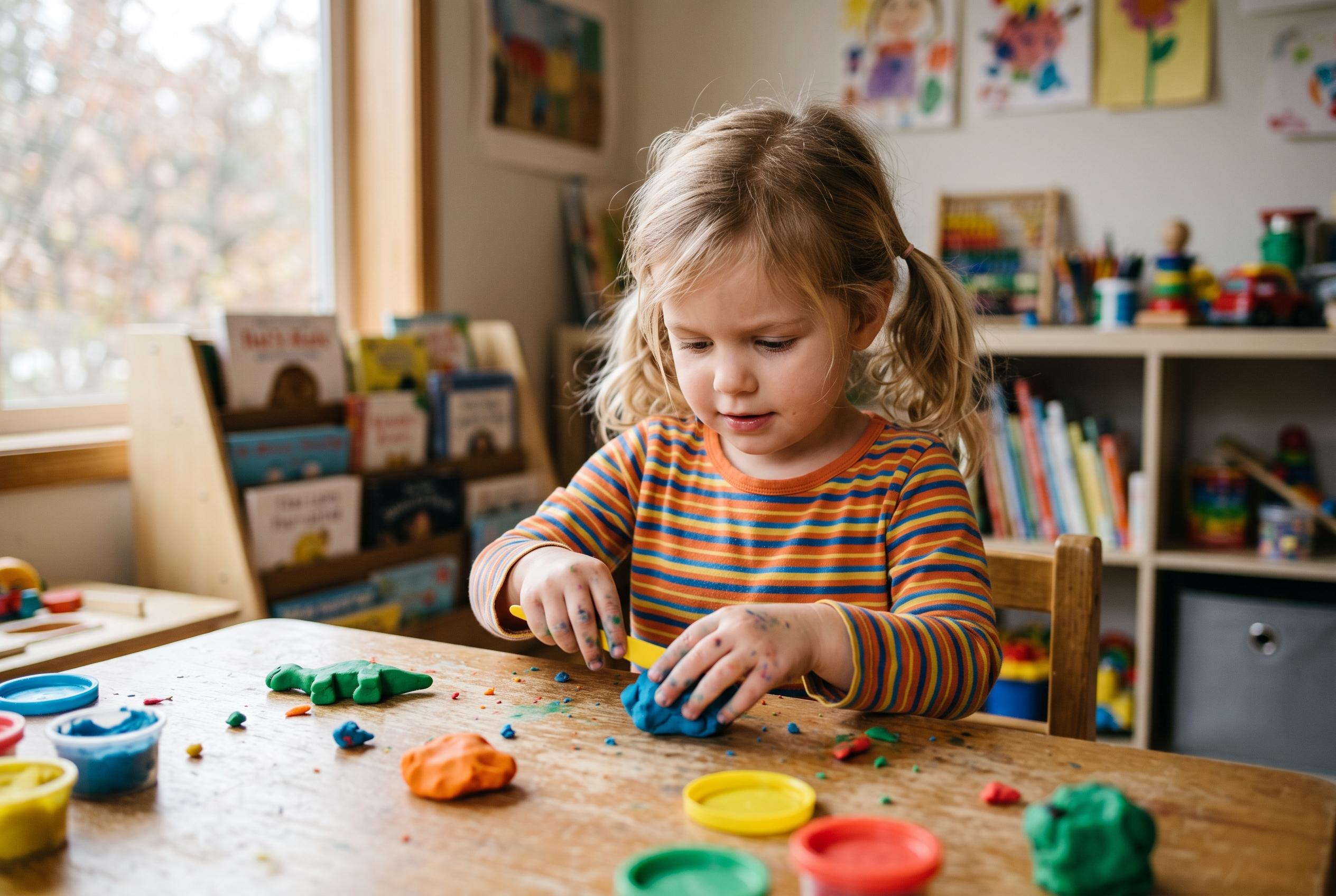

Regular plasticine play can build fine motor skills, concentration, speech and spatial awareness while helping children prepare for school without formal lessons.
Preparing for school does not have to begin with worksheets, textbooks or memorising rules. For many children, learning starts most naturally through play, and modelling with plasticine can turn the development of important abilities into something enjoyable and easy to understand. According to 7days.ru, early years educator Olga Sheeva and experts from Fix Price argue that parents should focus less on formal instruction and more on the skills children build through creative activity.
Working with plasticine can strengthen hand co-ordination, improve concentration and support speech development. The material recommended by specialists is wax-based plasticine, which is softer than standard varieties but still offers enough resistance to make the muscles in the hand work harder. That kind of exercise lays foundations for later tasks such as writing, playing a musical instrument and even learning foreign languages. Research published in education and child development journals also suggests that plasticine play can help children improve fine motor control, including the ability to use scissors properly, form letters and numbers, and complete other early classroom tasks.
Age-appropriate tasks matter. Very young children do not need complicated crafts straight away. At first, it is enough for them to squeeze, roll and stretch the material to explore how it behaves. That kind of open-ended play develops finger movement without turning the activity into a stressful test. As children grow older, they can move on to simple shapes and short story-based projects, learning to join pieces together, notice differences between them and talk about what they have made. School-age children, by contrast, can handle more independent creative work that involves several elements and requires a little planning in advance.
The article also highlights the value of using both hands in different roles. One hand can hold the model while the other presses in a pattern or attaches a detail, and changing the leading hand from time to time can help avoid over-reliance on one side. This type of task encourages co-ordination and trains the brain to manage more than one movement at once. A simple test, such as drawing a circle with one hand while the other draws a straight line, can show whether the hands are still interfering with each other. That kind of cross-body control is especially useful for children who may later take up music, dance or sport.
Modelling also offers an easy way to expand a child’s language. Adults can name colours, shapes and materials during the activity, describe actions and ask the child to explain the finished piece. Sheeva says the areas of the brain linked to speech and finger movement sit close together, which may make new words easier to remember when they are tied to concrete objects and actions. Another benefit is spatial thinking: unlike drawing, modelling introduces children to volume straight away. They can examine an object from every angle, compare parts and learn how proportions work. Those skills can support later learning in geometry, technical drawing, navigation, design and 3D modelling.
The activity does not need to last long to be effective. Fifteen to 20 minutes is enough if it happens regularly. Adults are encouraged to praise effort and small improvements rather than judging the beauty of the final result alone. According to the article, that approach helps keep children interested and shows that learning can be enjoyable as well as useful.
Disclaimer: This content is for informational purposes only and is not intended to be a substitute for professional medical judgment, advice, diagnosis, or treatment.



