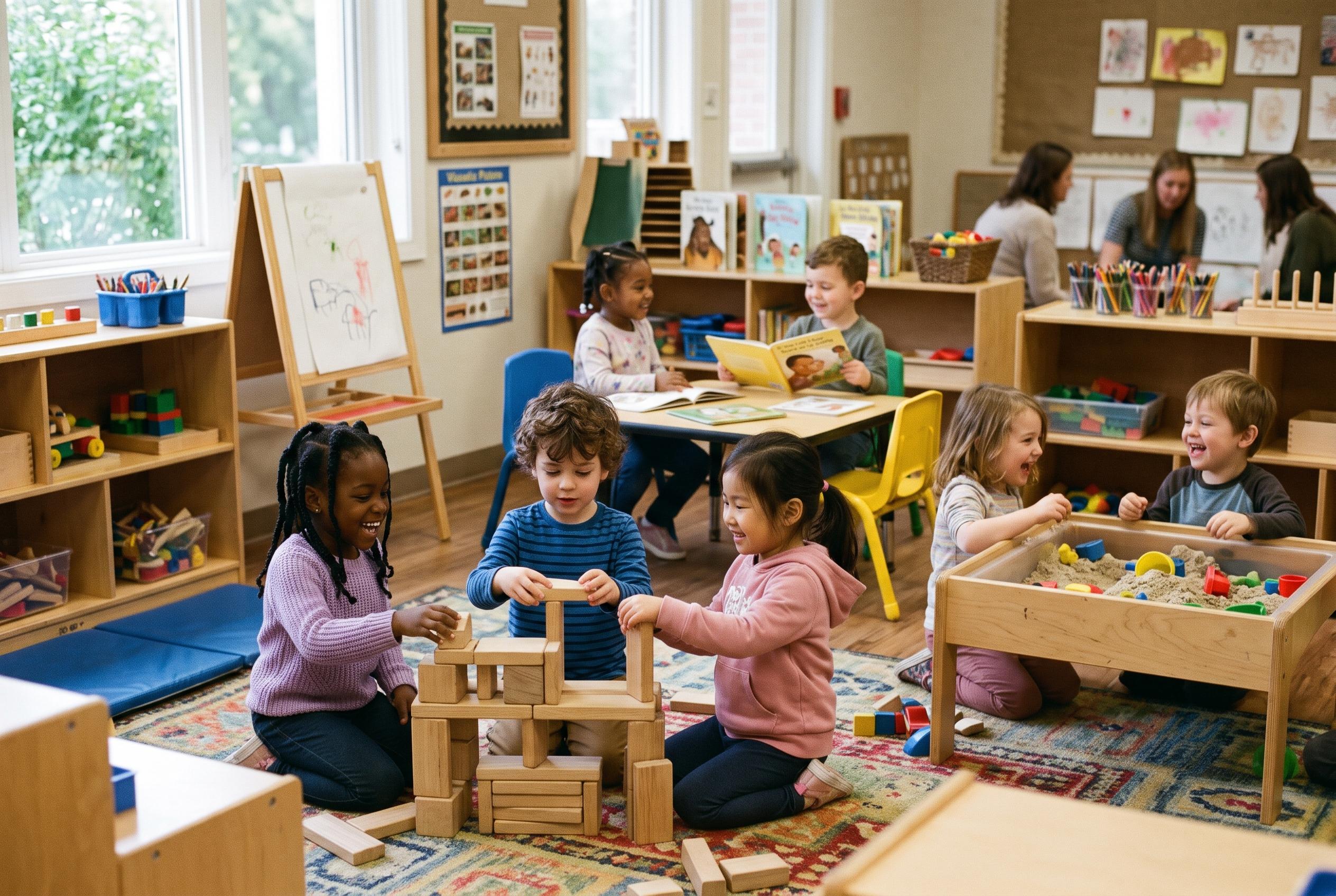

Research and classroom experience suggest that joy does more than make learning pleasant: it helps young children focus, regulate emotions, explore ideas and retain new skills.
Joy may look like a pleasant extra in early education, but researchers and educators increasingly describe it as a force that helps children learn in the first place. In an account published by Psychology Today and based on work from Literacy@Play, a preschool hallway that once dissolved into noise and tension was transformed by imaginative play: children tiptoed quietly because they were pretending to pass sleeping tigers. What had required repeated correction suddenly became a shared game, and the change revealed a larger lesson about learning. When children feel engaged, connected and delighted, they are often better able to focus, regulate themselves and carry a skill forward into the next moment.
That matters because stress changes how the brain works. The article explains that when young children become overwhelmed, the prefrontal cortex, which supports reasoning and decision-making, is less available, while the amygdala shifts attention towards survival. In that state, children are less likely to experiment, solve problems or absorb new information. By contrast, positive emotion broadens attention and makes room for curiosity, flexible thinking and exploration. The piece links this idea to Barbara Fredrickson’s Broaden-and-Build theory, which holds that joyful experiences expand immediate thought and action while also building lasting cognitive, social, physical and emotional resources.
The broader argument is echoed in an earlier Psychology Today essay on the joy of learning, which says joy should be understood as a starting point rather than a reward that comes after progress. That article suggests the arts are especially effective at creating the conditions for learning because they invite participation, imagination and emotional response. A song, a rhythm or a shared performance can turn hesitation into involvement, making learning feel less like compliance and more like discovery. In that sense, the arts do not merely decorate education; they help organise attention and make meaning visible.
Educators who work with young children often recognise this instinctively. The Psychology Today piece describes children at a Mozart for Munchkins concert who begin moving, conducting or drifting closer to an instrument before adults have even named what they are seeing. In those moments, music becomes both a sensory and social experience, helping children coordinate their bodies, attention and emotions at once. The lesson for parents and teachers is not that every activity must be entertaining, but that joy can emerge from wonder, movement, repetition and shared purpose. Even a simple song sung badly and eagerly can create a sense of belonging that helps children stay with the task.
That approach also fits with a much older strand of educational thinking. A 2015 Psychology Today essay argued that when school loses its sense of enjoyment, learning often suffers with it, because boredom and stress interrupt the processing of new information. Another long-running theme in the literature is that play is not a distraction from serious work but a meaningful form of it, especially in early childhood. The practical implication is straightforward: allow room for imagination, use rhythm and movement to support attention, and notice that joy does not always appear as laughter. Sometimes it shows up as calm focus, pride or the quiet concentration of a child who is fully absorbed.
Disclaimer: This content is for informational purposes only and is not intended to be a substitute for professional medical judgment, advice, diagnosis, or treatment.