

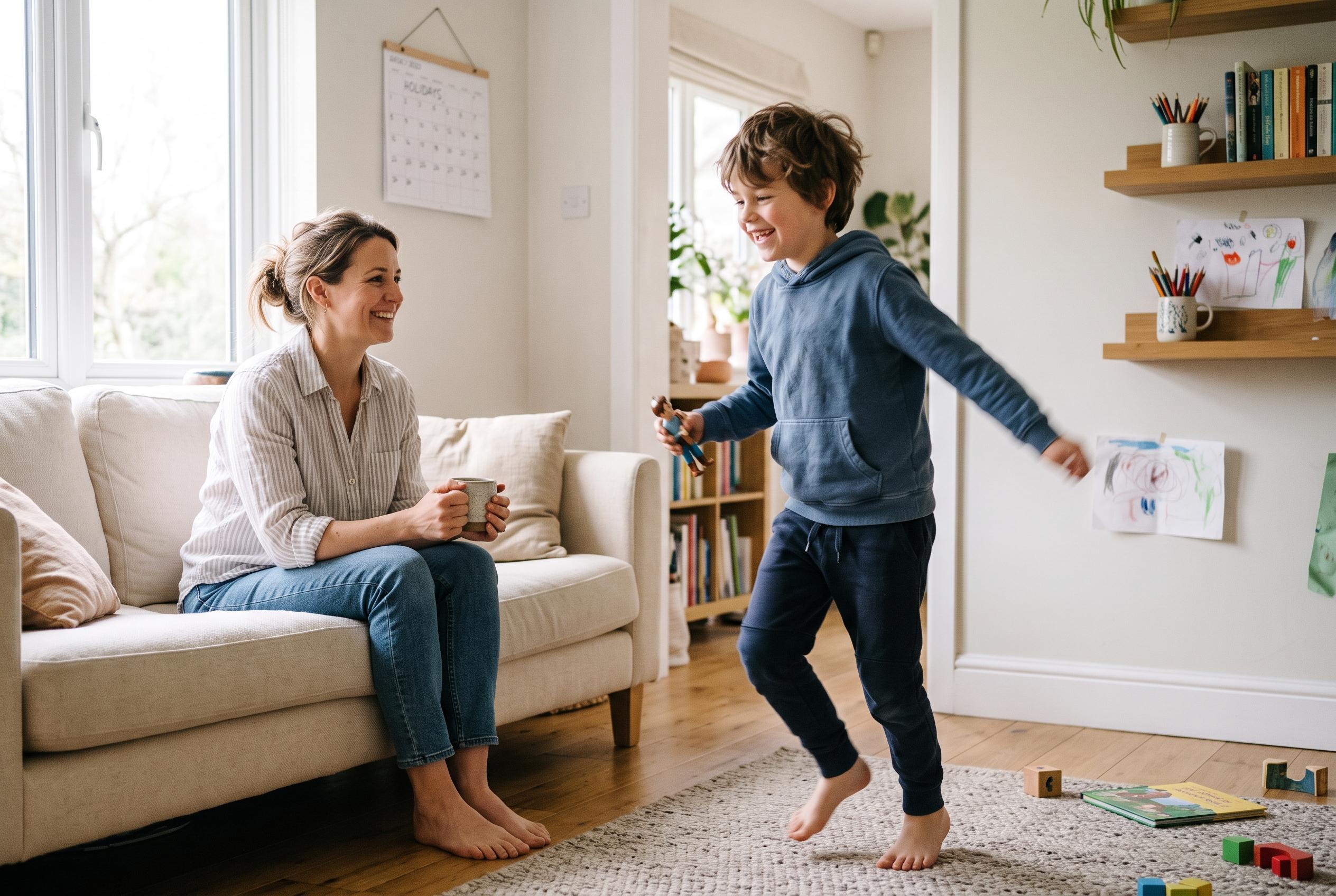

A light holiday structure, regular movement and a gradual return to term-time habits can help energetic children stay settled without recreating the school day at home.
School breaks can be a relief for children, but for those with plenty of energy they can also become a source of friction. When the day loses its familiar rhythm, boredom often arrives quickly, followed by squabbles, restlessness and the kind of evening chaos that can leave the whole household drained. The answer is not to recreate the school day at home, but to give the holiday a light framework that still allows for slower mornings, family time and unhurried moments.
That approach matters because children are often steadied by routine. School gives them a stream of signals that tell them what happens next: when to start the day, when to eat, when to work and when to pause. Without those cues, even simple choices can feel harder, from deciding how long to stay on a screen to knowing when lunch will arrive. Guidance from the Centres for Disease Control and Prevention says regular breaks such as recess can improve attention, reduce disruptive behaviour and support social and emotional development, while the American Academy of Paediatrics argues that daily recess helps with focus, stress relief and healthy development. Those benefits do not disappear during the holidays; they simply need to be built into the home schedule in a looser way.
For that reason, a holiday works best when each day has a recognisable shape. A fixed time for getting dressed, a set lunch slot, a window for active play and a predictable bedtime can make a big difference without turning the week into a rigid timetable. Some families find it useful to keep mornings for outings or high-energy activities, then reserve the afternoon for quieter pursuits such as reading, crafts or a film. Younger children may benefit from a simple visual plan showing the day in a few stages, while older children often do better when changes are explained before they happen. The Pennsylvania Training and Technical Assistance Network says structured breaks can help students regulate energy, emotions and focus, a principle that applies just as well at home during long holiday stretches.
Movement is especially important for children who seem to have energy to spare. A quick trip to the shops or a short playground visit may not be enough to take the edge off. Without an outlet, that extra energy can surface as rough play, climbing on furniture or arguments over minor requests. A proper physical session each day, whether that is cycling, swimming, dancing or sport, can improve the mood of the whole household. On wet days, parents can improvise with indoor obstacle courses, balloon volleyball or movement videos. The Whole Child Model notes that structured recess-style activity can help children play safely and cooperatively while also supporting physical health, social skills and stress relief.
For working parents, organised holiday care can offer another layer of support. A well-run camp or club provides scheduled activity, adult supervision and chances for children to socialise, wait their turn and try things they might resist at home. Before booking, it is worth asking how the day is organised, whether there is a mix of active and quiet time, and how staff handle children who need a break. The most useful settings tend to be those that balance energy with downtime rather than filling every minute. If a child is nervous, starting with a half-day can make the transition easier, especially if the staff can explain the routine clearly before the first session.
The last few days before term starts can be the hardest if bedtimes have drifted later and mornings have become completely open-ended. A gradual reset is usually kinder than a sudden one. Shifting sleep and wake times by small increments, bringing meals back to their usual slots and restoring the normal getting-ready routine can help children re-adjust without too much friction. It also helps to keep the final day calm: some outdoor play, an early meal and a familiar bedtime often provide a better launch into term than a big farewell outing. In the end, a successful holiday does not need to look like school. It simply needs enough structure to keep the days from unravelling, so children can enjoy their freedom without becoming overwhelmed by it.
Disclaimer: This content is for informational purposes only and is not intended to be a substitute for professional medical judgment, advice, diagnosis, or treatment.



