

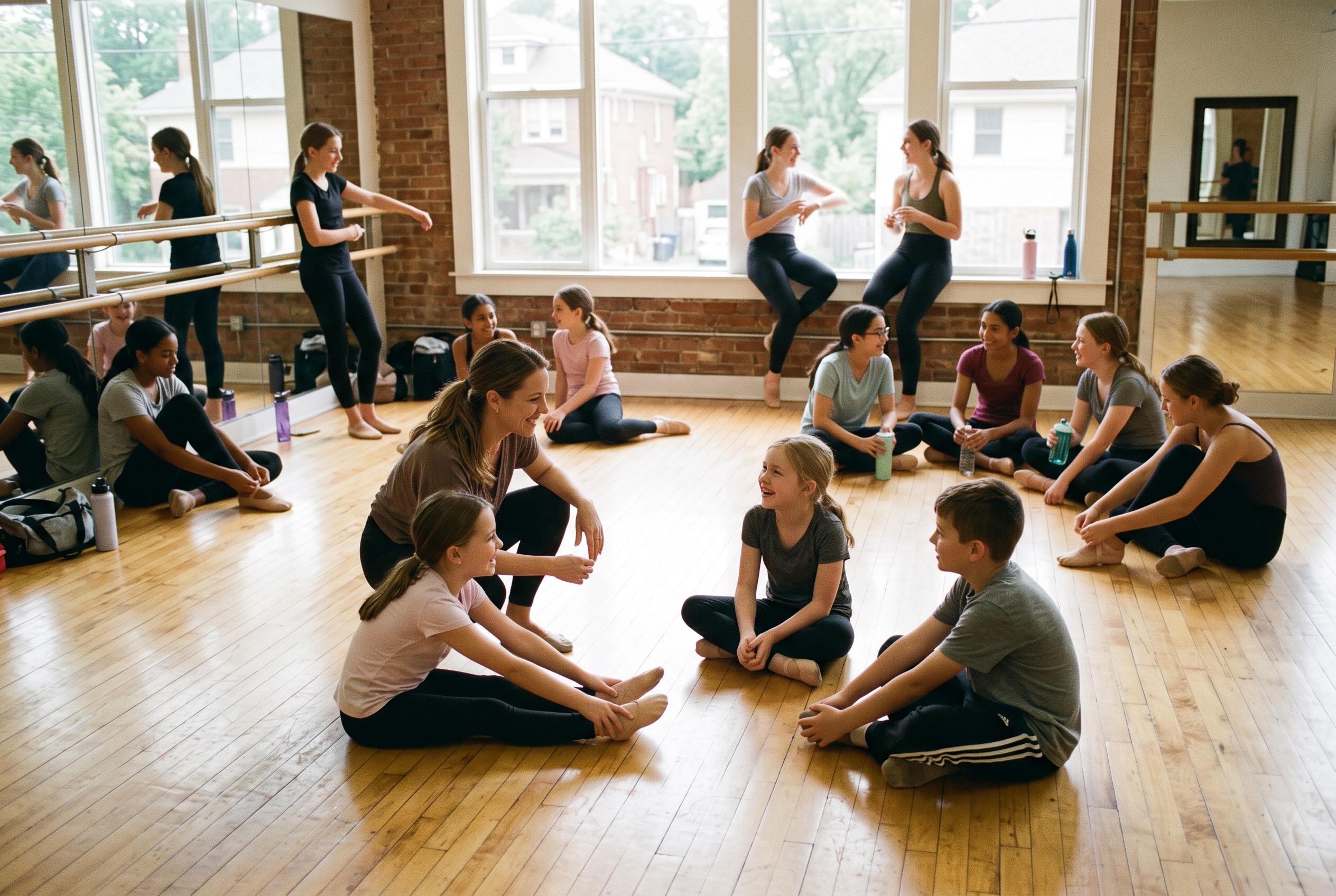

Beyond steps and choreography, dance training can help people build self-belief, express emotions, work with others and develop resilience.
Dance studios can offer far more than instruction in steps, timing and choreography. They often function as structured, supportive environments where children, teenagers and adults build confidence, strengthen creativity and learn how to cope with setbacks. The Pennsylvania Academy of Dance Arts says that regular dance training can help participants develop self-awareness, discipline and emotional expression, while several other studios describe similar benefits extending well beyond the studio floor.
A major part of that growth comes from body awareness and steady progress. As dancers learn to control posture, balance and movement, they often become more comfortable in their own bodies and more confident in what they can achieve. Mitkof Dance Troupe says dance can support strength, flexibility and focus, while Perform Art Studios notes that it can improve coordination, balance and spatial awareness in children. Over time, those gains can help dancers approach new challenges with more patience and resilience.
Dance also gives people a way to express feelings that can be difficult to put into words. The Pennsylvania Academy of Dance Arts says music and movement can help dancers communicate emotion through gesture, facial expression and interpretation. New Forest Academy of Dance makes a similar point, describing dance as a route to greater self-expression and a way to overcome self-consciousness through performance. For many young dancers, that creative outlet can also ease stress and create a sense of release.
Confidence often grows through repetition, rehearsal and performance. Legacy Dance Academy says progress matters more than perfection and argues that safe, encouraging spaces help dancers take risks without fear of failure. That same message runs through other studios’ accounts of dance education, which describe recitals, showcases and class feedback as opportunities to turn nerves into achievement. Each successful performance can reinforce a dancer’s belief that effort leads to improvement.
Creativity is another important part of the picture. The Pennsylvania Academy of Dance Arts says improvisation and choreography help dancers experiment with movement, solve problems and think imaginatively. Fouetté Academy of Dance highlights freestyle movement and original expression, especially in hip-hop, where musicality and personal style play a central role. Whether dancers are creating sequences from scratch or adapting ideas in class, they are learning how to turn imagination into structure.
Many studios also stress the social value of dance. Group classes require cooperation, listening and trust, and Marblehead Dance Company says a non-competitive setting can foster community while reducing pressure and comparison. Mitkof Dance Troupe similarly points to belonging, empathy and respect as natural outcomes of shared training and constructive feedback. Those lessons can matter as much as the technical ones, especially for children learning to work with others.
There is also a cultural dimension to dance that can broaden a student’s understanding of the world and of themselves. The Pennsylvania Academy of Dance Arts notes that different styles carry distinct traditions, histories and storytelling methods, and that exploring them can help dancers appreciate other communities while reflecting on their own heritage. In that sense, dance studios can be places of both personal development and cultural learning, giving participants tools that last well beyond class.
Disclaimer: This content is for informational purposes only and is not intended to be a substitute for professional medical judgment, advice, diagnosis, or treatment.



