

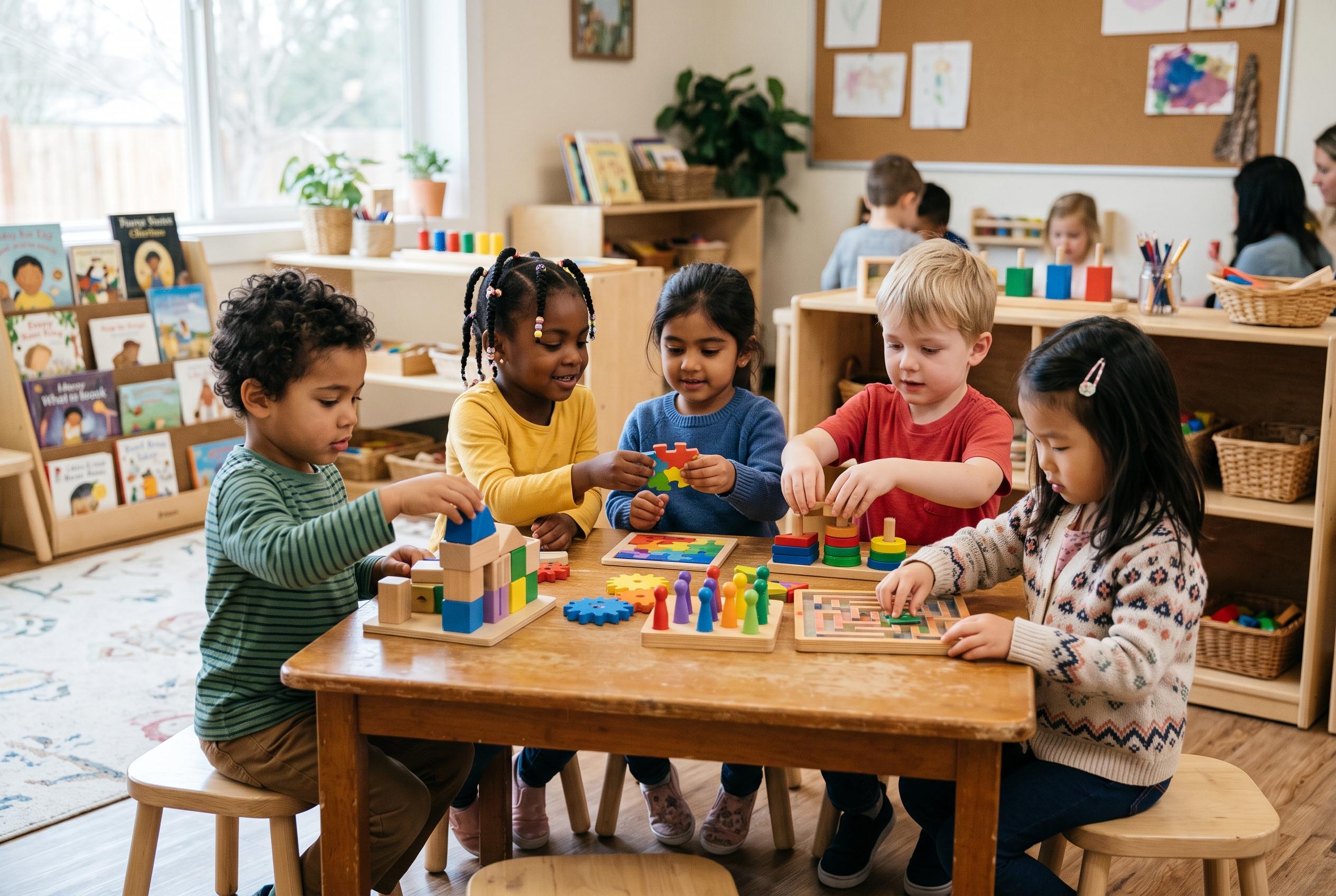

From First Orchard to Outfoxed!, the best preschool games are short, hands-on and designed to teach social and problem-solving skills without feeling like lessons.
For parents looking to build a game shelf that children will actually use, the best preschool titles tend to share the same qualities: simple rules, short rounds, sturdy pieces and enough colour, movement or make-believe to keep small children engaged. Busy Toddler’s 2026 guide argues that board and card games can do far more than fill an afternoon, helping young children practise turn-taking, problem-solving, early counting, fine motor control and the emotional work of winning and losing. Other guides focused on preschool play make the same case, noting that the strongest titles are often those that teach without feeling like lessons.
Among the most useful first games are cooperative titles, where children work towards a shared goal rather than competing head-to-head. Busy Toddler points to First Orchard, Hoot Owl Hoot!, Dinosaur Escape and Outfoxed! as especially strong options because they keep play brisk and understandable while reducing frustration for children still learning the basics. Similar round-ups from other parenting and educational sites highlight the same pattern: preschoolers do best with games that stay under about 15 minutes, avoid reading-heavy instructions and use pictures, colours or simple dice rolls to guide play.
The guide also makes room for games that appeal to children who want action, not just table-top thinking. Busy Toddler recommends titles such as The Sneaky, Snacky Squirrel Game!, Yeti in my Spaghetti and Animal Upon Animal for children who enjoy stacking, scooping, balancing and acting things out. That emphasis on hands-on play is echoed elsewhere: SplashLearn and FundEx Games both note that preschool favourites often build motor skills, logic and social confidence at the same time, particularly when they can be played by siblings of different ages or by children who are not yet readers.
For families ready to introduce a little more strategy, the list shifts towards games that can grow with children. Busy Toddler highlights Story Time Chess, Sequence for Kids, Monza and Dragon’s Breath as examples of games that introduce planning, matching and more deliberate decision-making without becoming too complex. That approach fits a broader trend in preschool game guides, which increasingly favour titles that begin simply but leave room for older children to stay interested rather than outgrowing them after a few plays.
The strongest overall message is less about a single perfect game than about choosing a small set that suits a family’s rhythms. Busy Toddler suggests that many children are ready to start playing board games between ages two and three, with the right number of games being whatever fits the household and does not create clutter or indecision. That practical view is echoed across the other guides, which frame preschool board games as a screen-free way to practise early academic skills, strengthen hand-eye coordination and give children a low-stakes setting in which to learn how to play with others.
Disclaimer: This content is for informational purposes only and is not intended to be a substitute for professional medical judgment, advice, diagnosis, or treatment.



